When a cavity loses its notes but gains strength express
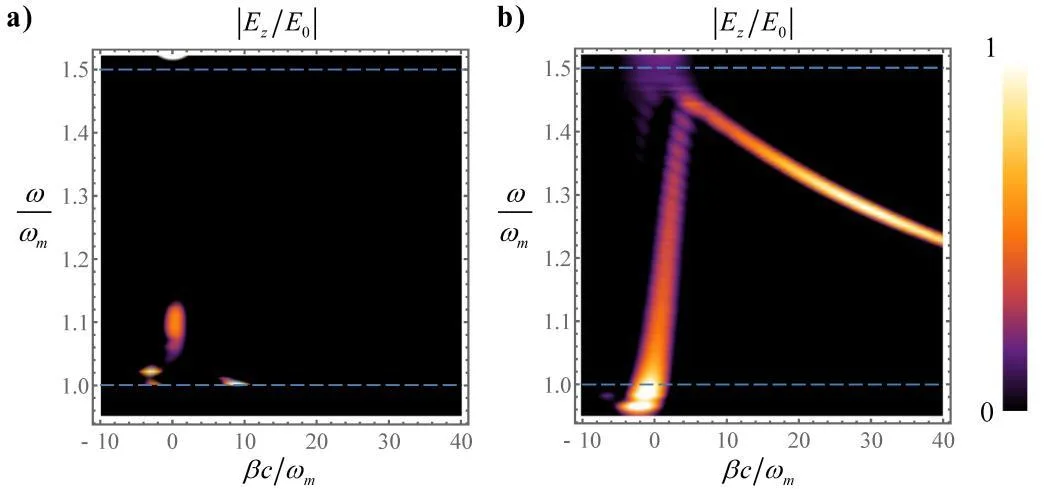
An ordinary microwave cavity resembles a music box: it responds only to strictly defined frequencies: its own notes. But what if you could make it sound different? Scientists changed the rules of the game by making the walls "one-way." Inside such a cavity, a wave can only run forward, never reflecting back.
In the experiment, they used a waveguide loaded with ferrite (a magnetic material). When the geometry was tuned so that wave motion became unidirectional, a sharp transition occurred: instead of a set of discrete resonances, a continuous frequency spectrum emerged. The field simultaneously compressed into a very small region — strong spatial localization appeared.
This discovery resembles an interpreter who gets distracted by every rustle in the hall, and a one-hour meeting stretches into two. In a nonreciprocal cavity, any perturbation is not scattered but trapped in a cage. Taming this effect will allow creating devices with unprecedented selectivity and sensitivity.
The ferrite used in the experiment is a material that transmits waves differently depending on the direction of the magnetic field. It is what makes the waveguide a "one-way street."