Open source is a licensing model that makes software's source code freely available for anyone to use, modify, and distribute. It fosters collaborative development, transparency, and innovation, as seen in projects like Linux, Python, and the Apache web server. For scientists, open source is essential for reproducible research, allowing others to inspect, validate, and build upon computational methods.
History
The term 'open source' was coined in 1998 by Christine Peterson, though the practice dates back to early hacker culture and the Free Software Movement led by Richard Stallman in the 1980s. The Open Source Initiative formalized the definition in 1998.
How it works
Open source licenses (e.g., MIT, GPL) grant users the right to access, modify, and share code, often with the condition that derivative works remain open. Development typically occurs through public repositories, where contributors submit changes that are reviewed and merged by maintainers. This decentralized model leverages collective expertise and peer review to improve software quality and security.
In practice
Open source software powers scientific computing (e.g., NumPy, ROOT), data analysis (e.g., R, Jupyter), and machine learningframeworks (e.g., TensorFlow), enabling researchers worldwide to share tools and results.
Fun fact
The Linux kernel, an open source project started by Linus Torvalds in 1991, now runs on everything from smartphones to supercomputers, including the majority of the world's top 500 fastest computers.
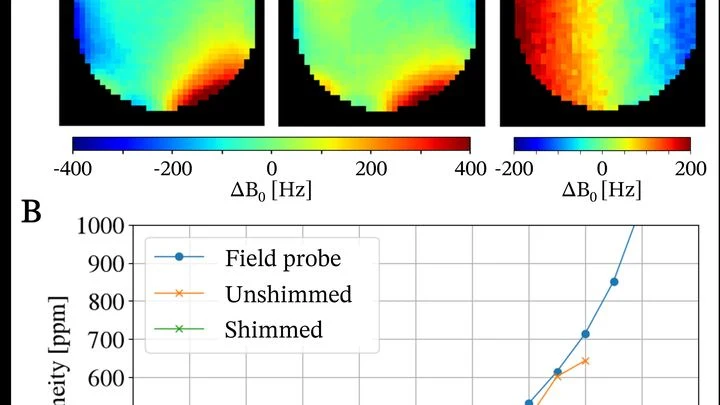
An MRI scanner is a big magnet that aligns hydrogen atoms in the body and then picks up their response signal. Such machines usually take up an entire room and cost as much as a nice house. Engineers from several labs decided to build a scanner that fits in a suitcase and released all the plans as open source.
In boiling soup, molecules collide chaotically and react. But if you measure how their concentrations change, patterns emerge. This is how carbon chemical networks work — mixtures of molecules that spontaneously 'cook' information, turning each reaction into an elementary computation. Previously they were used only for modeling nature.
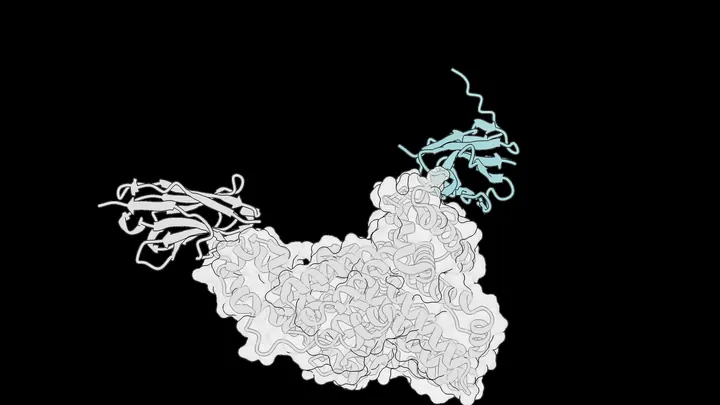
Think of a massive cookbook: each recipe is a protein, and the finished dish is its job in the cell. To whip up a complex treat, you often need to mix several ingredients and let them 'set' into the right shape. Until now, scientist-chefs could only guess how someone else's recipes would fold.
A quantum computer is like a finicky musical instrument: the slightest change in temperature, humidity, or string tuning, and the melody sounds different.
A child builds a simple game in Scratch: a character appears in the center and instantly jumps to a corner. The first move happens between frames — no one sees it. Removing that command is safe. But how does an automatic optimization optimizer know that? Today, the Scratch repository holds tens of millions of projects written by young authors.
A standard MRI machine is a huge magnet that you can't move, plus a powerful computer that turns signals from the body into a picture. In recent years, portable scanners with weaker fields have appeared: they are light, cheap, and can work in a field hospital or an ambulance.
Science is a vast kitchen where scientist-cooks seek new recipes. Once, they sifted ingredients by hand; now artificial intelligence, a seasoned chef, lends a hand. AI memorizes millions of flavors and suggests surprising pairings: through information search, the algorithm uncovers hidden patterns.
Today's blockchain is like a music box: the melody (the rules of the game) is embedded in the mechanism, and to change it you have to take the whole thing apart. Every time developers want to change an application's logic, they have to perform a fork, splitting the network into two branches that then compete with each other.
Fog thickens over the line "def max(a: Int, b: Int): Int". What does it do? It returns the larger of two numbers, but how can you verify that? You could write a dozen tests with specific pairs: max(2,3)=3, max(5,5)=5, max(-1,0)=0. Still, a nagging doubt remains: what if it breaks for, say, a million and minus a million?