Winds of Galactic Capitals express
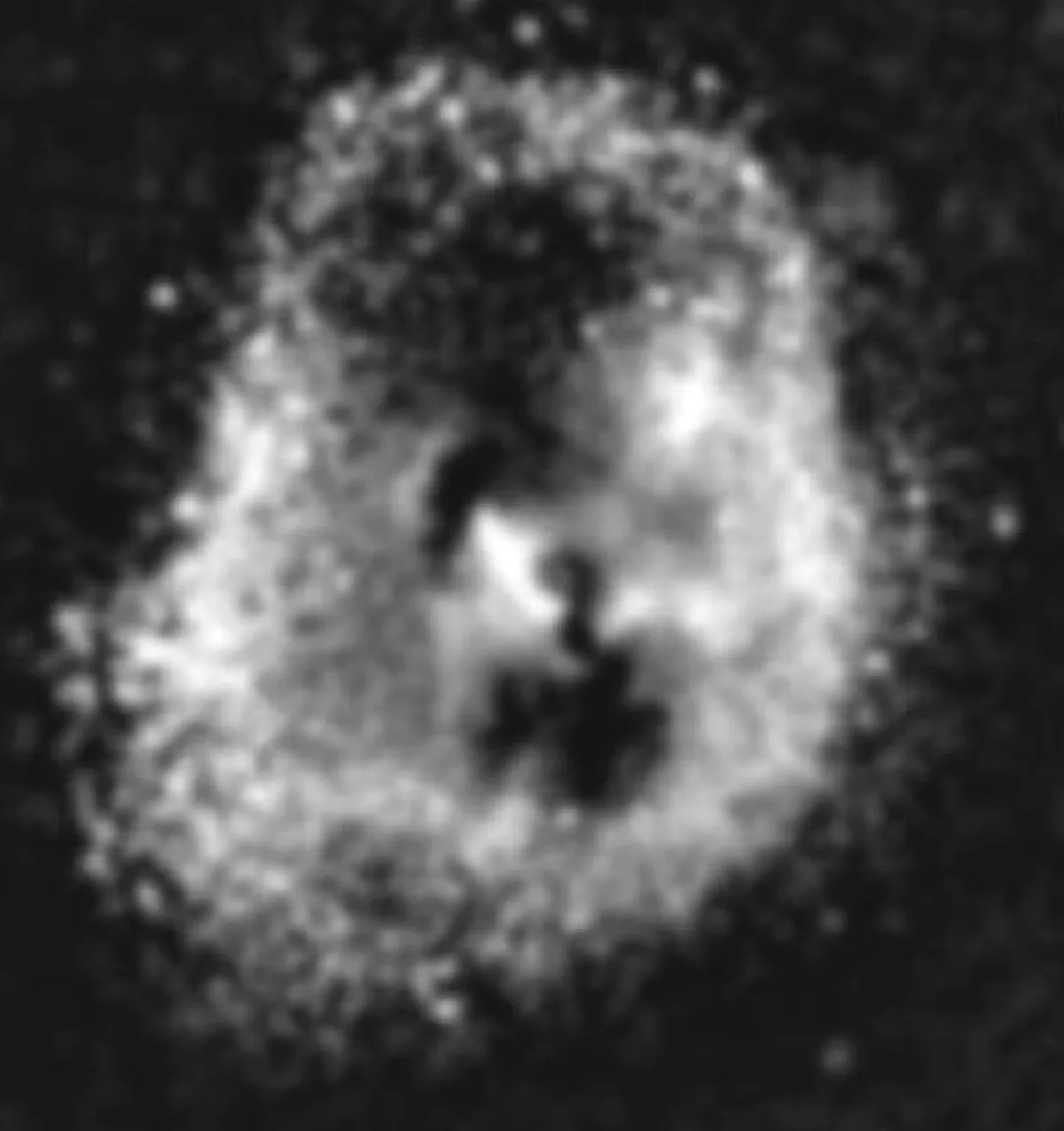
At the heart of the giant galaxy Hydra-A, there's a hive of activity. A supermassive black hole shoots out two powerful plasma jets. They punch through the surrounding cloud of hot gas and inflate giant bubbles within it. The new Japanese telescope XRISM has, for the first time, allowed astronomers to measure how fast this gas trembles and moves.
The telescope worked in tandem with the veteran Chandra. XRISM provided high resolution in the colors of X-ray light (this is called spectroscopy), while Chandra delivered sharp images. Together, they showed that near the black hole at the center, gas rushes about with a velocity dispersion of about 162 kilometers per second. Each cloudlet tears along at bullet speed. But the most interesting find was slightly to the north. There, where the shock wave from the jets slams into calm gas, the velocity dispersion jumps to 260 kilometers per second — one of the highest ever seen for such objects. It is precisely in this spot that a clump of gas rich in heavy elements was previously found. It may have been pulled upward like a cork from a bottle when old bubbles rose.
Out in the distant outskirts, 95–317 kiloparsecs from the center, things calm down. There, the velocity dispersion drops to 120 kilometers per second and below — almost a dead calm. The jet pushes gas effectively only nearby, and by the time its energy reaches the edges, it is already greatly weakened. Another detail: in the southwestern part of the central region, a bulk motion of gas toward us was detected at about 100 kilometers per second. This could be a slosh — a giant wave traveling across the gas ocean after some past collision.
The velocity dispersion of gas at the center of Hydra-A (162 km/s) is 30 times faster than the most powerful hurricane on Earth. If such a wind blew in the atmosphere, it would circle the planet in half an hour.
In Vernor Vinge's novel "A Fire Upon the Deep," zones of the galaxy with different speeds of thought are described. The gas turbulence in Hydra-A is a similar contrast: a turbulent center and a calm periphery, only instead of thoughts, it's hot plasma.