instrument

chandra

A NASA X-ray space telescope used to observe high-energy phenomena in the universe.
24 related articles

Description

The Chandra X-ray Observatory is a NASA space telescope that detects X-rays from extremely hot and energetic regions of the universe, such as supernova remnants, black holes, and the coronae of stars. Because Earth's atmosphere blocks X-rays, Chandra operates from orbit, providing a unique window into phenomena that are invisible to optical telescopes. It has been instrumental in mapping the X-ray sky, revealing the violent processes that shape galaxies and the cosmos.

History

Chandra was launched by NASA on July 23, 1999, aboard the Space Shuttle Columbia. It was named after the Indian-American astrophysicist Subrahmanyan Chandrasekhar, who won the Nobel Prize in Physics in 1983 for his work on stellar structure and evolution.

How it works

Chandra uses a set of nested, precisely shaped mirrors to focus incoming X-rays onto detectors. Unlike optical telescopes, which use lenses or simple mirrors, X-rays require grazing-incidence reflection—the rays strike the mirrors at very shallow angles and are deflected onto the focal plane. The detectors then record the position, energy, and arrival time of each X-ray photon, allowing astronomers to construct detailed images and spectra of cosmic sources.

In practice

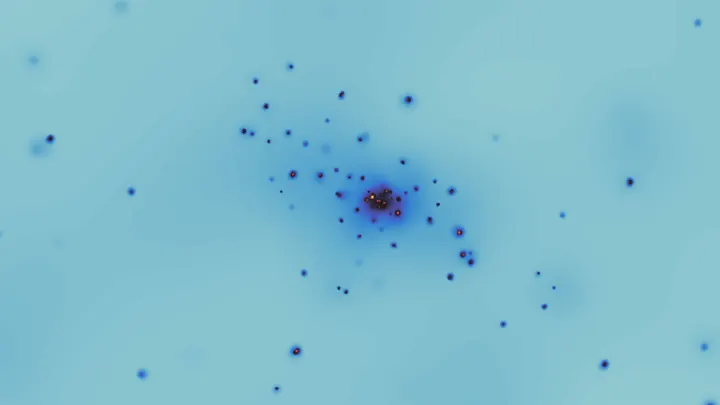
Chandra's observations have been used to study dark matter distribution in galaxy clusters, measure the spin rates of black holes, and investigate the composition of supernova remnants, providing data that tests fundamental physics under extreme conditions.

Fun fact

Chandra's angular resolution is so sharp that it can read a stop sign from 12 miles away, and it has observed the X-ray emission from matter falling into the supermassive black hole at the center of the Milky Way.

Concept graph →

Related articles · 24

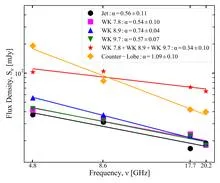
A Quiet Quasar Jet: X-Ray Portrait of the Inner Jet
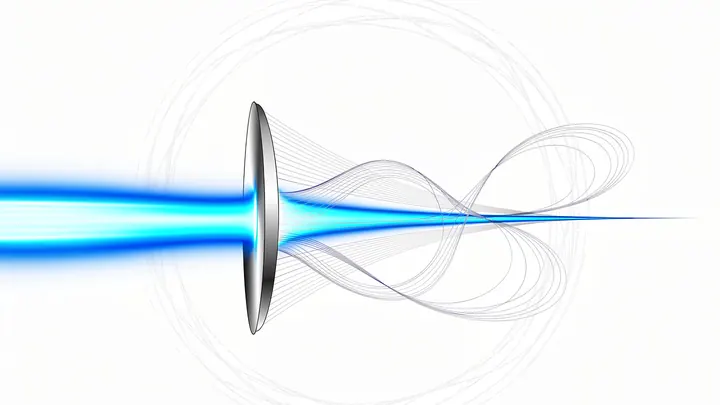
A spotlight beam cuts through the night fog. Part of the light we see comes directly from the lamp, and part from water droplets that scatter that light.
Stellar2026-07-173 minarXiv:2607.15719
How Artificial Intelligence Read the Magnetic Handwriting of Solar Flares
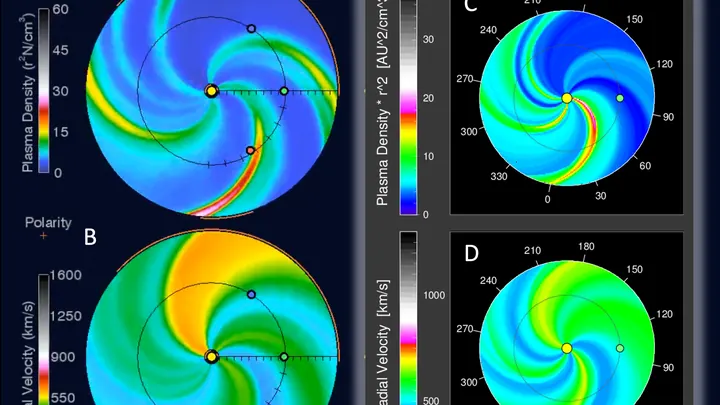
The Sun continuously scribbles magnetic fields across its surface. These patterns are not mere ripples but a handwriting in which nature has encoded warnings of flares. A flare is an explosion that releases the energy of billions of nuclear bombs in minutes, ejecting streams of plasma and radiation into space.
High Energy2026-07-172 minarXiv:2607.18315express
Winds of Galactic Capitals
At the heart of the giant galaxy Hydra-A, there's a hive of activity. A supermassive black hole shoots out two powerful plasma jets. They punch through the surrounding cloud of hot gas and inflate giant bubbles within it.
Lightning over a black hole: the first Neupert effect beyond our Galaxy
Active galactic nuclei (AGN) are the universe’s powerhouses: their X-ray coronae blaze millions of times hotter than stellar atmospheres. But what strikes the spark? A ten-day X-ray campaign by the XRISM and XMM-Newton satellites, aimed at NGC 3783, provided the answer: it’s actual thunderstorms.
Thunder and Nimbus: Birth of a Bow-Shock Nebula from a Neutron Star
A massive star doesn’t simply fade away — it blows up as a supernova, leaving behind an expanding remnant and a wildly spinning neutron star — a pulsar. In this cosmic storm, astonishing patterns emerge, and the 'Nimbus'–'Thunder' system is a dazzling illustration.
HEP Phenomenology2026-06-142 minarXiv:2606.15904express
Solar Neutrinos in a Dark Matter Trap: An Unexpected Tool for Helioseismology
Dark matter detectors are essentially incredibly sensitive microphones, capable of hearing a whisper amid the roar of a rock concert. Their job is to catch the rare nudges from hypothetical dark matter particles, which are thought to occasionally collide with atomic nuclei of ordinary matter.
HEP Phenomenology2026-06-091 minarXiv:2606.11310express
Hunting Ghost Particles from a Supernova
When a massive star dies, its core collapses, and a supernova explosion occurs. The cataclysm births streams of particles — like ripples from a thrown stone. The first to arrive are swift neutrinos, which pierce the Earth, hardly interacting. Then, hours later, ghost particles with a tiny charge appear.
Cosmology2026-05-252 minarXiv:2605.26265express
How Solar X-rays Catch Invisible Particles
Tiny invisible bullets pass straight through the Sun, barely noticing its matter. These are axions — hypothetical particles so light and elusive that they are often compared to ghosts.
High Energy2026-05-132 minarXiv:2605.13962express
X-ray Flares from the Black Hole at the Center of the Milky Way
A giant cauldron that barely smolders most of the time, but occasionally spits out showers of sparks. That is roughly how the supermassive black hole at the center of our galaxy — Sagittarius A*—behaves. It weighs four million times as much as the Sun and lies 26,000 light-years away.
Stellar2026-04-281 minarXiv:2604.26003express
The X-ray Trail of the Solar Wind
The solar wind, a stream of charged particles from the Sun, slams into the tenuous gas that fills the space between the stars. The collision produces a faint X-ray glow. For astronomers, this is like fog in front of headlights: it obscures distant objects.
HEP Phenomenology2026-04-282 minarXiv:2604.26004express
A Window for Invisible Particles: Axions Are Back
In 1987, astronomers saw a supernova flare up in a neighboring galaxy — the Large Magellanic Cloud. It was a rare gift: the explosion was close enough to catch not just light but also neutrinos, those nearly undetectable particles that pass straight through Earth.
High Energy2026-04-082 minarXiv:2604.07588express
An X-ray Tangle at the Heart of the Milky Way
The center of our galaxy is a crowded kitchen where several dishes are simmering at once, and their steam blends into a single cloud. X-rays from the exploded star's remnant, from the stellar wind around the supermassive black hole, and from hot gas between stars all overlap.
HEP Phenomenology2026-04-011 minarXiv:2604.01277express
Cosmic Invisibles: Axions and Supernova Light
When a massive star dies, a supernova explosion occurs, so powerful that a single flash outshines an entire galaxy. In this fire, billions of axions are born — invisible particles that leave almost no trace. Every second, trillions of these tiny things fly right through each of us, completely unnoticed.
Stellar2026-03-242 minarXiv:2603.22938express
The Mystery of Gamma Cassiopeiae: Half a Century to Solve the X-ray Phantom
For half a century, astronomers puzzled over the nature of the powerful X-ray emission from Gamma Cassiopeiae — a bright beacon in its constellation whose X-ray glow didn't fit models of single stars. An invisible companion was suspected, but direct evidence was lacking.
High Energy2026-03-171 minarXiv:2603.17210express
An X-ray Trail at the Center of the Galaxy
At the center of the Milky Way, among dense clouds of gas and dust, lies a region called Sagittarius C. It's like a bustling crossroads: stars are born here, streams of matter collide, and the whole scene is illuminated by X-rays. For a long time, this glow remained a mystery.
High Energy2026-02-051 minarXiv:2602.06192express
Invisible Beacons of Galaxies
The night sky is full of beacons, but some shine in a way that makes them nearly invisible. Astronomers have discovered a new class of objects: ultrasoft X-ray sources. They are so "cool" by X-ray standards that their emission falls at the boundary between ultraviolet and soft X-rays, where ordinary telescopes are almost blind.
HEP Experiment2026-02-031 minarXiv:2602.03818express
How to Hear the Cosmos Through the Noise
Cosmic particles with energies millions of times greater than anything our accelerators can produce slam into the atmosphere and create a shower of secondary particles. This shower emits radio waves that antennas on the ground pick up. But the signal is weak: it's swamped by the radio noise of our galaxy and the receivers' own noise.
High Energy2026-02-031 minarXiv:2602.03982express
How Light Escapes a Neutron Star
When an X-ray burst erupts on a neutron star, its atmosphere heats up to millions of degrees. The light we catch with telescopes passes through this dense layer of gas, and gets dramatically altered along the way. The spectrum no longer looks like that of an ideal radiator: some colors get amplified, others dim.
High Energy2026-01-262 minarXiv:2601.18139express
How a neural network tells black holes from neutron stars
For years, an X-ray telescope in orbit recorded how binary systems shine, where an ordinary star orbits a black hole or a neutron star. Matter from the companion falls onto the compact object, heats up to millions of degrees, and emits X-rays.
Instrumentation2026-01-171 minarXiv:2601.12094express
Neutrino Smoke: How to Catch a Supernova Before the Flash
When a massive star runs out of fuel, it collapses and explodes as a supernova. An instant before the catastrophe, neutrinos — ghostly particles — burst from the core. They rush through the star and interstellar space like the smell of smoke, heralding a fire that will only ignite minutes or even days later.
High Energy2026-01-121 minarXiv:2601.07357express
The Fading Echo Reveals a Stellar Accelerator
Twenty years ago, an X-ray image of the Arches cluster resembled a photo of a person in thick fog: the cluster itself was drowned in the glow of a neighboring cloud. The cloud acted like a mirror, reflecting hard radiation from the vicinity of the black hole, and that reflection swamped the faint signal from the stars.
Exoplanets2026-01-121 minarXiv:2601.07983express
When the Sun Dived into a Cloud
As it travels through the Galaxy, the Solar System occasionally dives into thick interstellar clouds — clumps of tenuous hydrogen and dust.
High Energy2026-01-121 minarXiv:2601.08047express
Cosmic Beacons That Flash and Fade
An X-ray telescope points at a neighboring galaxy, and sees a point that wasn't there yesterday. A month later, it blazes hundreds of times brighter than the Sun, and a year after that, it fades again. Such points are called ultraluminous X-ray sources, and each one is a close pair: an ordinary star and a black hole or neutron star, whirling around each other.
Instrumentation2024-11-292 minarXiv:2412.00159express
Night Flashes: Hunting for Split-Second Signals
A firefly blinks for one ten-billionth of a second somewhere above the Siberian taiga. Seeing such a thing is impossible, but the TAIGA-HiSCORE array, spread across a valley in the Tunkinsky district of Buryatia, tried to catch exactly such flashes — not from insects, but from the depths of space.