How to Catch Acceleration by the Tail express
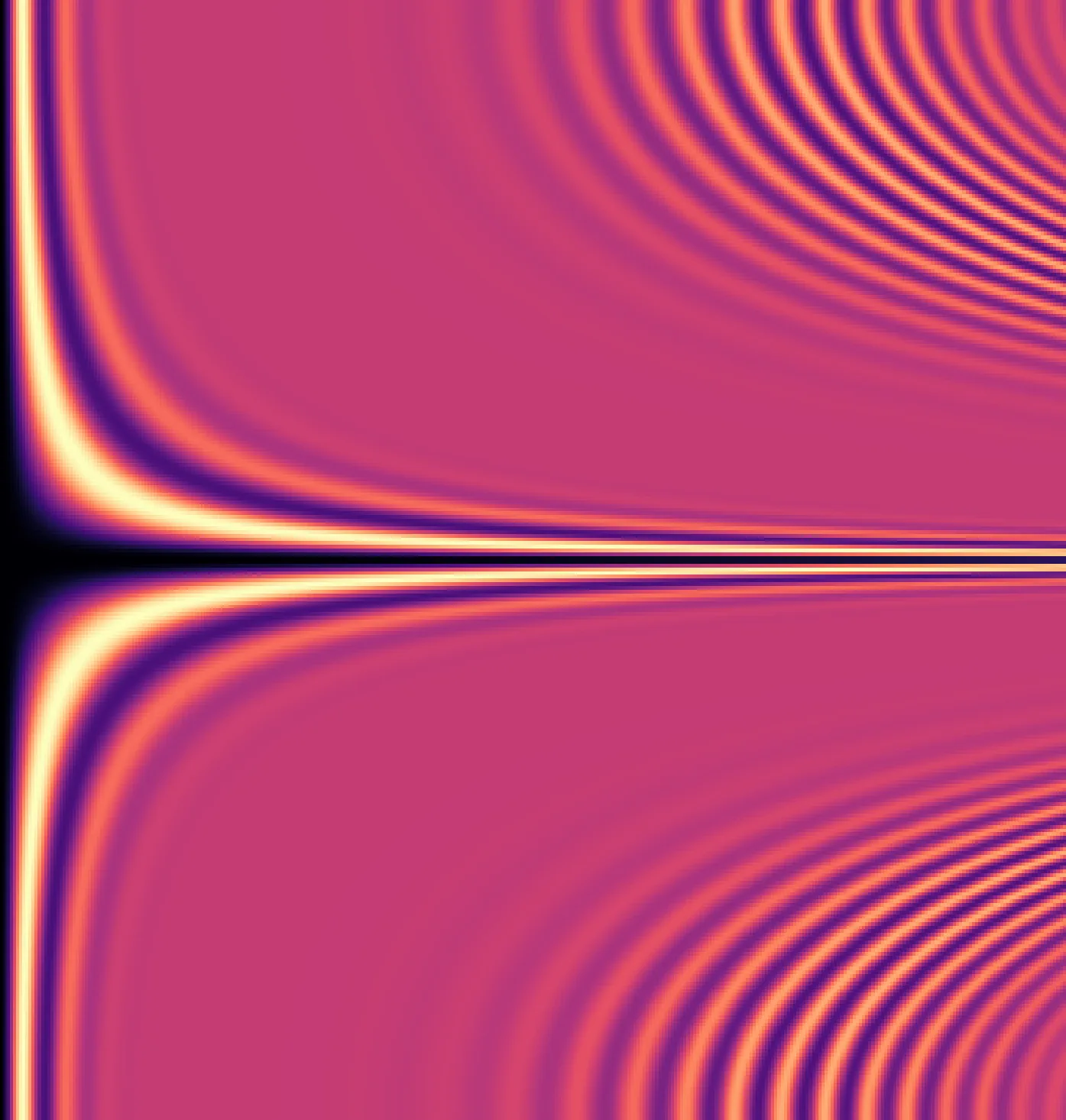
An optical trap holds an atom almost motionless, like a ball on a soft spring. But as soon as acceleration appears, say gravity, the equilibrium shifts. The atom moves within the standing light wave, and this changes the rate at which it exchanges energy with the field. The frequency of this exchange becomes a direct indicator of acceleration.
The authors calculated a model where the atom and field start from the most tranquil state, then exactly solved the equations of motion. It turns out that information about acceleration accumulates in the joint state of the atom and light. It can be extracted, and the longer you wait, the more precise it gets — precision grows quadratically with time.
There are different ways to read out the result. At a node of the standing wave, the phase method works: it senses the sign of acceleration. Away from the node, it's better to count photons or use homodyne detection with a tweaked phase. Even if the cavity has losses, there's an optimal measurement time when noise hasn't yet eaten all the useful information. This approach is like weighing an invisible load by the jitter of a spring — except the role of the spring is played by the vacuum structure itself.
The shift in the atom's equilibrium in the trap due to gravity is roughly the diameter of a proton, but that's enough to noticeably change the frequency of light exchange.