Acoustic Tweezers for Magnetic Vortices express
A magnetic vortex is like a tiny whirlpool in the sea, except that instead of water, it's magnetization that swirls. Such vortices could become memory cells in future computers, but to write and read information, you need to be able to move each vortex individually. So far, this is done crudely — shifting a whole bunch at once.
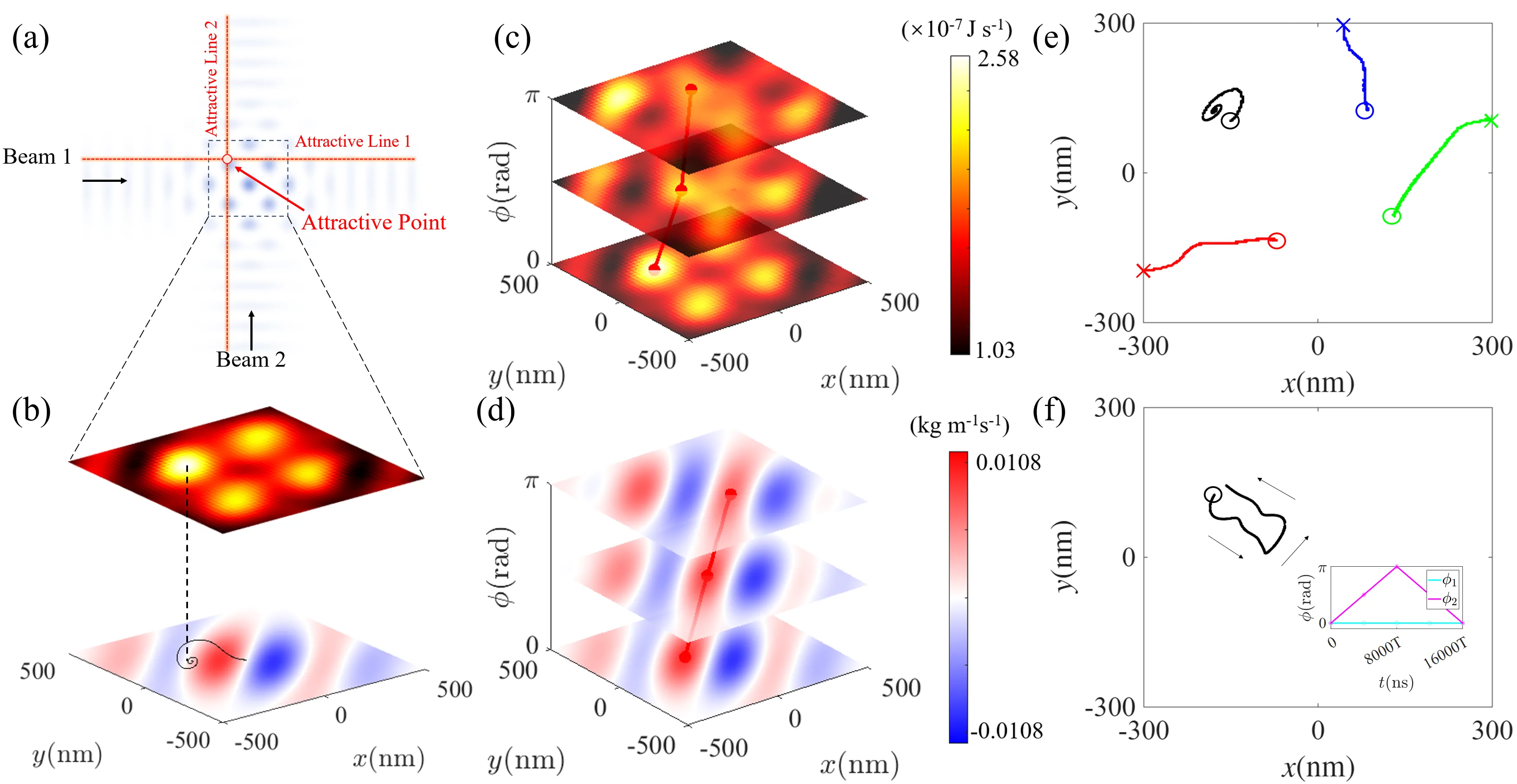
Scientists propose to catch vortices with sound. A sound wave is a wave of compressions and rarefactions, like ripples on water. If you direct two such waves at each other at right angles, at their intersection a point arises where vibrations are especially strong. The magnetic vortex is attracted there, like a dust particle to a charged comb. By moving the waves, you can smoothly drag the vortex across the chip.
The force that pulls the vortex arises because sound slightly changes the magnetic properties of the material. The vortex goes where it is energetically favorable — to the point of strong vibrations. This is like a ball rolling into a dimple on a table. This method does not break the vortex and does not require complex electrical contacts nearby.
Skyrmions are so small that thousands could fit across the width of a human hair. Yet they are stable, like little spinning tops: hard to spin up or stop.
In the series 'Star Trek', engineers move objects with acoustic fields; here a similar idea is applied to magnetic vortices on a chip.