Heat bends around corners express
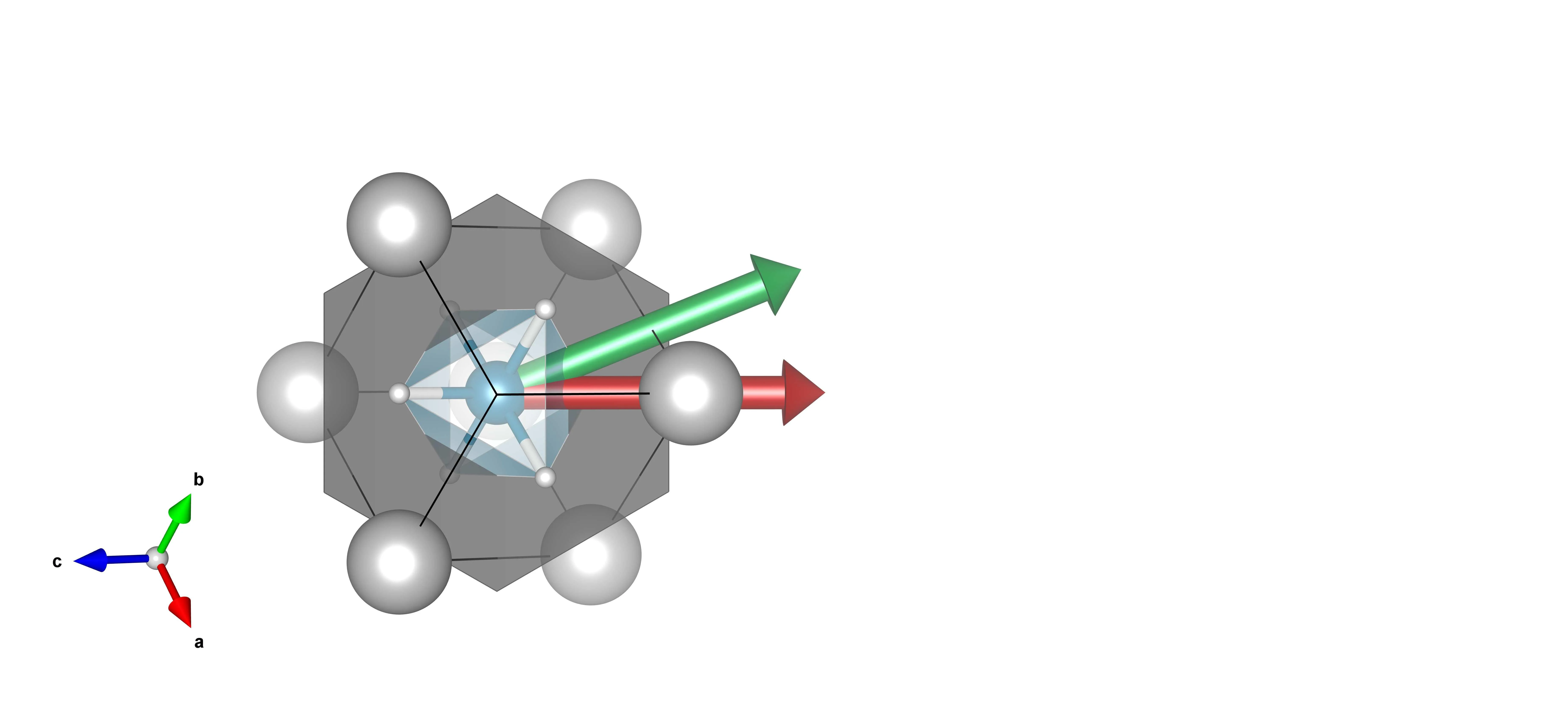
A magnetic field usually acts like a strict traffic cop: for heat to turn into electricity, it must stand across the road. If the field lies along the heat flow, the effect disappears, or so it was believed for decades.
Scientists took an ultra-thin film of a magnetic oxide — a material where electron spins are aligned in a plane, like compass needles on a table. It turned out that even when the external field lies in this plane, a noticeable voltage arises in the film. The signal magnitude rivals that produced by a classic transverse field.
The secret is that in such a film, the magnetization itself creates the necessary "skew" for electrons. Heat flows, electrons deflect sideways, and a potential difference appears at the film's edges. It's as if the traffic cop weren't standing at the intersection but were part of the road itself.
Now engineers can place thermoelectric elements at any angle to a heat source — for example, on curved surfaces of engines or chips. The constraint is lifted, and this changes the game for harvesting waste heat.
Original abstract
as written by the authors arXiv:2608.14060v1
The Nernst effect, which enables the conversion of a heat current into a transverse voltage under magnetic field or spin magnetization, holds significant promise for energy harvesting and thermal management in future electronics. However, the conventional Nernst effect is fundamentally constrained by the orthogonality requirement that the applied field or spontaneous magnetization must be perpendicular to the plane defined by the temperature gradient and the induced voltage. Here we report that symmetry-tailored ultrathin films of a prototypical ferromagnetic oxide exhibit anomalous Nernst effect arising from intrinsic coupling to spontaneous in-plane spin magnetization. Systematic magnetothermoelectric measurements under spherical rotations of the magnetic field reveal that a pronounced Nernst signal, comparable in magnitude to the out-of-plane response, emerges robustly associated with out-of-plane orbital magnetization. Our findings demonstrate that the anomalous Nernst effect is no longer limited by the orthogonality condition, opening new opportunities for more flexible designs of magnetothermoelectric materials and devices.
The Nernst effect is named after Walther Nernst, who won the Nobel Prize in Chemistry in 1920 for his work on thermodynamics, but he discovered the effect itself back in 1886.