How neutron stars grow 'mountains' ✛
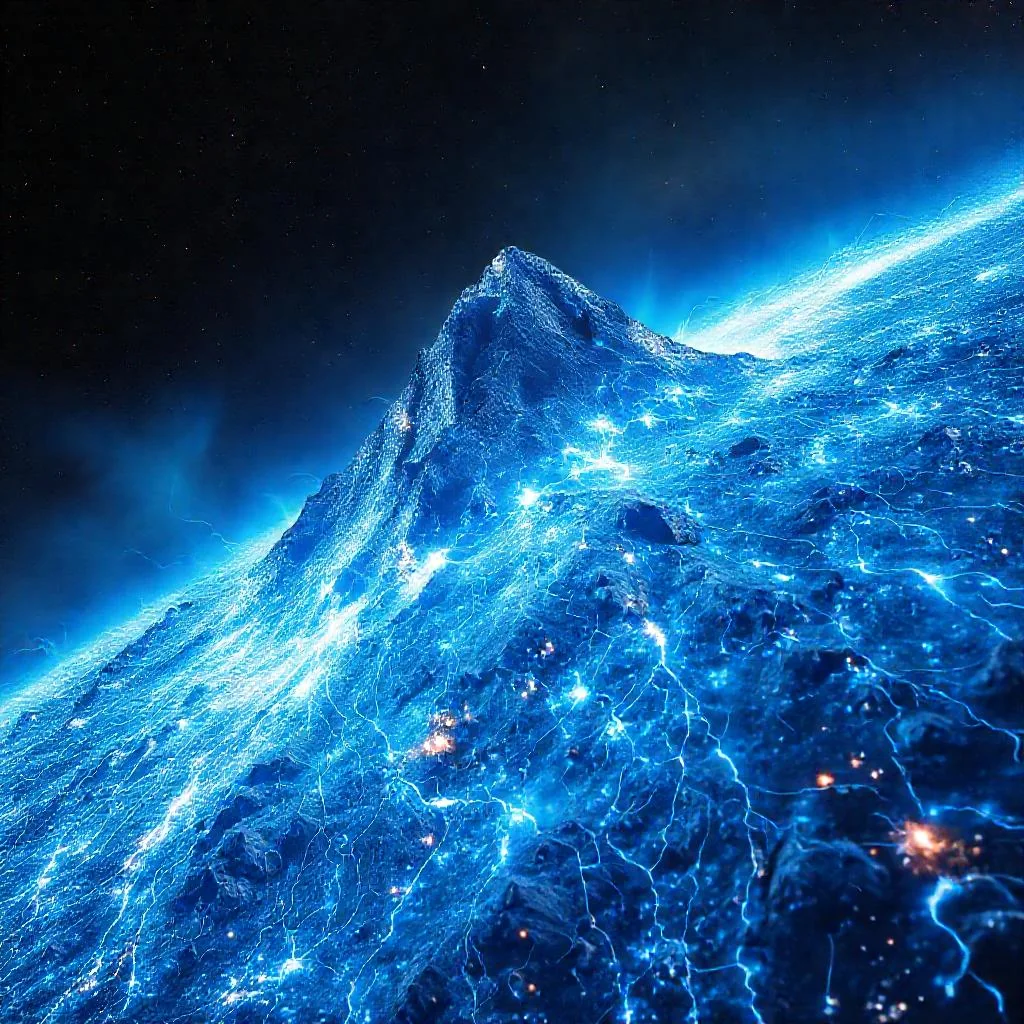
A sculptor shapes mountains from magnetic fields and heat, but the rock resists. A neutron star, the ultradense remnant of a supernova explosion, in a binary with a normal star pulls matter onto itself. This matter falls onto the star and heats its crust unevenly. Meanwhile, the magnetic field tugs the crust from within. Together, they create tiny 'mountains' on the surface.
Previously, these forces were considered separately. Now scientists have built a model where they work together. It turns out that the magnetic field and heating can pull in different directions. With a weak flow of matter, the magnetic field dominates; with a strong flow, heating does. The maximum 'mountain' is like a bump less than a millimeter high on a sphere with a radius of 12 kilometers.
Now we know how magnetic fields and heat sculpt the terrain on the hardest surface in the universe.
The maximum deformation that a neutron star crust can sustain corresponds to a "mountain" less than a millimeter high on an object with a radius of 12 kilometers, like a bump on a perfectly polished billiard ball.