Atoms Spin and Flip a Magnet
Atoms in a crystal are always vibrating. If you make them move in circles, they can transfer their rotation to a magnetic layer on top and flip its magnetization. Previously, this trick had been demonstrated only on two materials. Now physicists tested it on seven different crystals to see how universal it is.
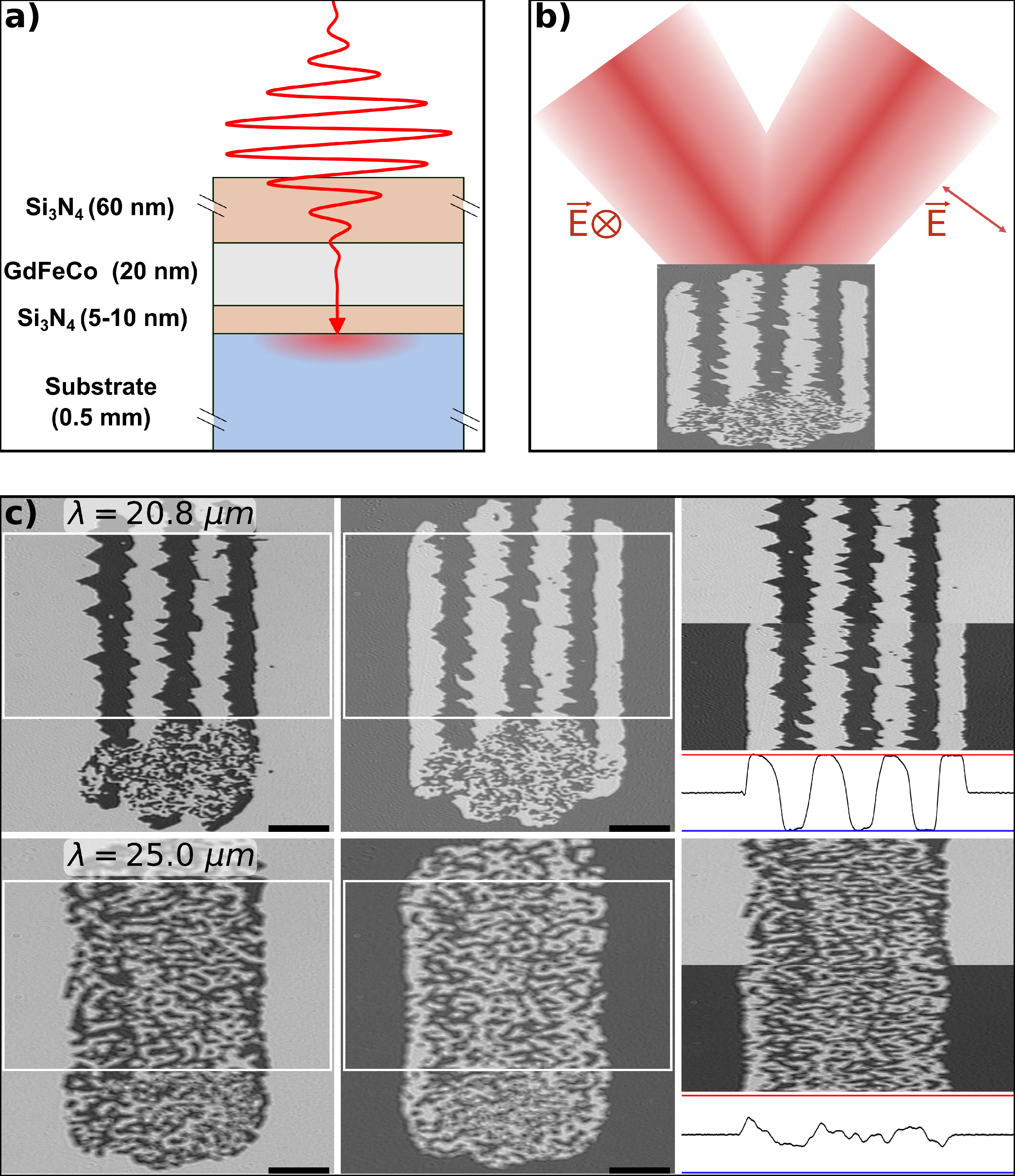
The most intriguing part: switching did not correlate with where the crystal absorbs light most strongly. On magnesium oxide, the best result occurred at a wavelength of 20.8 micrometers, while the absorption resonance lies near 25 micrometers. Calculations showed that near resonance, almost all the energy is deposited in the first 200 nanometers of the substrate, right at the interface with the magnetic layer. This local heating seems to hinder switching. So the key is to find a balance: the light must excite the atoms but not overheat the interface.
Effective magnetic fields generated by circularly polarized phonons can exceed tens of tesla, comparable to the fields of the most powerful pulsed magnets.