Crystal substrate conducts the magnet
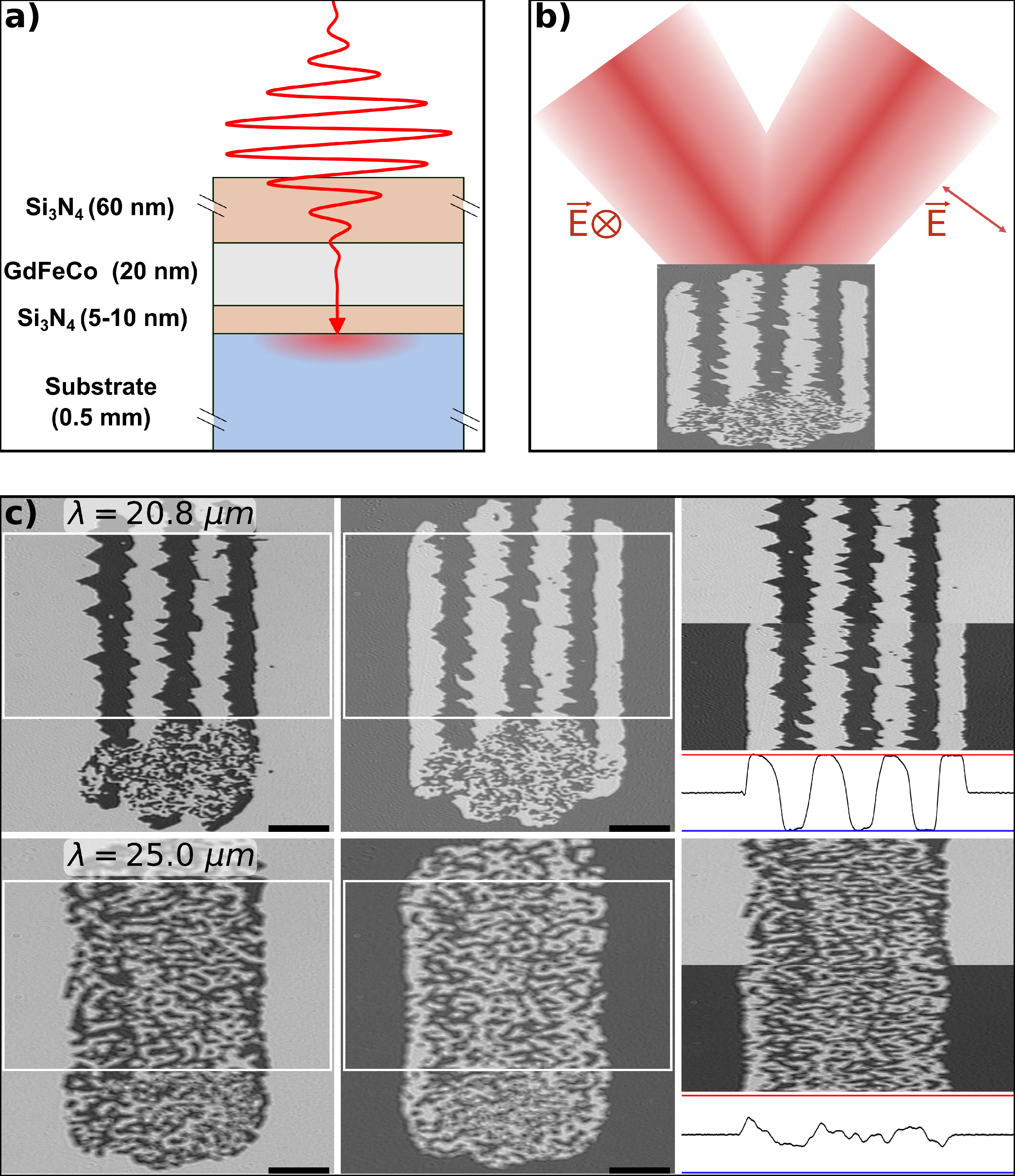
An orchestra without a conductor can sound harmonious if the musicians feel the common rhythm. In the world of solids, phonons play that role: quanta of crystal lattice vibrations. When atoms in a substrate start moving in circles, they can transfer their rotation to a magnetic layer on top and flip its magnetization. This effect had previously been seen only on two materials, but now physicists have tested it on seven different crystals with varying atomic packing symmetry.
Switching worked on all seven substrates, but with varying strength: from 30% on quartz to 95% on titanium oxide. Something else was surprising. The switching efficiency spectrum did not mirror the crystal's absorption spectrum. On magnesium oxide, the maximum efficiency of 96% was achieved at a wavelength of 20.8 micrometers, whereas the phonon resonance lies around 25 micrometers. The shift toward shorter wavelengths was systematic for all materials.
This clarified the role of the hall's acoustics. The substrate does not just transmit the rhythm; it also determines where the energy stays and where it turns into heat. If absorption is too strong, energy concentrates in a thin layer near the boundary, and the magnetic layer fails to "hear" the right note. When the wavelength is slightly shifted from resonance, energy spreads deeper, and switching becomes more efficient.
Back to the orchestra. Previously, it seemed that the key was the musicians' skill, meaning the substrate's own properties. Now it is clear: the entire hall acoustics matter, that is, the optical structure of the heterostructure. That is what decides how coherently the lattice vibrations conduct the magnetic layer. This discovery shifts the focus from simple resonant excitation to a balance between phonon generation and local heating. Practical benefits may emerge in devices that require ultrafast control of magnetization without external magnetic fields.
Effective magnetic fields generated by circularly polarized phonons can exceed tens of tesla, comparable to the fields of the most powerful pulsed magnets.