Gravitational redshift is the phenomenon where light (or any electromagnetic radiation) loses energy as it climbs out of a gravitational well, shifting toward the red end of the spectrum. Conversely, light falling into a gravitational well gains energy and shifts toward the blue. This is a direct consequence of Einstein's general relativity: gravity affects the flow of time, and a photon's frequency is tied to the ticking of a clock at its location. The effect is tiny on Earth's surface but becomes significant near compact objects like neutron stars or black holes, and it is a key prediction that distinguishes general relativity from Newtonian gravity.
History
The concept was first predicted by Albert Einstein in 1907 and refined in his 1915 general theory of relativity. The first terrestrial measurement was made by Robert Pound and Glen Rebka in 1959 using gamma rays over a 22.5-meter tower at Harvard University.
How it works
In general relativity, a clock deeper in a gravitational potential runs slower than one higher up. A photon emitted from the lower clock has a frequency set by that slower ticking; when it reaches the higher observer, it is compared to their faster clock, so it appears to have a lower frequency — hence redshifted. The energy loss is not a frictional effect but a consequence of the geometry of spacetime: the photon's path through curved spacetime conserves energy in a way that depends on the gravitational potential difference between emission and reception.
In practice
Gravitational redshift is routinely accounted for in Global Positioning System (GPS) satellites, where clocks on orbit run faster than those on the ground by about 38 microseconds per day; corrections are applied to maintain positioning accuracy.
Fun fact
The effect is so precisely measured that atomic clocks on Earth's surface tick at different rates when separated by just one meter of altitude.
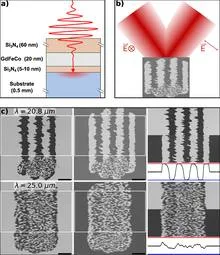
An orchestra without a conductor can sound harmonious if the musicians feel the common rhythm. In the world of solids, phonons play that role: quanta of crystal lattice vibrations. When atoms in a substrate start moving in circles, they can transfer their rotation to a magnetic layer on top and flip its magnetization.
Light escaping a massive body loses steam. Its frequency dips slightly, and its color shifts toward red. Physicists call this gravitational redshift. In classical theory, it's all clear, but the moment you bring quanta into the picture, trouble starts.
Previously, this shift was modeled as a kind of mode mixer — a device that entangles different states of light.
Light escaping a massive body loses energy: its waves stretch, and its color shifts toward the red. This is gravitational redshift, known since the work of Einstein.
Imagine a giant orchestra where every musician is a particle born in the fire of the Big Bang. When time's baton gives the downbeat, these particles begin to decay into lighter ones. Each decay is accompanied by a quiet chord — the emission of gravitons, tiny quanta of gravity.
A stone falls into a well, and the splash reaches your ears with a delay. Something similar happens to light as it leaves Earth: its oscillations become less frequent, the beam seems to 'tire.' This is gravitational redshift — a phenomenon Einstein spoke of a century ago.
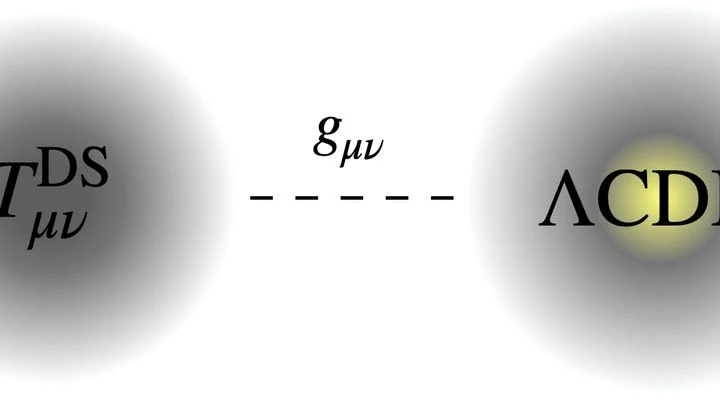
A pond with ripples spreading from a fallen stone. So it is on cosmic scales: a sudden burst of energy in the dark sector, an invisible substance that emits no light, creates ripples in the fabric of space. These ripples alter the path of light particles traveling to us from the very birth of the cosmos.
The authors of the new study built a mathematical framework to describe these distortions.
A clock isn't just hands. Every atomic nucleus is a natural metronome: it oscillates with nearly perfect regularity. If you lift one such metronome a couple of meters, its rhythm speeds up ever so slightly — that's time warping, as predicted by Einstein.
Time flows slower near the ground than on the roof: this was predicted by Einstein in his theory of relativity. To spot the tiny difference, physicists propose using a pair of photons, linked like voices in a duet.
The James Webb Space Telescope has spotted a scattering of compact objects in the early universe, nicknamed 'little red dots.' They are too red and too dim to be ordinary quasars, and astrophysicists are scratching their heads over what powers them.