Time reversalsymmetry is the principle that the fundamental laws of physics remain valid if the direction of time is reversed. In equations, this means that if a process is physically allowed, then the exact reverse process, with all velocities and momenta flipped, is also allowed. This symmetry holds for the strong, weak, and electromagnetic forces under specific conditions, and it underpins the idea that at the microscopic level, physical processes are reversible — they look the same whether played forward or backward.
History
The concept was formalized in the 1930s by Eugene Wigner, who introduced the anti-unitary time reversal operator in quantum mechanics. The possibility of its violation in the weak interaction was proposed by Lev Landau in 1957, following the discovery of parity violation.
How it works
In quantum mechanics, time reversalsymmetry is implemented by an anti-unitary operator that flips the sign of time, momentum, and angular momentum. For a system to respect this symmetry, its Hamiltonian must commute with this operator. When this symmetry is unbroken, certain transport coefficients, like electrical conductivity, obey Onsager relations that link forward and reverse processes. Breaking this symmetry — for example, by applying a magnetic field or through the weak interaction — allows for phenomena like the Hall effect, where currents flow perpendicular to an applied electric field, and other one-way transport effects.
In practice
Time reversalsymmetry breaking is exploited in spintronics and topological insulators, where it enables the robust, dissipationless transport of spin or charge, and in the design of magnetic memory devices.
Fun fact
The violation of time reversalsymmetry in the weak force is one of the necessary conditions for the observed matter-antimatter asymmetry in the universe, as it allows processes that distinguish between forward and backward time.
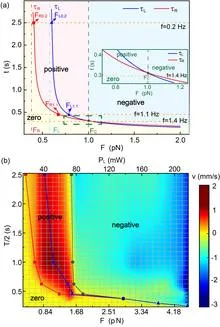
A swing that rocks on a sawtooth hill behaves strangely: without kicks, it gets stuck in the first dip, but with rhythmic pushes it can move uphill, downhill, or stay frozen in place. That is exactly what physicists saw when they placed a single dust grain in a trap with a sawtooth bottom and started pushing it alternately with laser beams.
In some quantum theories, symmetries intertwine in an unusual way, as if a lock had two keys, but turning one slightly shifted the other. Such intertwined symmetries are called 2-groups. One is an ordinary symmetry acting on point particles (0-form), and the other is a 'linear' symmetry (1-form) governing extended objects like strings or lines.
A rotating black hole is no calm whirlpool. Space around it shudders and rings at the slightest disturbance, like a guitar string after a pluck. These oscillations are described by the Teukolsky equation — a complex mathematical construct that physicists have studied for half a century.
Recently, a strange symmetry was noticed in this equation.
The race for fusion energy is like trying to bottle a lightning bolt. For decades, physicists have struggled to recreate on Earth the processes that power the Sun. The main challenge is getting light nuclei to fuse despite their mutual repulsion, while extracting more energy than was spent heating and confining the plasma.
Cosmic ripples begin with tiny clumps. 380,000 years after the Big Bang, the universe was nearly homogeneous — density fluctuations were only one part in 100,000. But gravity turned these weak ripples into galaxies, clusters, and giant voids.
The boundary sets the rules
Quantum gravity is like a theater where spacetime is the stage and fields are the actors. When the stage has an edge, you need to know exactly what happens at the boundary; otherwise, the play falls apart. In 2018, Edward Witten proposed an elegant recipe for such a case.
At the very beginning of the universe, when all of space was compressed into a point, the laws of physics break down. This point is called a singularity — an edge where our equations lose meaning. But what if it's not an end, but a special type of boundary?
The authors of this work propose viewing the singularity as a free boundary.
A black hole is not just a dark spot in space. It is a region where gravity compresses matter so intensely that even light cannot escape. Among all possible black holes, one stands out — the rotating Kerr black hole. Its description was long thought to be tied to Einstein's equations, like a recipe tied to a specific cookbook.
Hot water sometimes freezes before cold: this is the Mpemba effect. In the quantum realm, a similar paradox appears: the more the equilibrium is disrupted, the faster it recovers. It's like fleeing from disorder (entropy) in reverse: the system rushes toward order, and a large initial imbalance only helps.
A wormhole is a hypothetical tunnel in curved spacetime connecting two distant regions of the universe and potentially shortening the journey between them.
A translator gets distracted by every rustle in the hall, and a one-hour meeting stretches into two. That's roughly how ordinary quantum mechanics works: a particle evolves in time, while space serves as the stage. But what if we swapped their roles? Then the particle 'moves' through space, and time becomes a static backdrop.
A pebble tossed into a pond sends ripples spreading in all directions. Now imagine the pond itself suddenly turning into jelly — instantly, faster than the wave can complete a single crest. Some ripples would keep spreading but change their spacing, while others would unexpectedly turn around and run back toward the point of impact, as if time were flowing backward for them.
Physicists have mastered an elegant mathematical trick that lets them translate gravitational equations into the language of electricity. This method — double copy — works like a kind of dictionary: it replaces the complex geometry of curved spacetime, described by high-dimensional tensor fields, with the simpler rules of…
An infinite chain of atoms spaced at equal intervals. Shift the entire chain by one step, and the picture doesn't change. That's translational symmetry: the world looks the same wherever you look. You'd think such a simple rule would give rise to simple states, like a crystal lattice assembled from identical building blocks.
But the authors counted those blocks anew.
Sugar dissolves in tea, and then with a single motion gathers back into the spoon. In an ordinary kitchen, you won't see that — viscosity and disorder get in the way. But in the world of ultra-slow motions, where inertia vanishes, such tricks become reality.
Light usually behaves like a pedestrian on a two-way street: the path from a streetlamp to a camera matches the reverse path. But near a rotating black hole with broken spatial symmetry, this street becomes one-way. Swap the light source and observer, and the hole's shadow changes shape: from an oval resembling a rugby ball, it turns into a teardrop.
Before measurement, a quantum object lives in a world of possibilities, where wave amplitudes add up like sound waves in a studio before pressing the “record” button. Crests amplify each other, troughs cancel out.
Normally, current flows equally well in both directions if there's no magnet. A magnetic field or magnetic material breaks that symmetry: electrons start to prefer one direction. But in a new study, physicists found a way to do without magnets.
In a crystal, atoms may not sit perfectly ordered but with some disorder.
A solar panel on a roof produces little current in the morning, a lot at noon, and stays silent at night. Wind doesn't blow randomly either: it's often stronger in the morning and evening than during the day. Energy providers need to know in advance how much energy will be available in an hour or three, so they can switch on backup plants or store electricity in batteries in time.
A pendulum swings both left and right at the same time. In the atomic world, such a 'double' state is called a Schrödinger's cat: a particle exists in two states simultaneously, like the cat in the thought experiment — both alive and dead.
Scientists have found a way to assemble such states from many atoms using short light pulses.
An ordinary laser amplifies light into a bright beam. Run the process in reverse, and you get an anti-laser — a device that sucks in light without a trace. But such a machine is finicky: even a slight disorder can ruin the absorption.
Physicists have found a way to make the anti-laser invulnerable.
Two metal plates in a perfect vacuum attract each other. Even Richard Feynman compared emptiness to a boiling foam: particle pairs are born and immediately vanish, creating the Casimir effect. If the plates are asymmetric, they also start to twist — that's a vacuum motor.
But rotation doesn't require oddly shaped parts.
Water in a glass cools, ice melts, and a kettle heats the stove: that's how the world works: heat always flows from hot to cold. This is the second law of thermodynamics, a law that has never been broken.
Time is a one-way road: events race forward with no U-turn allowed. The arrow of direction is governed by entropy — a measure of disorder, which only grows in the Universe, like a traffic jam at rush hour. You can clear one intersection, but the overall congestion only gets worse.
A quantum system, once born, does not forget it. Even after dozens of lifetimes, a trace of the initial state remains in its decay: a slowly decreasing power-law tail. For two fluorescent dyes, erythrosine B and eosin Y, this tail has been observed for the first time in two spectral channels simultaneously.
Two translators listen to the same symphony. One hears only the fundamental tone: a clean, predictable melody. The other catches the overtones that color every note.
Setting up an orchestra without a conductor: the algorithm itself decides which instruments (basis functions) and at what volume (weights) should play to reproduce Earth's gravitational symphony.