We have retold 4 papers by this author. 2 of them with a full read. most often about: squeezed state, topological insulator, electroweak_topological_susceptibility. 8 co-authors across our retellings.
In 1976, Gerard 't Hooft noticed that the vacuum of a gauge theory is not as simple as it seems: it possesses a topological structure that manifests itself in a nonzero topological susceptibility.
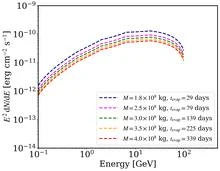
In 2017, the LIGO and Virgo gravitational detectors caught ripples in spacetime from the merger of two black holes 540 megaparsecs away. The event was named GW170814. But what remained after this cosmic collision? Besides distorted space, tiny black holes, or 'crumbs', might have been born.
Usually, we think of the number of dimensions as fixed: length, width, height. But in the quantum world, even that can be changeable. A new theory describes systems where dimension isn't a constant but a quantum property, capable of being different simultaneously.
A balloon is flat when cold, round when warm.
A black hole is like a spinning drop of viscous liquid. Normally, such a drop tends to stay whole: splitting would reduce its surface area, which contradicts the law of non-decrease of entropy (a measure of disorder, like a broken cup doesn't glue itself back together).