Why Three Days of Rain Are More Dangerous Than One ✛
In February 2022, rain fell for several consecutive days in eastern Australia. Cities were flooded, and insurance companies paid out 3.35 billion dollars, a record for the country. Standard methods of assessing rainfall look at each day in isolation, as if the days were unrelated. But for flooding, what matters is that rain comes in a chain: three days of moderate rain can flood a city more than one day of downpour.
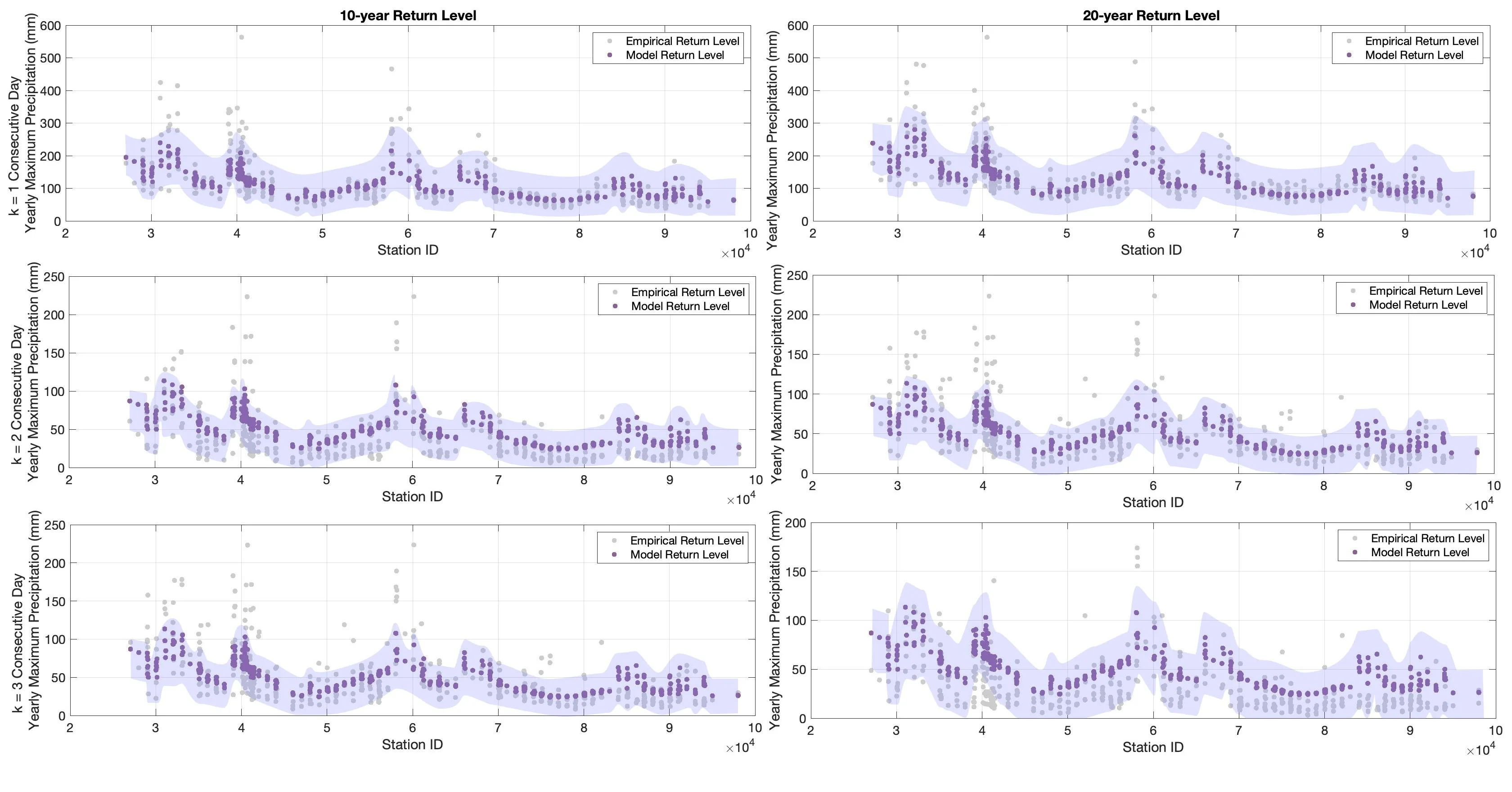
The scientists took data from 454 weather stations for 1984–2021 and, for each station, constructed a rolling minimum over a window of several days. This is a simple trick: for each day, take the weakest rainfall from that day and the two following days. If rain falls on consecutive days, the minimum is high; if the rain is isolated, the minimum drops. Then they applied standard statistics to these minima and added a sanity check: the shape of the distribution should not change as the window grows. If the shape drifts, an error has crept into the calculations.
It turned out that in Brisbane, heavy rains on average come in clusters of 2.25 days, which matches what was seen during the 2022 flood. The method also showed that El Niño's effect on three-day downpours is twice as strong as on one-day downpours, especially away from the coast. Now it is possible to more accurately assess flood risk for cities, farms, and insurance companies.
The 2022 Australian flood, caused by 2–3 days of heavy rain, caused 3.35 billion dollars in insured damage, making it the most expensive flood in the country's history.