The Dance of Three Bodies: New Orbits in Chaos ✛
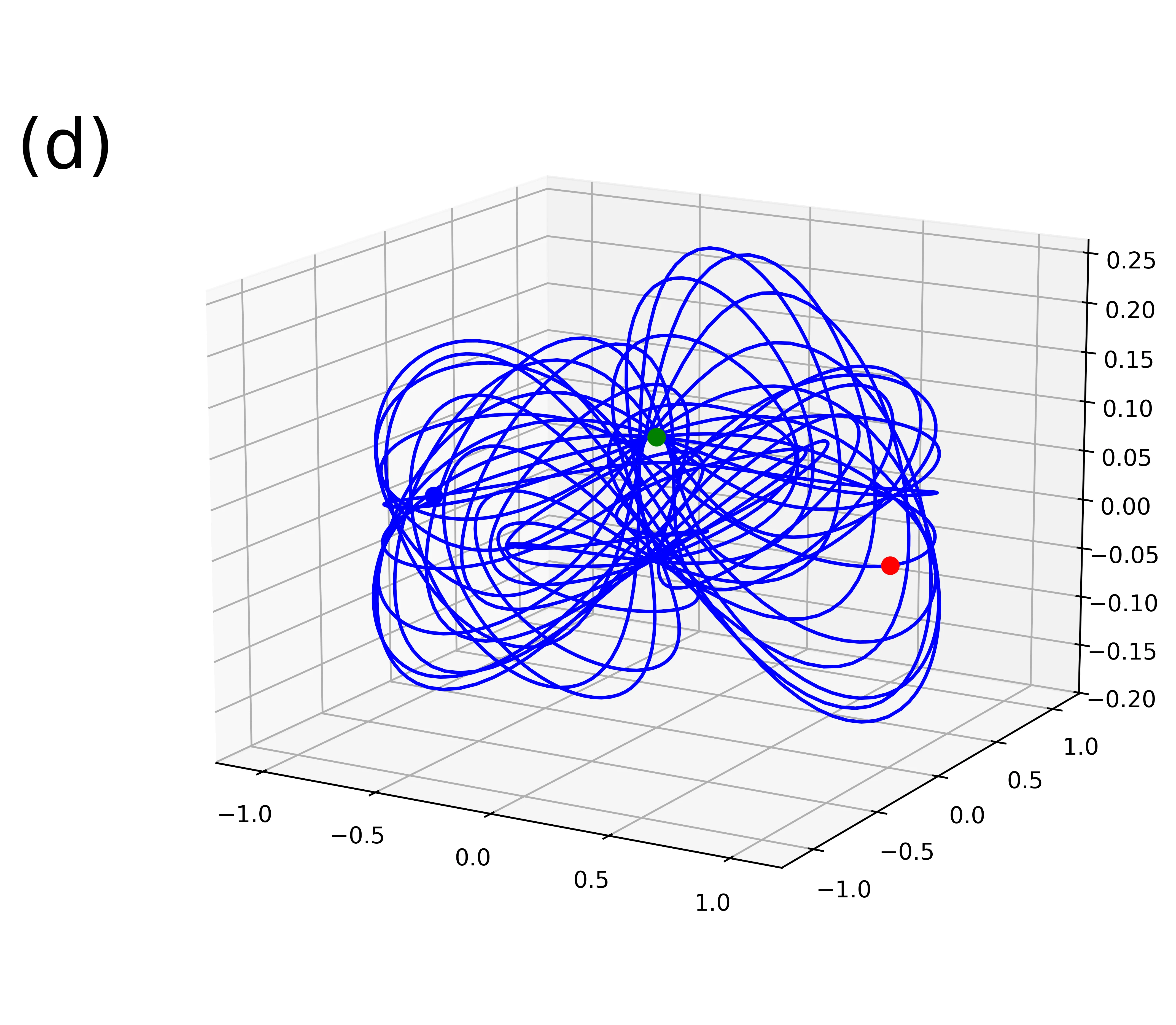
Three bodies in space under the influence of gravity usually dance wildly, like strangers on a dance floor. But occasionally their dance becomes strict — the figure closes and repeats for eternity. These periodic orbits were sought by Newton long ago, and today's scientists have managed to find thousands.
For two massive bodies and one light one, they collected 10,059 three-dimensional steps. Contrary to chaos, nearly 20% are stable: a nudge doesn't break the rhythm — the orbit would survive even a passing rogue star. Such high stability surprised even skeptics: it seemed triple systems should be chaotic from birth. Three equal bodies circle in 21 round dances, following a single curve. There are also 273 duets with a solo: two as a pair, the third on its own, but together they return. Such figures hide in any galaxy, even where black holes lurk. This is the key to why triple stars don't fly apart: they simply dance a perfect dance.
Stable triple star systems are rare, but one of them — Alpha Centauri — is our neighbor, though its dance is not so elaborate.
The unpredictability of three bodies inspired Liu Cixin's novel 'The Three-Body Problem,' where a civilization's survival hinges on the chaos of the gravitational dance.