Diamond DNA Chip: A Revolution in Rapid Diagnostics ✛
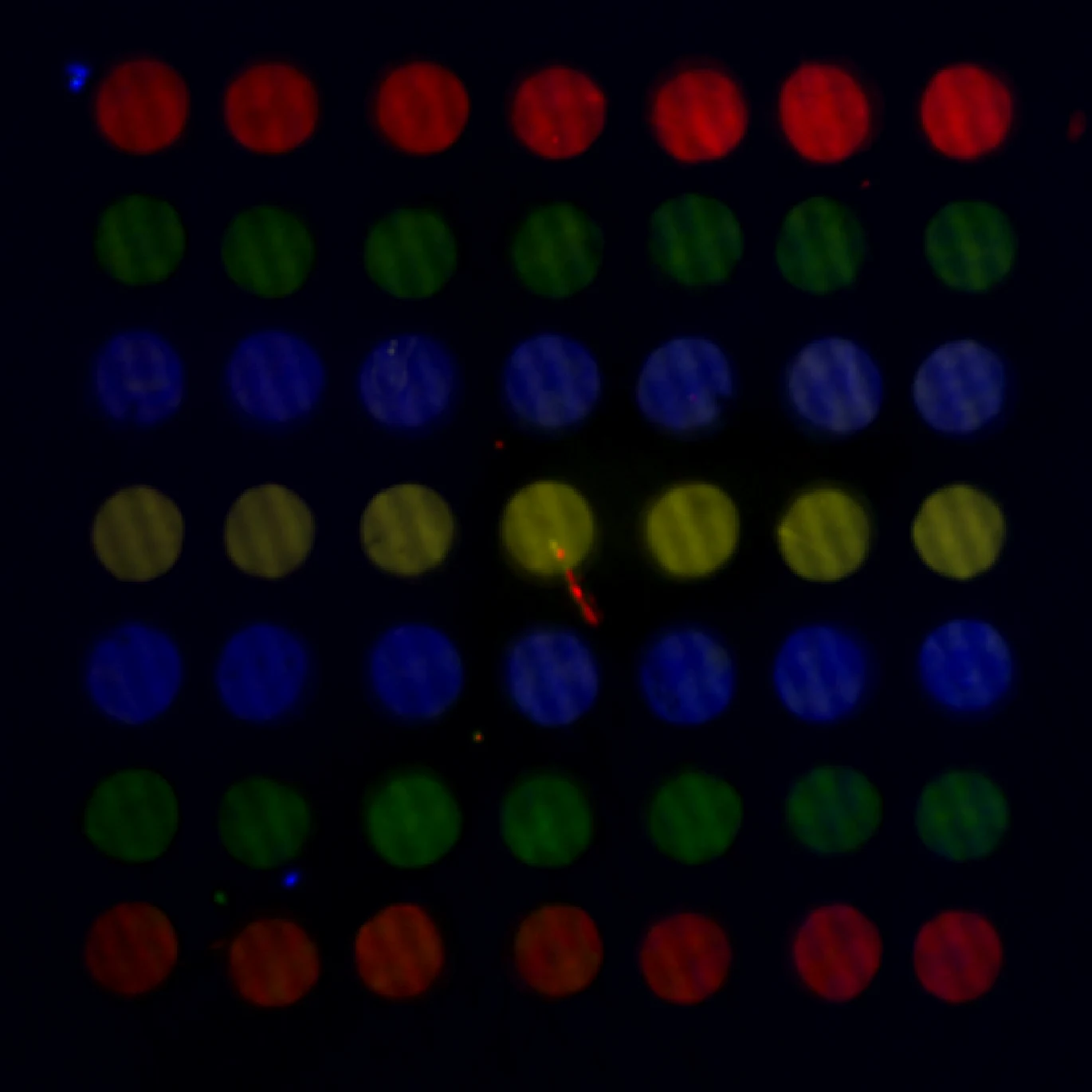
To find traces of disease in blood, you typically need bulky lab equipment that analyzes a sample for hours. This new diamond chip does it almost instantly. Inside tiny defects in the diamond sit magnetic needles — ultra-sensitive sensors that quiver at the slightest magnetic field. Scientists attached 49 short DNA strands to the surface, each with a magnetic weight — gadolinium ions. The same stuff injected for MRI scans works in reverse here: instead of boosting the signal, it creates noise.
When a target molecule shows up in a drop of sample, it snatches the weight from the matching DNA strand. The magnetic noise dies down, the needle settles, and its relaxation time (T₁) increases. An ordinary microscope picks up this shift, giving a clear "yes" for each of the 49 cells. The chip was already tested in aqueous solutions mimicking blood, and verified with fluorescence microscopy — accuracy is excellent. In the future, such fingernail-sized diamond plates could scan hundreds of biomarkers in a minute right at the patient’s bedside, with no electricity needed.
These same defects in diamond can act not just as sensors, but as qubits for quantum computers — two future breakthroughs in one crystal.
The tricorder from Star Trek takes a step closer: diamond quantum sensors promise instant diagnosis from a drop of blood.