How Acceleration Heats Up the Void ✛
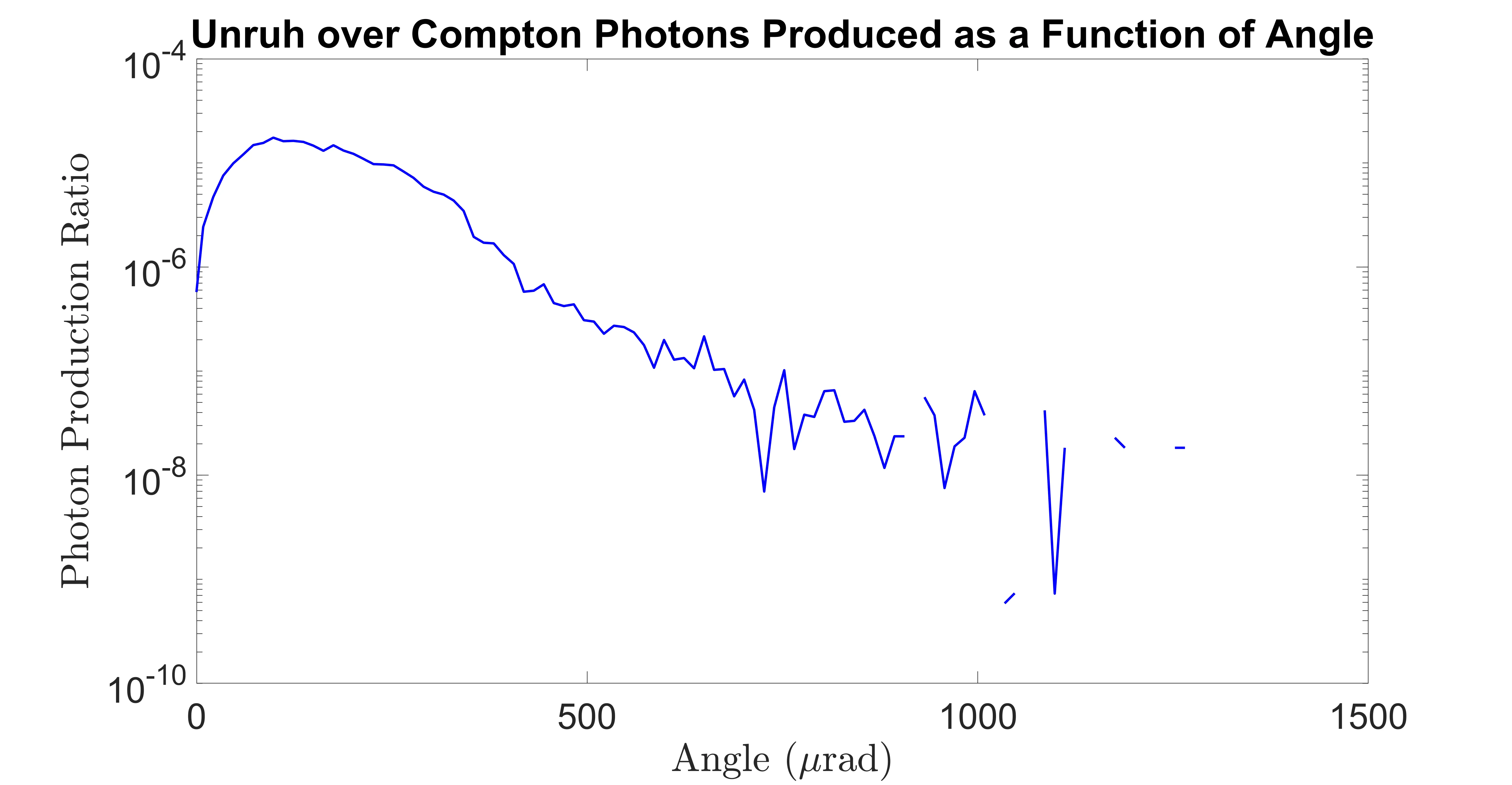
An empty room with nothing in it. Running through it turns on an invisible furnace — the air warms up. That's sort of how the Unruh effect works: to an accelerating electron, the vacuum feels warm. Physicists have simulated how to snatch this radiation from laser light. The main hurdle is ordinary Compton scattering, a bright background. But the spectrum of the Unruh thermal signal looks different when viewed at an angle of a fraction of a milliradian.
Surprisingly, any acceleration warms the void. Even a person standing still is bathed in this radiation, but its temperature is trillionths of a degree. Laser-accelerated electrons heat up space much more, and future experiments promise to detect the thermal response of nothingness for the first time.
The Unruh effect turns an accelerating rocket into a warm bath of particles: though it's vacuum outside, an astronaut inside would feel radiation as if from an invisible fireplace.