Simple

How a Laser Can Help Distinguish Water and Ice in Clouds ⚡ экспресс

Original: "Detection of isolated specular reflection for calibration of cloud thermodynamic phase estimation with quantum parametric mode sorting LIDAR"
arXiv:2509.17556 · 2025-09-22 · CC BY 4.0 · ⏱ 1 min · Quantum Physics Atmospheric and Oceanic Physics
A special quantum filter will teach satellite lasers to flawlessly tell water from ice in clouds.
Abstract

Scientists have figured out how to better determine what clouds are made of—water or ice—using laser radars in space. Usually, specular glare messes up measurements, but the new system deliberately amplifies it, like when you tilt a small mirror to catch a sunbeam. This way, you can 'see' the cloud structure more accurately. The question is, can this laser sunbeam tell us more about the weather than a regular radar?

Links in the knowledge graph 1

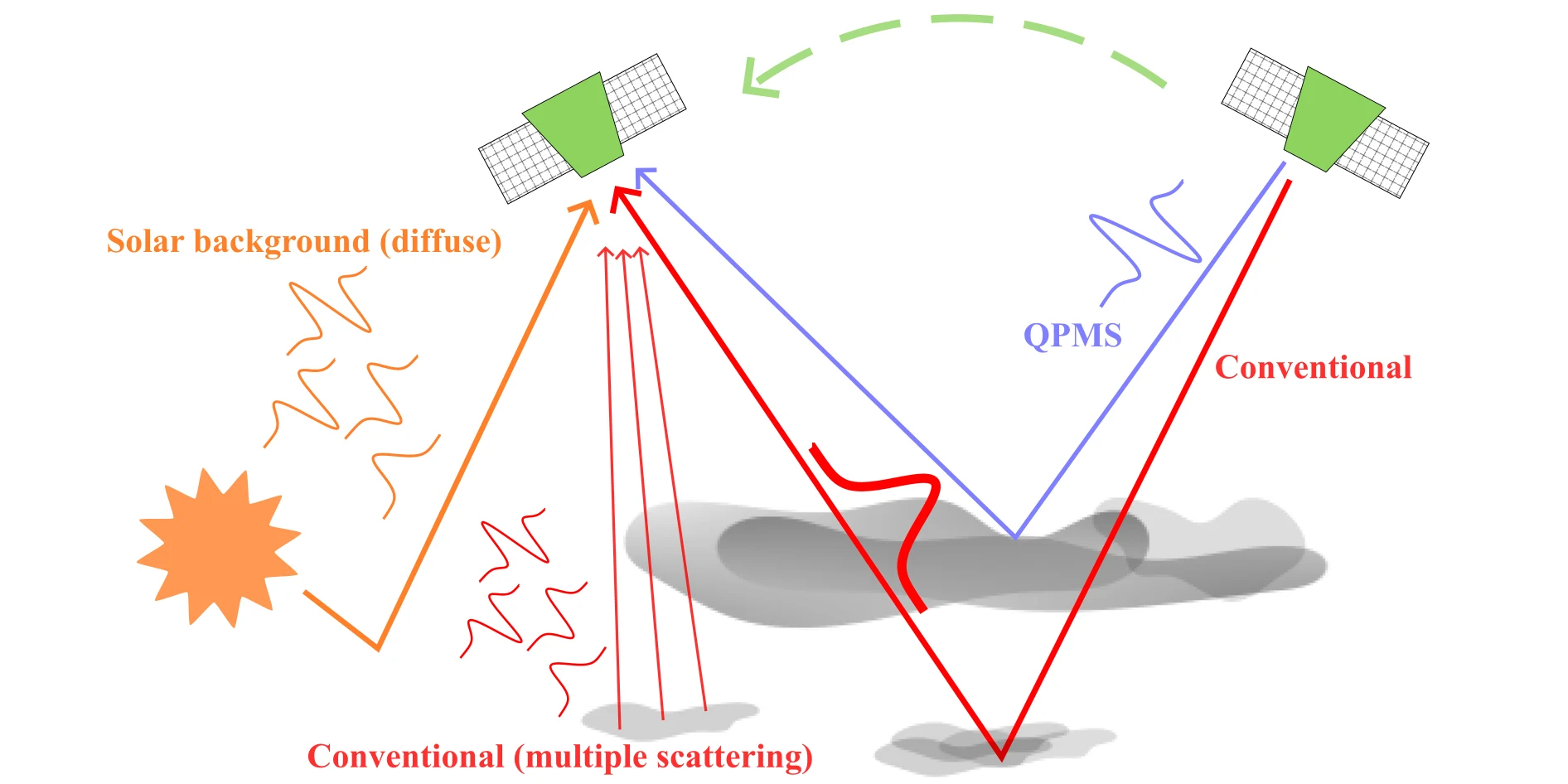
When a satellite laser beams downward at clouds, it often gets blinded by specular glare—especially if ice crystals form a smooth surface. This glare masks details, making it impossible to tell what's below: water or ice. Instead of fighting the blinding, scientists decided to use it. The quantum filter in the new lidar works like polarized sunglasses: it dampens scattered light, leaving only the direct mirror-like reflection. By comparing images taken with and without the filter, you can confidently distinguish droplets from crystals. Theoretical calculations confirm the method works even with a weak signal. Paradoxically, it's precisely that mirror-like quality that made lasers useless that became the key to solving the puzzle. In the future, this will allow satellites to peer into clouds without errors, improving weather forecasts and climate models.

🎯 The mirror reflection from icy clouds can be so strong that it completely 'blinds' satellite lasers, rendering them useless for analyzing cloud composition.

Scientists
Christian DopplerD. B. McLaughlinDidier QuelozMichel MayorR. A. RossiterJames Clerk Maxwell
Tags
Water photometry spectroscopy
Laws
Doppler effectMaxwell's equationsPlanck's lawPlanck–Einstein relationWien's displacement lawStefan–Boltzmann law
Original: arXiv:2509.17556 · CC BY 4.0 · bridge42worlds