Black Holes: A Rip Instead of an Event Horizon ✎ express
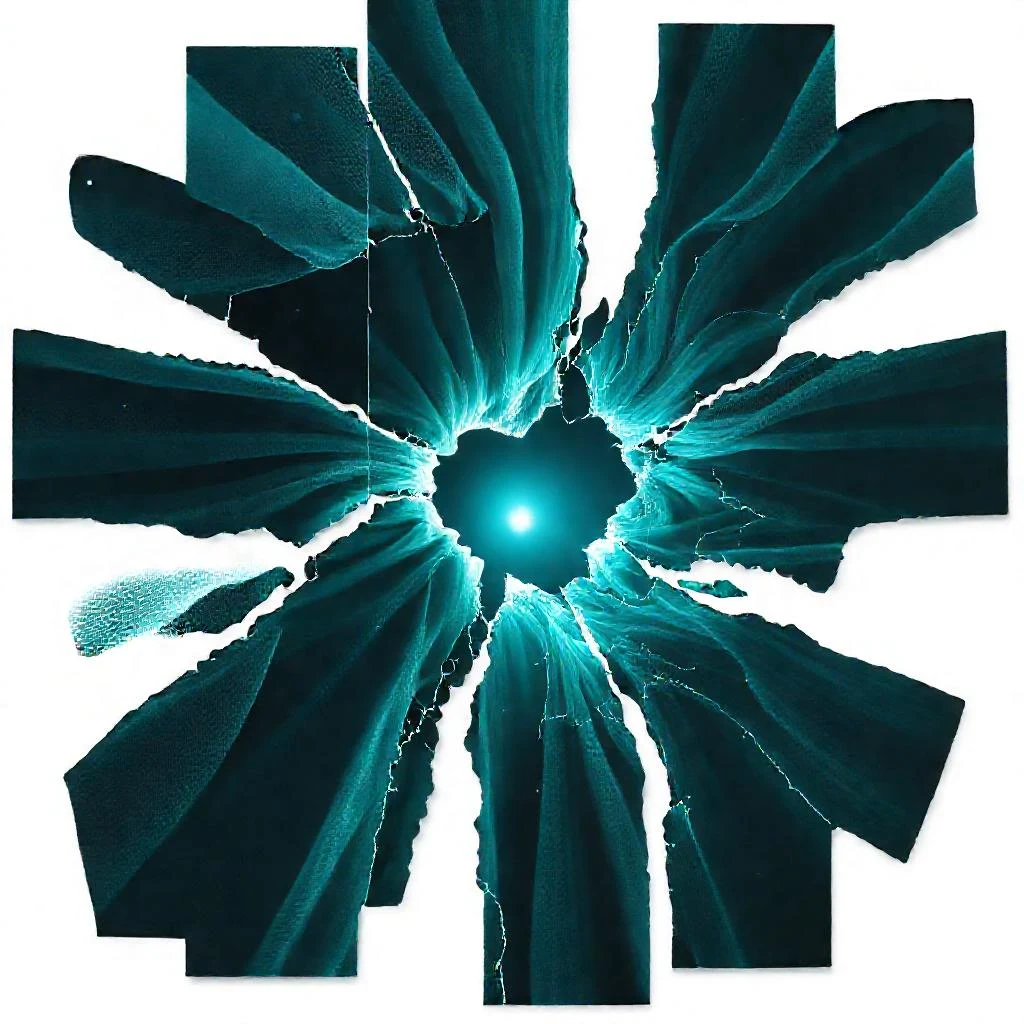
Typically, a black hole is a region from which nothing returns. But an exact solution to Einstein's equations, combining a solitary Schwarzschild hole with the Lemaître expansion of the universe, paints a different picture. Instead of an event horizon — that supposed boundary of no return — at a distance of twice the mass from the center, spacetime curvature becomes infinite. The fabric of space rips apart, forming not a passage, but a dead end.
Inside a radius of 8M/3, the rule forbidding energy from flowing faster than light is also violated. The black hole loses stability, and spacetime inside it ceases to exist as a coherent structure. This calls into question the usual image of black holes in an expanding universe — after all, this solution is the only exact one where both effects are accounted for without simplifications.
To preserve smoothness, physicists propose two paths: switch to a theory of conformal gravity, or replace the hole's constant mass with a function that depends on radius. In both cases, the rip is smoothed out, giving black holes back an interior without catastrophe. So, real black holes might turn out to be far more exotic than we thought.
The event horizon is often drawn as an invisible sphere, but in this solution, it becomes the place where the fabric of reality tears off.
In 'Interstellar,' the hero crosses the event horizon; according to this solution, he would face an instant end of space — as if the plot cuts off mid-sentence.