Listening to the Shudder of Space: The Nano-Mirror Experiment express
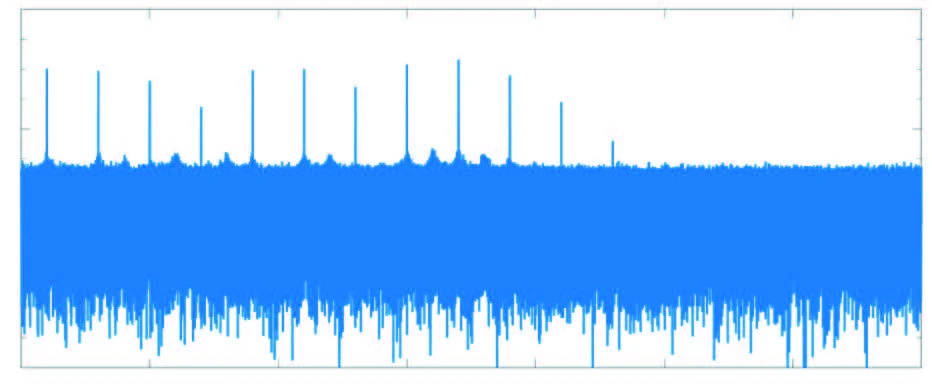
Two great theories describe reality: one — how massive bodies cause curvature of space, the other — the Standard Model — governs elementary particles. Reconciling them remains elusive, like trying to describe an ocean storm in the language of a diamond lattice. The key is likely hidden at the Planck scale, where space resembles a boiling foam.
Experimentalists have built a tuning-fork detector. It’s a nano-mirror weighing billionths of a gram, vibrating at a precise frequency. If space does foam, the rhythm of its oscillations will subtly shift. A laser beam helps detect this deviation: like a guitar pickup, it amplifies the signal many times over.
This device won’t just test a theory. It will become the first instrument capable of playing the symphony of spacetime, and perhaps lead to the long-sought unification of gravity and the micro-world.
The Planck scale is as small compared to a grain of sand as that grain is small compared to the entire visible Universe.
A similar principle of “listening” to the shudder of space is described in Hannu Rajaniemi’s novel “The Quantum Thief,” where gravitational detectors track the ripples from objects passing through the fabric of existence.