Simple

Quantum Chip Outperforms Supercomputers: Two Hours vs. Years ⚡ экспресс

Original: "Heuristic Quantum Advantage with Peaked Circuits"
arXiv:2510.25838 · 2025-10-29 · CC BY 4.0 · ⏱ 1 min · Quantum Physics
An experiment on a quantum processor showed it solves a specialized task in hours, while classical computers would take years.
Abstract

Scientists ran a special program on a quantum computer that gives the right result in just a couple of hours—like instantly finding the one key that fits from a pile. Regular supercomputers would take years to do the same. This is another step toward quantum supremacy. What if this technology one day protects our data?

Links in the knowledge graph 1

The task resembles a giant maze with a single exit among billions of dead ends. A conventional computer checks each corridor step by step—taking centuries. A quantum processor launches a wave that seeps through all paths at once. The correct route echoes back, amplifying, and the answer is found in hours. That’s exactly how the “peak” circuits worked in the new experiment.

The result is extremely ordered—the maze seems to collapse into a straight line. This is a state with vanishingly low entropy.

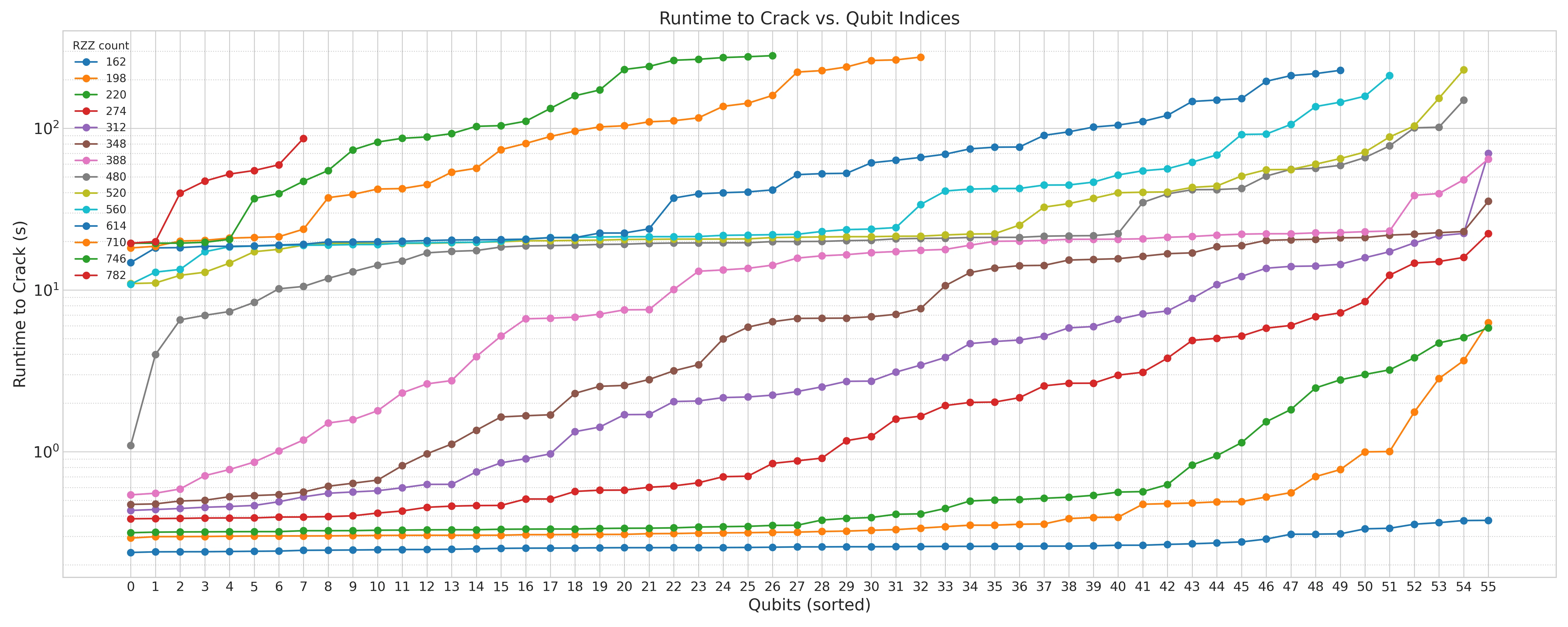
With each additional fork, the quantum chip’s advantage grows not just quickly, but frighteningly so—like the expansion of the Universe accelerates galaxies. Surprisingly, the quantum device’s answer is probabilistic: it guesses the path with high accuracy but doesn’t guarantee it. Yet that accuracy is enough to make classical verification take years. In the experiment, the most complex circuit had 2,000 forks. H2 found the exit in two hours; supercomputers would need years.

The resulting ordered code could serve as the basis for encryption that’s resilient even against attacks by other quantum machines—this breaks the standard model of cryptography.

🎯 The most complex circuit involved 2,000 operations—like an orchestra of 2,000 instruments playing in unison.

Scientists
Adam RiessBrian SchmidtEdwin HubbleGeorges LemaîtreMaarten SchmidtSaul Perlmutter
Tags
entropy expansion of the universe Standard Model
Laws
Hubble's lawsecond law of thermodynamicsNoether's theoremBekenstein-Hawking entropyBoltzmann distributionfirst law of thermodynamics
Original: arXiv:2510.25838 · CC BY 4.0 · bridge42worlds