How a Whirlpool in a Cup Becomes a Black Hole Bomb express
When liquid is swirled in a cup, a vortex with an empty center forms. In this empty core, waves find a trap: bouncing off the walls, they siphon energy from the vortex and grow like a flame along a fuse — each wave stronger than the last, until a surge breaks loose.
The main surprise of the experiment: the best desktop analogue of a black hole turned out to be a vortex with a completely empty center. It is precisely the emptiness inside, like in a tornado, that makes its behavior almost cosmic. Thus, a simple pot of water becomes a portal to distant abysses.
Original abstract
as written by the authors arXiv:2511.05351
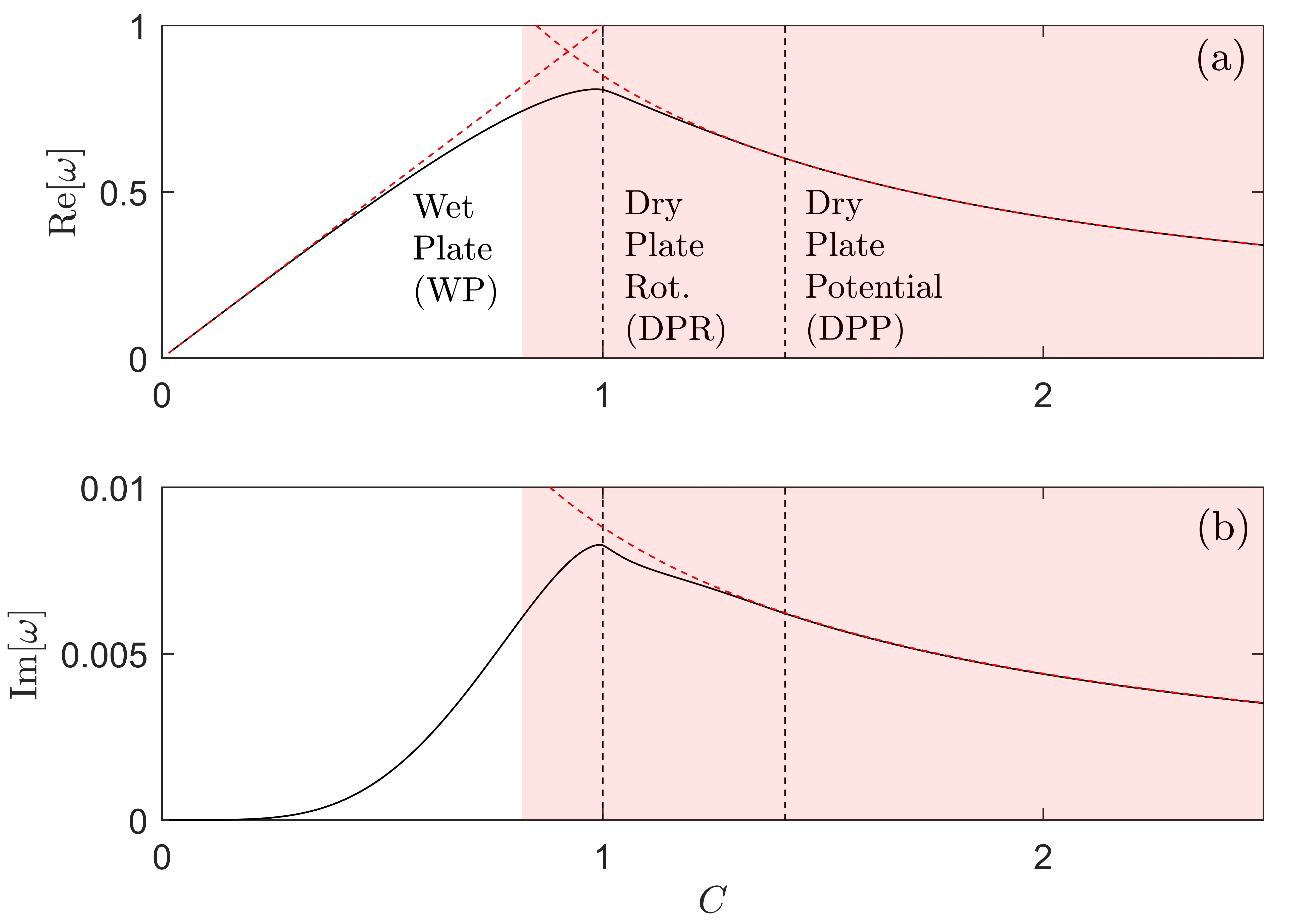
Draining vortices provide a powerful platform for simulating black hole phenomena in tabletop experiments. In realistic fluid systems confined within a finite container, low-frequency waves amplified by the vortex are reflected at the walls, rendering the system unstable. This process, known in the gravitational context as the black hole bomb, manifests as a sloshing motion of the free surface. The analogy, however, becomes more nuanced when a realistic vortex core with a non-singular vorticity distribution is considered. We investigate this by analysing a non-draining Rankine vortex in the shallow-water and inviscid limits. At low circulation, the sloshing corresponds to an instability of the vorticity field, whereas at high circulation where fluid is expelled from the vortex core, the destabilising mechanism coincides with that of the black hole bomb. Our variational framework distinguishes the energetic contributions of vorticity and irrotational perturbations, offering new insight into the rotating-polygons instability reported by, e.g. Jansson et al. (2006). From the analogue-gravity perspective, we identify hollow core vortices as an optimal regime for exploring black-hole-like instabilities in fluids.
Tornadoes and waterspouts exactly replicate the structure of black holes: their empty center acts as a trap for waves — once they reflect, an avalanche begins.