How a Whirlpool in a Cup Becomes a Black Hole Bomb express
Original: "When is a sloshing vortex an analogue black hole bomb?"
An ordinary vortex in a glass of water turned out to be a miniature copy of a black hole bomb.
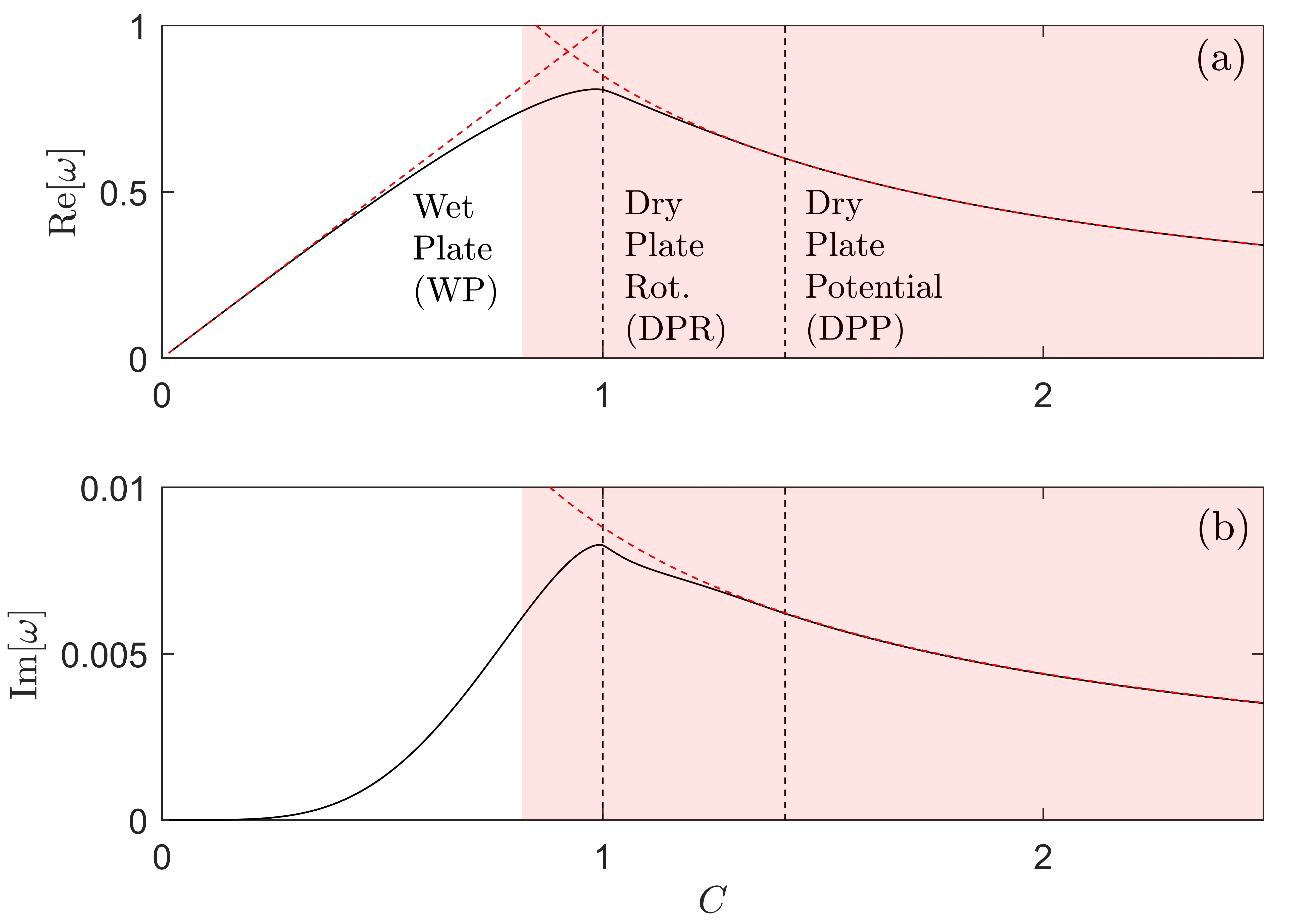
When liquid is swirled in a cup, a vortex with an empty center forms. In this empty core, waves find a trap: bouncing off the walls, they siphon energy from the vortex and grow like a flame along a fuse — each wave stronger than the last, until a surge breaks loose.
Astrophysicists have described the same chain reaction around black holes. There, ripples in spacetime bounce between the horizon and the curved edges, amplifying repeatedly — that's why this scenario is called a bomb.
The main surprise of the experiment: the best desktop analogue of a black hole turned out to be a vortex with a completely empty center. It is precisely the emptiness inside, like in a tornado, that makes its behavior almost cosmic. Thus, a simple pot of water becomes a portal to distant abysses.
Tornadoes and waterspouts exactly replicate the structure of black holes: their empty center acts as a trap for waves — once they reflect, an avalanche begins.
Scientists
Stephen HawkingJacob BekensteinFritz ZwickyBernhard RiemannJoseph WeberKarl Schwarzschildvortex lattice
quantum vortex
non singular black hole
quantum vortices
analog black hole
turbulence
vorticity
wormhole resonance
earthquake
scalar perturbations
scalar particle
innermost stable circular orbit
inner horizon
superfluid vortices
hawking radiation mechanism
critical collapse
gravastar
gravitational atom
accretion disk wind
obstacle