The Moon Assembled from a Swarm of Earth's Fragments express
When countless asteroids pummeled the young Earth, they tore chunks from its mantle. These fragments spiraled in a cosmic disk around the planet and, like a snowball in a blizzard, fused into the Moon.
The same scenario applies to Pluto's moon Charon and hundreds of binary asteroids in the Solar System. Importantly, fragments moving in the same direction as the disk's rotation stayed in orbit and contributed to growth, while those coming the opposite way fell back. Thus, some material destined for the Moon scattered over Earth: we walk on rocks that once traveled through space.
Original abstract
as written by the authors arXiv:2512.22375
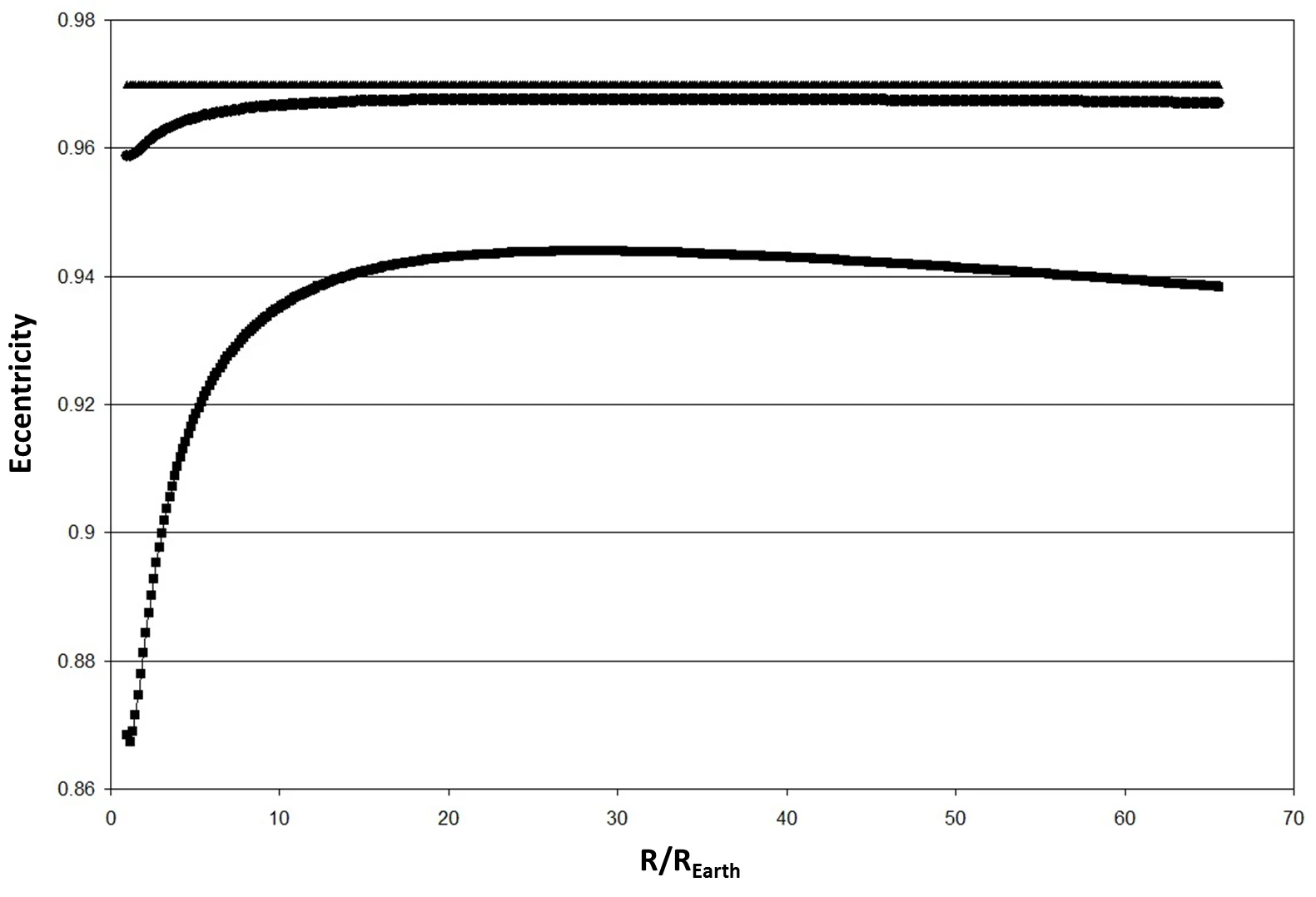
The proposed multi-impact model explains the formation of the Moon, Charon, and binary asteroids without invoking catastrophic cosmic events. The main elements of the new model are as follows: a. A primordial, low-mass proto-satellite disk with prograde rotation existed around the proto-Earth. b. Most of the lunar material was ejected from Earth mantle by numerous impacts of large asteroids. This naturally explains the lunar iron deficiency. c. Collisions between ejecta and particles of the prograde proto-satellite disk stabilize the fragments on satellite orbits. We demonstrate the high efficiency of the multi-impact mechanism: ejecta on prograde orbits readily merges with the prograde proto-satellite disk, whereas retrograde ejecta falls back onto Earth.
The Moon is iron-poor, which long didn't fit the single-impact hypothesis: such a collision would have mixed crust and mantle material, enriching the satellite. The new multi-impact model naturally solves this puzzle.