Popular

Rogue Planet Gave Itself Away with Warped Light ⚡ экспресс

Original: "KMT-2024-BLG-0816/OGLE-2024-BLG-0519 -- A Microlensing Event with Candidate Free-Floating Planet Lens and Blended Light"
arXiv:2601.00325v1 · 2026-01-01 · CC BY-SA 4.0 · ⏱ 1 min · Exoplanets Galaxies
Astronomers found a wandering planet by how its gravity momentarily amplified the light of a distant star.
Abstract

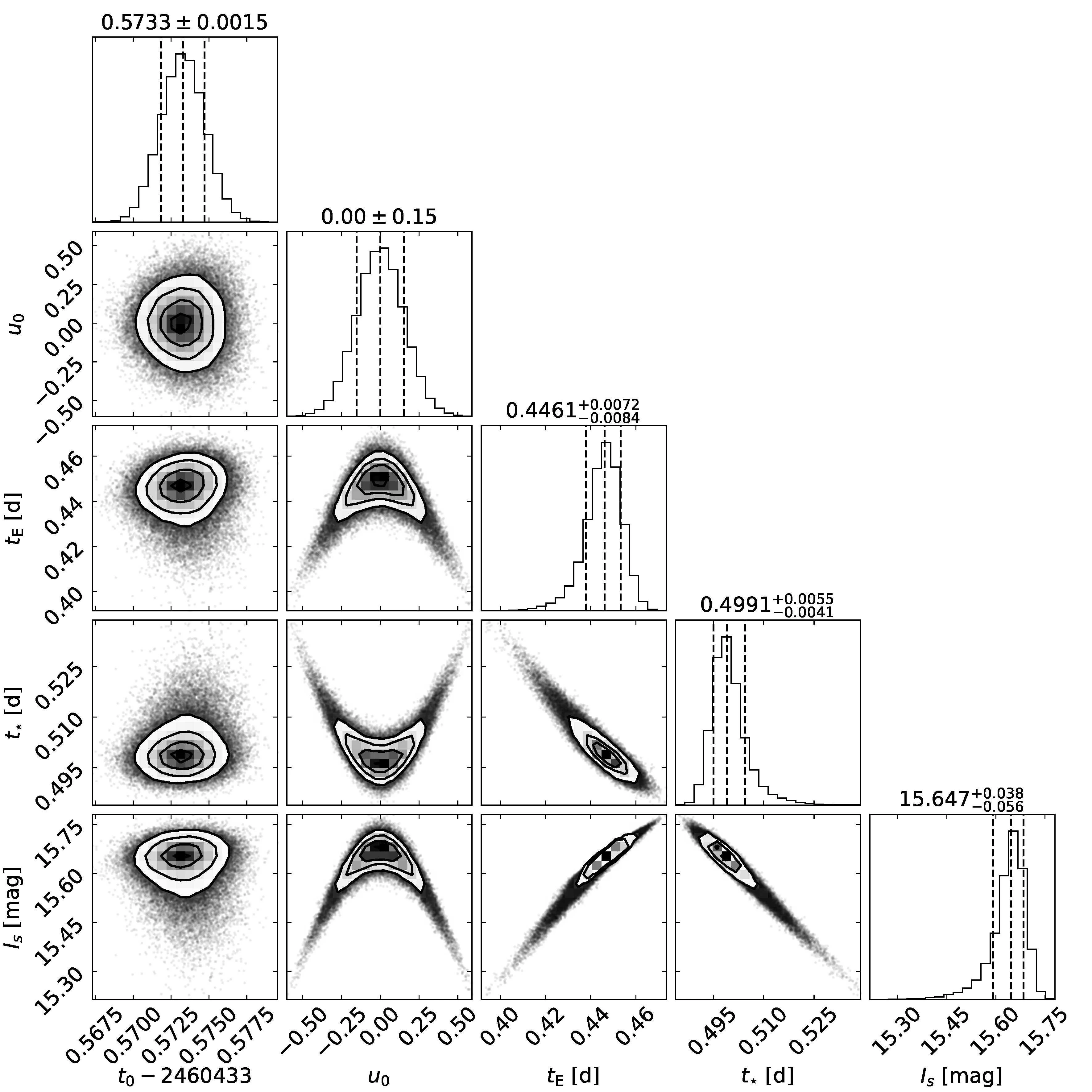
Astronomers have spotted a free-floating planet—no host star attached—in the microlensing event KMT-2024-BLG-0816. This one's special because of the finite-source effect (the lensing object actually felt the disk of the background star) and a bunch of extra blended light from some unresolved neighbor. It’s the only known free-floating planet with a finite-source effect that also has unresolved blended light. That mixed light might be coming from a star the planet orbits—meaning it's not truly alone, just very distant.

Links in the knowledge graph 1

📄 Showing the "Simple" version — "Popular" is not ready yet. Add it to favorites to help prioritize it.

The lone planet KMT-2024-BLG-0816, one of many free-floating planets, was discovered when its gravity acted like a magnifying glass for a few hours. Passing in front of a distant star, the invisible body warped space like a glass marble, and boosted the background light. Thanks to a rare coincidence, the planet passed so close to the line of sight that telescopes could observe how the brightness of different parts of the stellar disk changed — the lens slid across its surface.

There may be more rogue planets in the Galaxy than stars. Loneliness is a common fate for worlds.

A faint stray light added to the mystery: it doesn't look like starlight, but could be the ghost of its former host. If confirmed, for the first time a lone planet will be seen together with its parent star — albeit separated by trillions of kilometers. Subsequent brightness measurements in different colors will test this hypothesis.

🎯 Gravitational lensing was predicted by Einstein back in 1936, but he thought it impossible to detect.

🎬 In science fiction, rogue planets are icy worlds holding secrets of ancient civilizations, like in Asimov's novel 'Nemesis'.

Scientists
Christian DopplerD. B. McLaughlinDidier QuelozMichel MayorR. A. RossiterDavid Charbonneau
Tags
exoplanet photometry spacetime curvature
Laws
Doppler effectKepler's third lawStefan–Boltzmann lawKepler's first lawequivalence principleKepler's second law
Original: arXiv:2601.00325v1 · CC BY-SA 4.0 · bridge42worlds