Ion Transistor in a Nanopore express
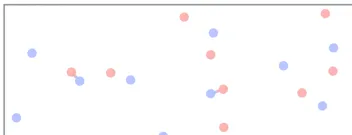
In a narrow slit between two plates, ions don't behave like free particles but like a crowd in a packed bus: pressed tightly together, they form dense clusters. This very property, the ability of ions to bunch up in extremely confined spaces, underpins a new mechanism for controlling ion transport.
Researchers studied ion behavior in two-dimensional nanochannels just a few atoms wide. They found that mechanically compressing or stretching the channel changes not only its shape but also the density of charged particles inside. This effect, dubbed the 'force ion transistor,' allows control over ion flow just as gate voltage controls current in a conventional transistor.
Such 'ionic logic' could underpin devices that process mechanical signals — for instance, in neuromorphic systems that mimic the brain. Instead of electrons, ions; instead of wires, wet nanopores. And this is no longer science fiction but a calculation backed by microsecond-scale simulations.
In living cells, mechanosensor proteins open ion channels when the membrane stretches — for example, in our muscles and inner ear.
In the TV series 'Stargate Universe,' an alien ship was controlled by streams of charged particles in microscopic channels, a distant echo of ionic logic.