Black Holes as Ghost Particle Accelerators express
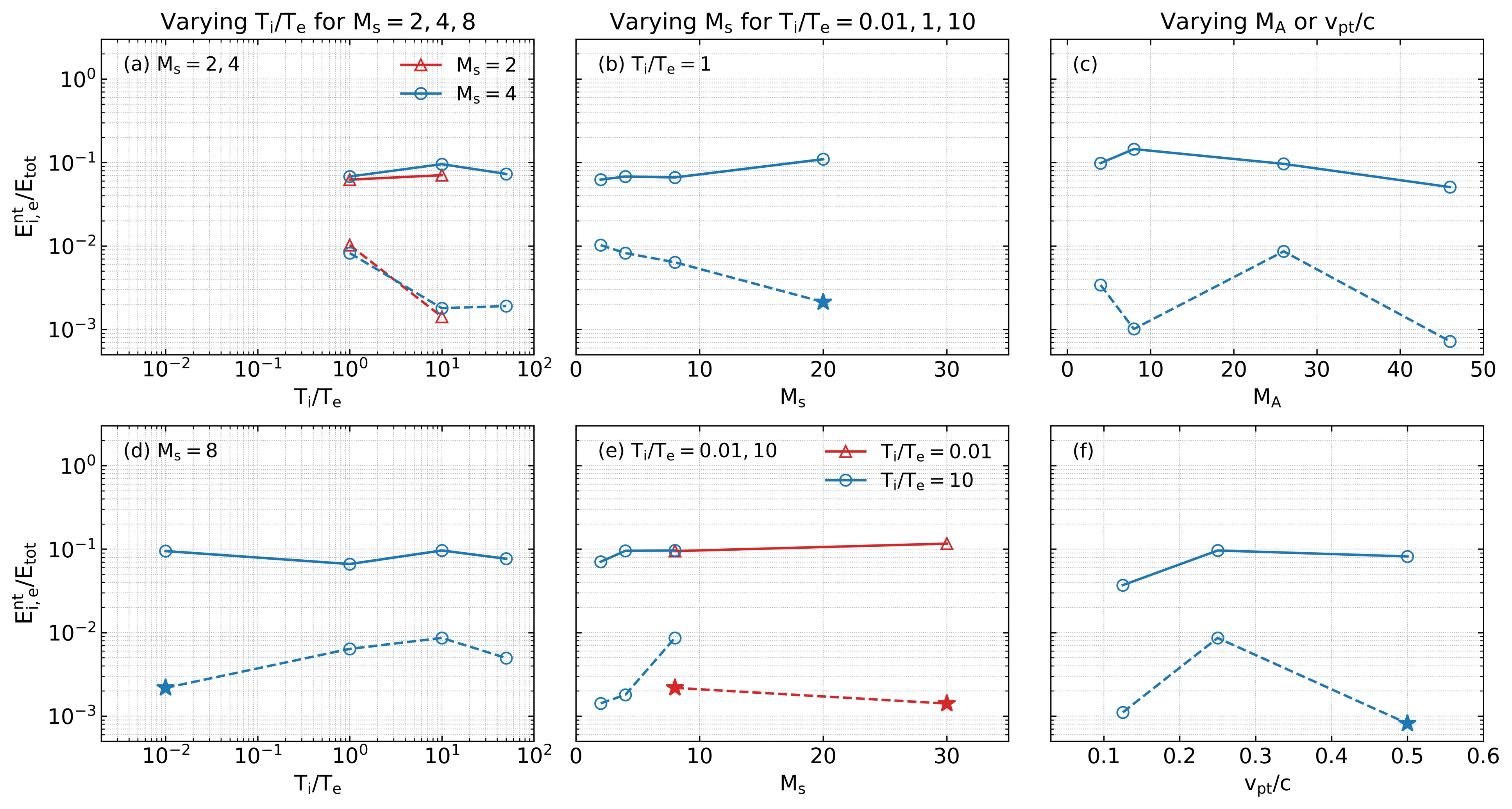
A new study confirms: shock waves in plasma around supermassive black holes at the cores of galaxies act like ocean swells, shoving protons to near-light speeds. Even a weak wave passes on a tenth of its energy, like a gentle surf launching a surfer into space. Bouncing off magnetic fields, protons gain a million times the energy of the Large Hadron Collider, and then spawn neutrinos — particles that ghost through planets like they’re nothing.
But why do we spot neutrinos from galaxy NGC 1068, yet no gamma rays? The gamma radiation born in the wave drowns in plasma depths, like sunlight in murky water. The black hole’s corona blocks light, but to neutrinos it’s barely a ripple. The accelerator plays favorites: electrons hardly get a kick, while protons rip loose as the lead racers.
Original abstract
as written by the authors arXiv:2601.01999v2
Recent observations by the IceCube Neutrino Observatory have revealed a significant excess of high-energy neutrinos from nearby Seyfert galaxies, such as NGC~1068, without a corresponding flux of high-energy gamma-rays. This suggests that neutrinos are produced via hadronic interactions in a region opaque to gamma-rays, likely a hot corona surrounding the central supermassive black hole. However, the mechanism responsible for accelerating the parent protons to the required energies ($$\sim 100$$ TeV) remains an open question. In this study, we investigate diffusive shock acceleration (DSA) in active galactic nucleus (AGN) coronae using a suite of one-dimensional Particle-in-cell (PIC) simulations spanning a broad range of plasma parameters. We find that DSA is a robust and efficient mechanism for proton acceleration, consistently channeling approximately 10\% of the shock's kinetic energy into non-thermal ions, even for shocks with sonic Mach number as low as $$ M_s \approx 2$$. In contrast, the efficiency of electron acceleration is highly variable and less efficient ($$<1\%$$) in our parameter survey. These findings provide strong, first-principles support for the hadronic models of neutrino production in AGN and offer quantitative constraints that can explain the observed gamma-ray deficit.
Cosmic shock waves can accelerate particles to energies a million times beyond the reach of the Large Hadron Collider, the most powerful accelerator on Earth.
In Stanisław Lem’s novel “His Master’s Voice,” neutrinos are the perfect medium for interstellar communication because they can pass through anything.