Dust Beaten by Invisible Waves express
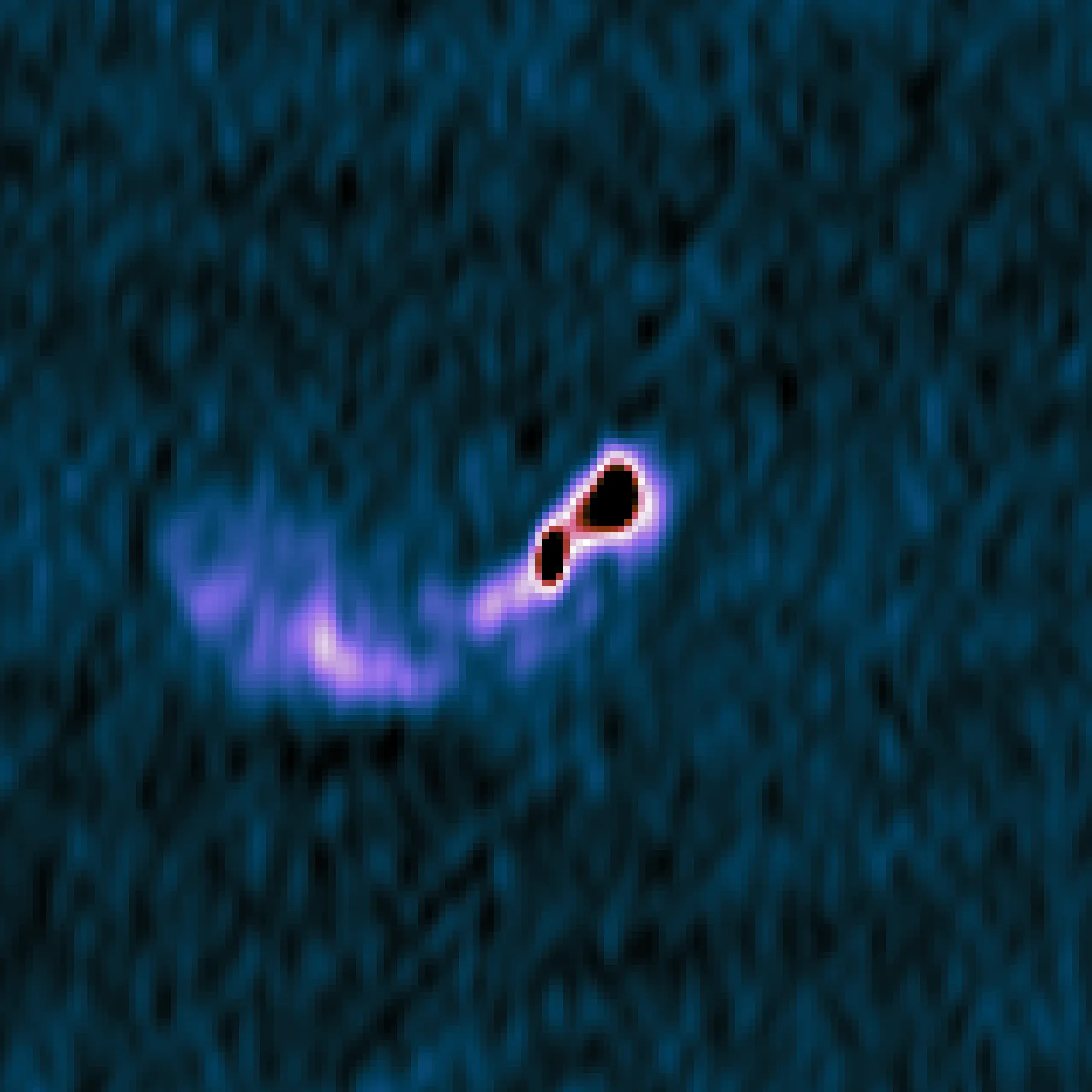
At the center of nearly every large galaxy sits a supermassive black hole. It pulls in gas and dust, and a bright disk swirls around it. But the James Webb Telescope looked further out — into a region where the black hole's light is weaker, yet the dust still glows.
Astronomers examined eight galaxies. In four of them, the dust extends hundreds of light-years from the center, like long sleeves. The dust emits heat, and its spectrum reveals the temperature. It turns out the dust is hotter than it should be if only the black hole's light were heating it. Even with the most generous estimate, the light falls short.
So what else heats the dust? The scientists tested the idea of shock waves. When gas in a galaxy collides at enormous speeds, it compresses and heats up, like the air in front of a speeding airplane. Such waves strike the dust grains and make them shine brighter. Calculations showed that shock waves traveling at 200–400 kilometers per second could easily supply the missing heat.
So the dust at the centers of galaxies is not just a passive speck warmed by the black hole. It feels the blows of invisible waves. And these impacts may be the main source of its heat.
Dust grains at the center of a galaxy can be hotter than the surface of Venus, the hottest planet in the Solar System.