Cold gas in interstellar space — primarily molecular hydrogen (H₂) at temperatures of 10–50 K — is the raw material from which stars and planets form. It collects in vast clouds, often mixed with dust, and collapses under gravity to ignite new stars. Because H₂ emits almost no radiation at these temperatures, astronomers trace it indirectly throughcarbon monoxide (CO) or other molecules that glow in radio wavelengths.
History
The existence of cold interstellar gas was inferred in the early 20th century from absorption lines in starlight, but its molecular nature was confirmed in the 1960s with the discovery of OH and then CO in the 1970s, which became the standard tracer.
How it works
Cold gas clouds are dense enough to shield themselves from ultraviolet radiation, allowing molecules to form and survive. The gas cools by emitting rotational lines of molecules like CO, which radiate energy at millimeter wavelengths. Radio telescopes detect these emissions, mapping the distribution and motion of the gas. When a cloud becomes gravitationally unstable, it fragments into cores that collapse into protostars.
In practice
Cold gas observations are used to map star-forming regions in our galaxy and others, and to understand the initial conditions for planet formation, including the chemistry of prebiotic molecules.
Fun fact
Cold gas clouds contain not just hydrogen but also complex organic molecules like methanol and even simple sugars, formed on the surfaces of dust grains at cryogenic temperatures.
At the center of nearly every large galaxy sits a supermassive black hole. It doesn't just devour infalling gas; it also blasts some of it back out in powerful jets. These jets act like giant pistons, shoving the surrounding gas and heating it. Astronomers have long suspected that this is how black holes keep galaxies from cooling into cold star factories.
Around every galaxy lies an invisible corona of cold gas. It extends far beyond the stellar disk and serves both as a fuel depot for new stars and as a graveyard for ejected material.
Two stars, AF Lep A and ε Indi A, have become the focus of close attention. Using the GHOST spectrograph on the Gemini telescope, astronomers split their light into colors and, from absorption lines, determined how much carbon, oxygen, sulfur, and thirteen other elements are in the stars' atmospheres.
Two spinning tops whirl so close they nearly touch. One is scorching blue, the other dim white. Together they complete a full orbit in twenty hours. This is the pair Feige 64: a blue star with a mass of just a third of the Sun's, and a white dwarf, the cooled core of a former star, one and a half times heavier than our Sun.
The blue star seems too hot for its mass.
In the coldest, darkest corners of space, dust grains get covered in ice, like a window on a frosty day. This ice isn't just frozen water: it also contains carbon monoxide and carbon dioxide. From such ice, comets and planets may eventually assemble. But until now, it was unclear how the dust grain itself affects the ice that forms on it.
Around young stars, flat clouds of gas and dust swirl: these are future planetary systems. Inside some of them, a void gapes: the dust and gas have been swept away, as if someone thinned out the middle of a vinyl record.
In a dense molecular cloud, at the edge of glowing gas, an invisible assembly line is at work. It takes simple scraps — single atoms and light pairs — and glues them together step by step into long carbon chains and rings. The first piece of this assembly line has long eluded our eyes. Now it has been found.
In dark interstellar clouds where new stars are born, chemistry starts with a tiny particle — the trihydrogen ion (H₃⁺). It collides with other atoms and sets off a cascade of reactions that build ever more complex molecules. For a long time, it was thought that the main reaction producing it, H₂⁺ colliding with H₂, only happens in the gas phase.
The five-hundred-meter FAST radio telescope picked up a signal at the 21-centimeter wavelength — the telltale glow of cold hydrogen. The signal came from a cloud named Cloud-9. It hangs in space near the galaxy M94, but it contains not a single star.
In the first moments after the Big Bang, the universe expanded at an incredible rate — a phase known as inflation. Even the vacuum was restless back then: quantum jitters shook the fields like wind rustling through a wheat field.
In the furnace of star formation, the heat reaches 900 degrees Celsius, like a glowing blast furnace. It is in this hellish heat that cosmic crystals are born. Astronomers have for the first time caught the moment when crystalline dust appears right during an accretion flare (when the star gobbles up surrounding gas) at the very young star EC 53, still cocooned in dense gas.
In the black depths of space, on the surfaces of tiny icy dust grains, a quiet construction is underway. There, where temperatures drop to near absolute zero and harsh radiation abounds, the ordinary amino acid glycine, the simplest protein building block, links up with itself.
A disk of gas and dust spins around the young star HV Tau C, nearly edge-on to us. The James Webb Space Telescope examined its spectrum and detected the glow of hot molecular hydrogen (H₂). This revealed a wide, bipolar wind blasting from the inner regions far beyond the disk.
The cosmos resembles silk fabric with threads of the dark web showing through. We only glimpse tiny swatches of the real tapestry — through telescopes, in actual galaxy catalogs. To separate the fundamental signal from astrophysical noise in the cosmic pattern, statistical analysis demands thousands of plausible sketches — synthetic sky maps.
When two neutron stars, the ultra-dense cores of dead stars, collide, a kilonova is born: an explosion a thousand times brighter than a typical nova. This is the universe's true smelting works. In the scorching cloud racing outward at near-light speeds, a furious flux of neutrons transmutes atomic nuclei into gold, platinum, osmium.
Tiny seeds of life can cross the black void on icy wanderers like comet 3I/ATLAS. The James Webb Space Telescope found water and methane on it for the first time, and light analysis revealed an unusual gas composition.
Dark matter is the invisible scaffold that holds galaxies together. But how did it come to be? The standard answer: particles of dark matter once stopped colliding and "froze out" in the amount we see today. However, there's a trickier path — UFO, or ultra-fast freeze-out.
Here, everything is like coffee that cools down and then heats up again as you carry it through a cold corridor.
The Universe at 700 million years old was a noisy construction site, just beginning to light up. Telescopes caught a signal from that distant epoch: the galaxy REBELS-25, massive and full of stellar fuel.
The James Webb Space Telescope peered into a disk of gas and dust around a young star where planets are born, and for the first time spotted ice made of heavy water. This water is not ordinary: in its molecules, regular hydrogen is replaced by deuterium, its heavier sibling.
Two stones fall into a pond. Ripples spread from each, but when they collide, there's a splash and a short, sharp clap. That's roughly what the merger of two neutron stars sounds like: those ultra-dense remnants of exploded stars.
In the heart of the Milky Way, in the cloud G+0.693, astronomers caught a sweet signal — emission lines of erythrulose, a simple sugar with four carbon atoms and four oxygen atoms.
The James Webb space telescope peered into an era when the Universe was less than a billion years old and discovered hundreds of strange objects there. Tiny yet dazzlingly bright, they glowed a deep red — like burning coals scattered across the black velvet of space.
Using the JWST space telescope, astronomers conducted a chemical analysis of the centaur Chiron, an icy body from the fringes of the Solar System. It turns out its gas activity resembles a layered cake. Carbon dioxide evaporates from the surface, forming a top crust.
In the crowded center of the galaxy, two stars orbit so close together that one strips the outer layers off the other, like wind blowing off a coat. What remains is a hot helium core, a star without a hydrogen envelope.
A supernova is the final explosion of a massive star, scattering its material over light-years. Inside the expanding shell, a neutron star remains, and the shell itself continues to plow through interstellar gas for thousands of years.
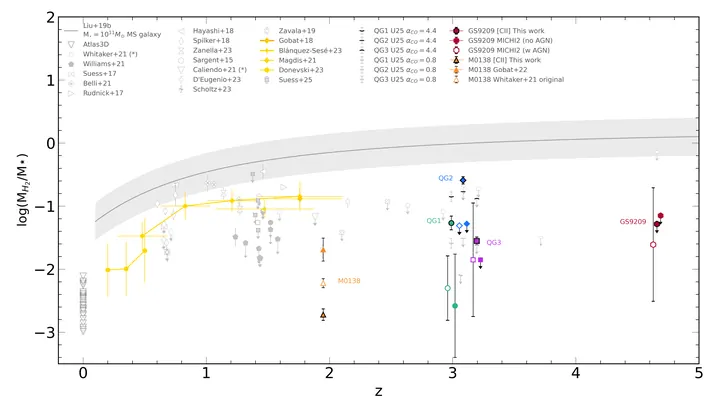
A galaxy is not a static picture but a bubbling cauldron where new stars are constantly born from tenuous gas. To understand how long this boiling will last, astronomers weigh the key ingredient — cold molecular hydrogen. It is invisible itself, but it is betrayed by carbon monoxide (CO), which shines in the radio range.
For nearly half a century, astronomers have been searching for glycine, the simplest amino acid and one of the fundamental building blocks of proteins, in the interstellar medium.
In the dense gaseous cocoon around a young massive star, streams of matter collide as if in a giant chemical flask. One stream moves relative to us at about 11 kilometers per second, the other at about 5. The telescope at Onsala (Sweden) caught their radio voices and resolved them into hundreds of spectral lines — molecular fingerprints.
Recently, astronomers spotted three interstellar comets coming from deep space. One of them, 3I/ATLAS, turned out to be unexpectedly large: its nucleus is several kilometers across.
A giant planet hangs in space in complete solitude, separated from its star by a distance 160 times greater than the path from the Sun to Pluto. The light from its parent star arrives so faintly that the surface temperature barely exceeds 200 degrees Celsius — about as warm as a well-heated sauna.
Chondrules look like frozen raindrops made of stone. They're about the size of a grain of sand, but they record the history of the first few million years of the Solar System. Once, these droplets floated in the scorching gas around the young Sun, then clumped into asteroids and fell to Earth as meteorites.
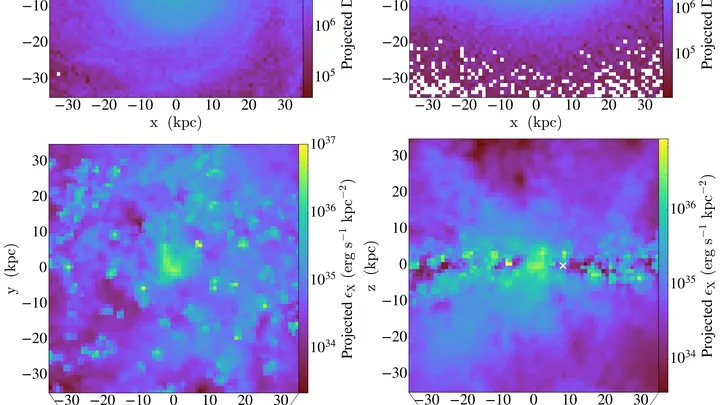
Around our Galaxy, like an invisible crown, stretches a tenuous cloud of gas heated to millions of degrees. It is called the galactic halo. Seeing this glow directly is difficult: it emits soft X-rays that are absorbed by Earth's atmosphere.
An old chest of family heirlooms opens, and inside lie jewels that were thought to be as old as great-grandmother. But suddenly it turns out: the gold was remelted, the stones were recut, and this happened much later than thought. A similar story happened to the oldest particles in meteorites — calcium-aluminum inclusions, or CAIs.
In cold clouds between the stars, dust grains are coated with ice, like windows covered with frost in winter. On this icy crust, chemical reactions take place that do not occur in gas. One such reaction is the encounter between a carbon atom and a nitrogen molecule.
A world that for years refused to show its face. Planet GJ 1214 b is exactly such a case. It is larger than Earth but smaller than Neptune, and its dense envelope made the atmosphere invisible to telescopes: starlight passed through it without leaving clear traces. But astronomers' persistence and a new sensitive instrument provided the first clue.
Around young stars, flat clouds of gas and dust swirl, like pizza dough from which planets will eventually be shaped. This cloud contains various chemical elements, and sulfur is one of the most elusive: it's hard to catch with telescopes because it hides in solid grains or escapes as gas.
Five galaxies that long ago stopped igniting new stars look like houses with darkened windows. But the ALMA radio telescope and the James Webb Space Telescope peered inside and saw that in these 'sleeping' houses, a fire still smolders.
When an exoplanet briefly eclipses its star, starlight passes through its air and absorbs its chemical taste. This technique, the transit method, is the core of how the James Webb telescope works.
Every molecule is like a set of building blocks: the same pieces can be assembled in different ways. Two assemblies with the same atoms but different geometry are called isomers. If one can be turned into the other by a simple rotation around a bond, they are conformers, like a bent arm versus a straight one.
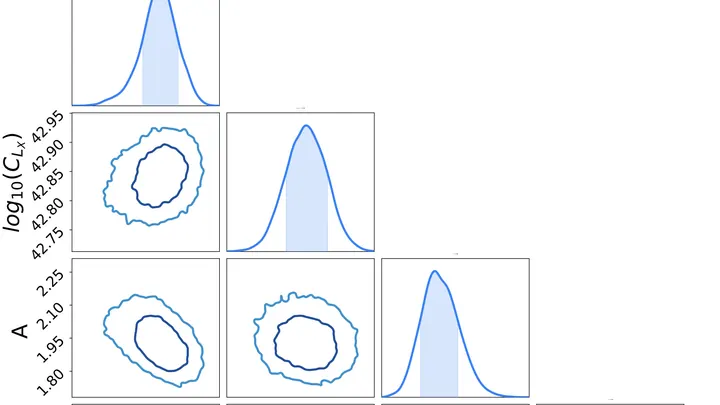
A pot of boiling water sits on the stove: the higher the heat, the hotter the water and the more steam escapes. Hot gas in galaxy clusters behaves much the same way. But in small galaxy groups, this "steam" leaks out faster than you'd expect from the temperature alone.