The Universe Stops Being Uniform at a Scale of 138 Megaparsecs express
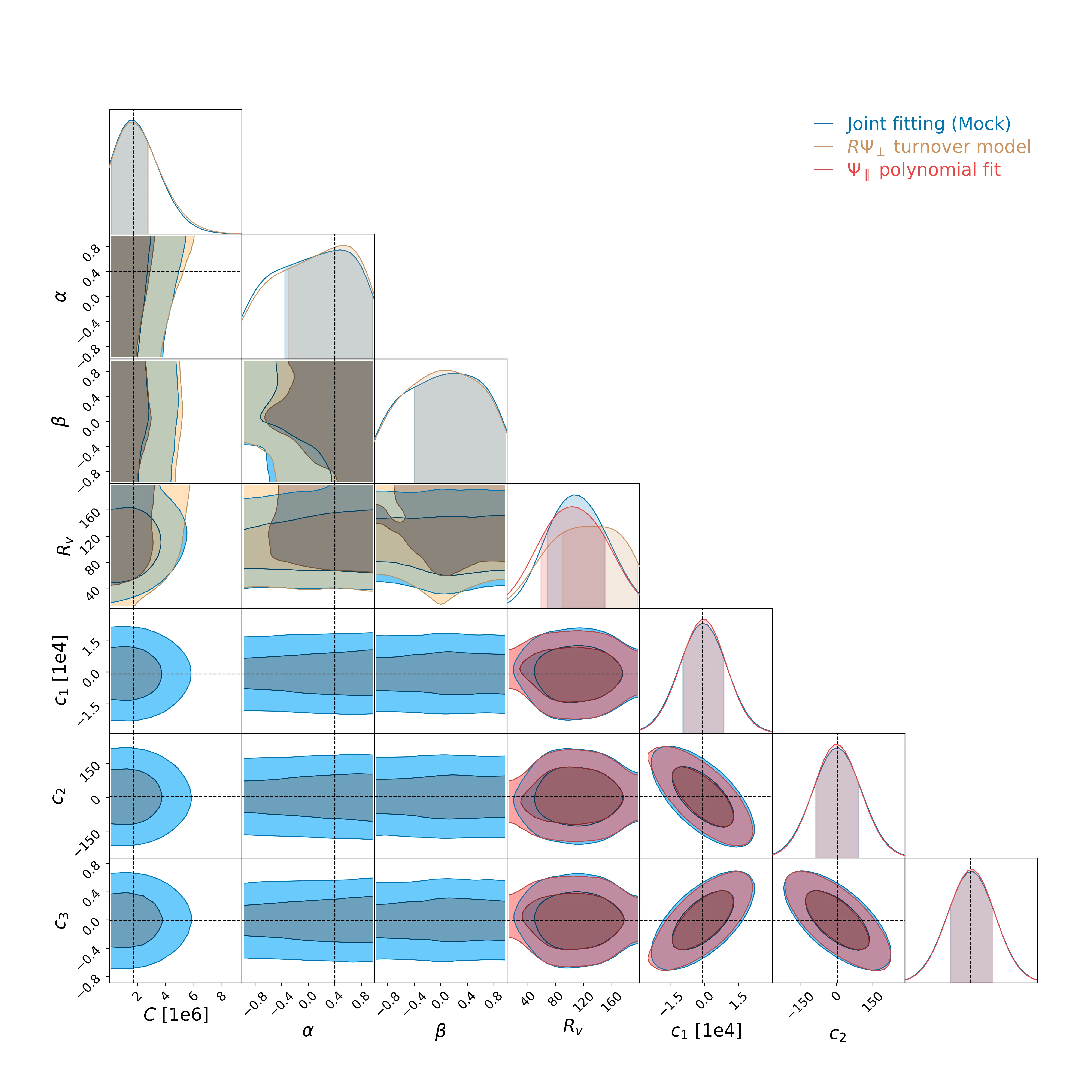
Galaxies in the Universe are not scattered randomly: neighboring ones move in the same direction, like a school of fish, while distant ones each go their own way. Where the boundary between 'together' and 'apart' lies has been unclear until now. Astronomers have devised a new measure — the scale at which the average motion of galaxies along the line connecting a pair stops being coherent and starts contradicting each other.
This scale is called the velocity coherence scale. It can be computed via a special quantity — the sphere-averaged trace of the velocity correlation tensor. Sounds complicated, but the idea is simple: take a sphere around a point and see how galaxies inside it move relative to the center. On small spheres, they on average move away from or toward the center in a coordinated way. On larger spheres, the motion becomes chaotic, like a crowd in a square after a concert.
The most interesting part is that this scale is almost independent of time. In an expanding Universe, it remains the same in comoving coordinates, as if the ruler grew with space itself. Therefore, it can be used as a 'standard ruler' for measuring cosmic distances. It is also closely related to the moment when matter and radiation densities in the Universe became equal — a key event in its history.
Currently, measurement precision is limited: galaxy velocities are known less accurately than their positions. But new sky surveys, already operating or in preparation, will allow refining this scale. Then cosmologists will have another reliable tool to test our understanding of the Universe's structure.
Original abstract
as written by the authors arXiv:2601.02886
We introduce the velocity coherence scale $$R_v$$, the scale at which the spherical volume average of the trace of the velocity correlation tensor transitions from scaling faster than the sphere radius to scaling more slowly. This corresponds to the radius at which the average motion of galaxies along their separation vectors transitions from correlated to anti-correlated. We derive a theoretical estimator for $$R_v$$ by defining the bulk in spheres $$B_R$$, a velocity-field analogue of the mean scale counts used in density-field correlation analyses. We show that, for a statistically homogeneous matter distribution, the logarithmic derivative of $$B_R$$ and the correlation dimension $$D_2$$ share the same asymptotic behaviour and therefore can be used to estimate the scale of transition to statistical homogeneity. Furthermore, we show that in standard $$\Lambda$$CDM cosmologies the velocity coherence scale is tightly connected to the matter-radiation equality scale $$k_{eq}$$, and that its value in comoving coordinates is redshift-independent. These results highlight the potential of $$R_v$$ both as a standard ruler and as a physically motivated scale characterising the onset of cosmic homogeneity. We present a proof of concept using measurements of the PV correlation functions from SDSS. We show that the main challenge in determining $$R_v$$ is the limited precision of PV measurements compared to density ones, as they typically rely on smaller samples with larger uncertainties that scale roughly linearly with survey depth. Fitting our theoretical estimators for $$R_v$$, we obtain $$R_v \approx 138^{+23}_{-54}\,\mathrm{Mpc}/h$$. Finally, we show that more precise determinations should be achievable with current and upcoming peculiar velocity surveys.
The velocity coherence scale is about 300 times the diameter of the Milky Way.