Birth of the Universe from False Vacuum: Why Some Bubbles Expand and Others Collapse ✎ express
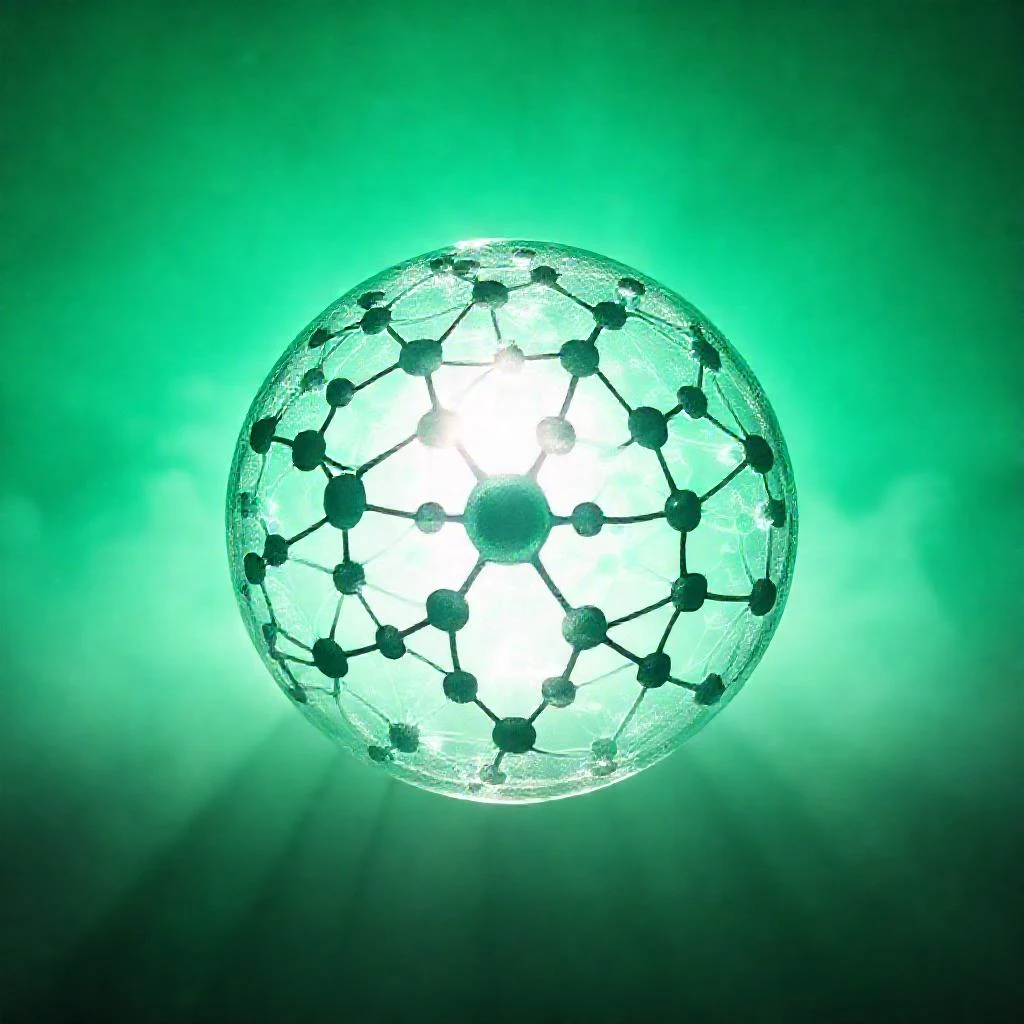
Our Universe may have arisen from a highly unstable state that physicists call the false vacuum. Imagine a glass of water cooled below its freezing point: the liquid remains liquid only until the first jolt, which instantly triggers crystallization into ice. By analogy, the false vacuum is an energetically strained state of a field, ready to roll down into a more stable, true vacuum state. A tiny bubble of true vacuum, randomly appearing in this "supercooled" environment, can grow to the scale of an entire Universe. Its fate is determined by two factors: the initial radius and the strength of particle interactions inside it. A small bubble, like a fragile ice crystal in warm water, collapses under surface tension — the energy of the boundary exceeds the gain from the interior volume. But if the bubble is born large enough, the energy gain from transitioning to the true vacuum wins, and it begins to expand irresistibly, consuming the surrounding false vacuum. This very process could have triggered the Big Bang and the subsequent expansion of the Universe. An echo of that event might be dark energy — a remnant of the false vacuum that even today pushes galaxies apart. Alan Guth was the first to propose that cosmological inflation was caused by such a true vacuum bubble. The unexpected twist: calculations hint that our current vacuum might also be false, and someday the Universe will be reborn through the birth of a new bubble.
Had the false vacuum been slightly more stable, the Universe might have remained forever in uncertainty, never coming into being.
In Stephen Baxter's collection "Vacuum Diagrams," bubbles of new vacuum give rise to universes with different laws of physics.