Oxygen from Water: How Plants Build It Brick by Brick express
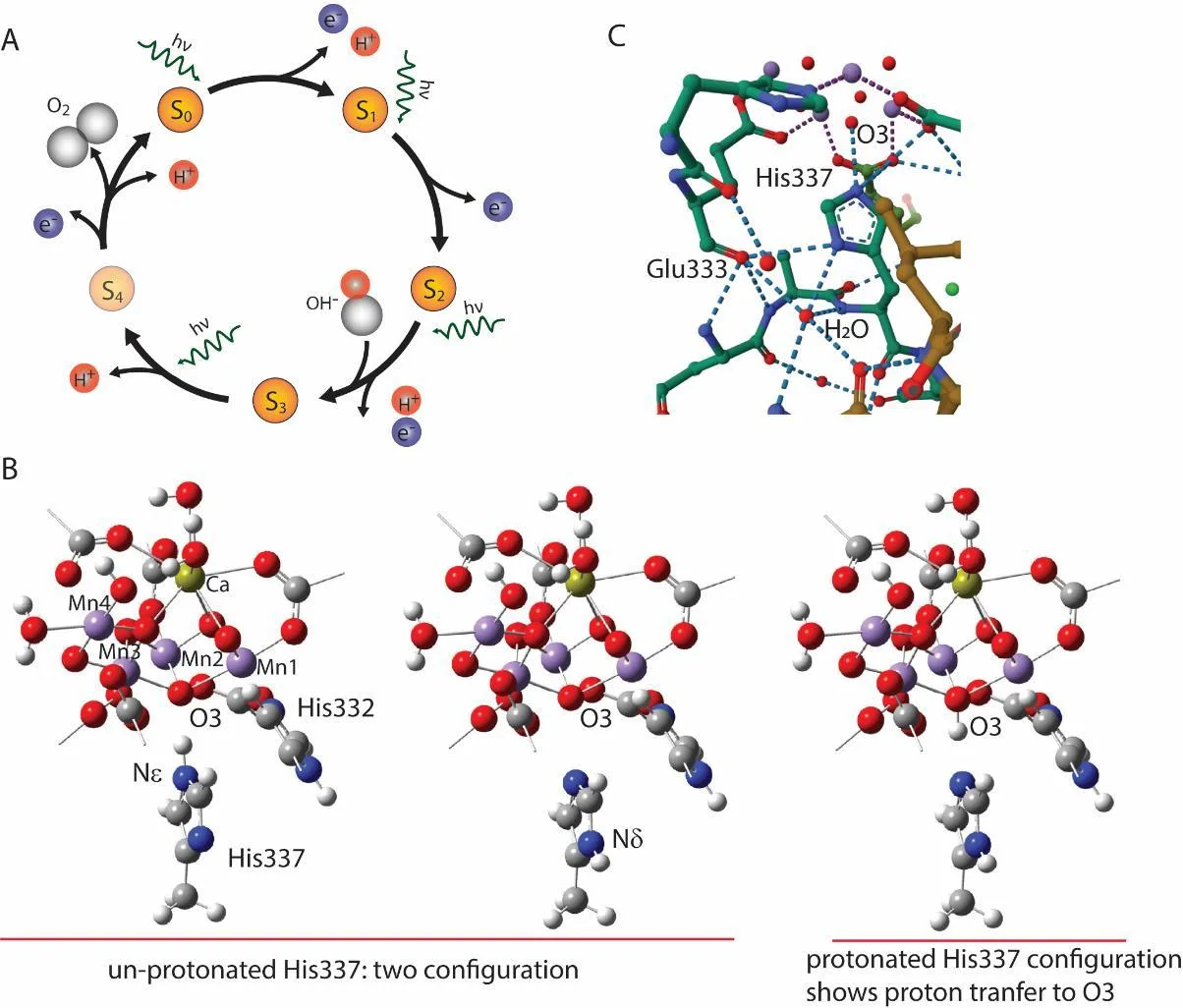
In every leaf, in the light, a factory works that splits water into oxygen and hydrogen. The oxygen goes into the air we breathe, and the plant uses the hydrogen for food. The heart of this factory is a protein complex with four manganese atoms and one calcium atom. It's there that water loses electrons and becomes oxygen.
For a long time, researchers couldn't figure out how two oxygen atoms that were previously in different water molecules end up next to each other and bond. New work proposes this scenario. One oxygen atom (let's call it O3) comes from a water molecule and sits next to manganese. The second atom (O6) is already held ready by the protein. When light arrives, electrons jump, and the atoms come closer. The bond between them forms like a zipper: two halves come together, and the teeth catch each other.
This pathway of bonding turns out to be energetically more favorable than the one previously considered dominant. Instead of waiting for two oxygen atoms to find each other in a crowded room, the protein guides one of them to the right spot and holds it until the second arrives. It's like assembling furniture: first you place a piece into the groove, then you screw in the second one.
Understanding this mechanism is important for creating artificial systems that will produce oxygen or clean fuel from water and sunlight. If we learn to replicate this trick, we could build factories that mimic a leaf but are even more efficient.
Each year, plants produce about 300 billion tons of oxygen. That's roughly the weight of all humans on Earth multiplied by 40.