process

energy extraction

The process of converting light energy into usable chemical energy by organisms.
16 related articles

Description

Energy extraction in biology refers to the process by which organisms convert light energy into usable chemical energy, primarily through photosynthesis. This process is the foundation of most life on Earth, as it captures photons and stores their energy in chemical bonds, such as those in glucose, which cells then use to power their functions. It is a highly efficient and finely tuned mechanism that has evolved over billions of years.

History

The process was discovered through experiments by Jan Ingenhousz in 1779, who showed that plants produce oxygen in light, and later by others who identified the role of chlorophyll and the Calvin cycle in the 20th century.

How it works

In photosynthesis, pigments like chlorophyll absorb photons, exciting electrons to higher energy states. These electrons are then transferred through a chain of proteins in the thylakoid membrane, creating a proton gradient that drives ATP synthesis. The energy is ultimately stored in carbohydrates, which can be broken down later to release energy. The process involves two stages: light-dependent reactions that capture energy and light-independent reactions (Calvin cycle) that fix carbon dioxide into sugars.

In practice

It is harnessed in artificial photosynthesis for clean fuel production, and understanding it helps improve crop yields and bioenergy technologies.

Fun fact

Photosynthesis is about 30-40% efficient in converting light energy to chemical energy, far exceeding the best solar panels, which typically achieve around 20%.

Concept graph →

Related articles · 16

Chemical Physics2026-08-072 minarXiv:2608.07390express
Plant Quenches Its Internal Light in 60 Picoseconds
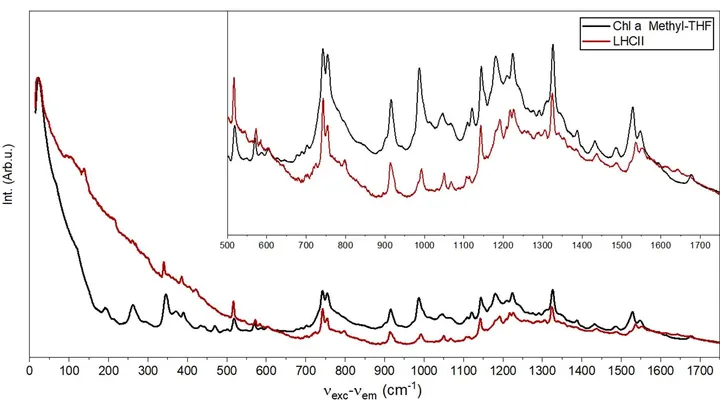
The lifetime of the entangled triplet pair in the protein is about 60 picoseconds, which is eight times longer than in solution. Sunlight is like a continuous stream of balls flying at a wall.
Biological Physics2026-08-022 minarXiv:2608.01143express
Protein Folding as a Side Effect of Function
A protein chain folds into a working tool in a fraction of a second, and almost never makes a mistake. For a long time, it was thought that evolution specifically polishes amino acid sequences so that a protein not only works but also easily finds its unique shape. New work turns this idea on its head.
Biological Physics2026-06-172 minarXiv:2606.19066express
The Fire That Kindled Our Minds
A living organism is a machine that constantly channels energy through itself and converts it into heat. This internal cycle is called internal entropy production (a measure of energy dissipation). But about 2.5 million years ago, our ancestors switched on a second loop — an external one. They picked up a sharpened stone, and then a burning branch.
Biological Physics2026-05-272 minarXiv:2605.28720express
Living Things Glow with Heat, Like the Sun
Billions of tiny motors hum inside every living creature. Cells ceaselessly pump substances, burn sugar, and build new proteins, and all this invisible motion warms us from within. To maintain order, life must dissipate heat into the environment, like a stove that never goes out. The power of this internal heating is almost independent of size.
Chemical Physics2026-03-262 minarXiv:2603.24924express
Hydrogen from Algae: A Green Light for Clean Energy
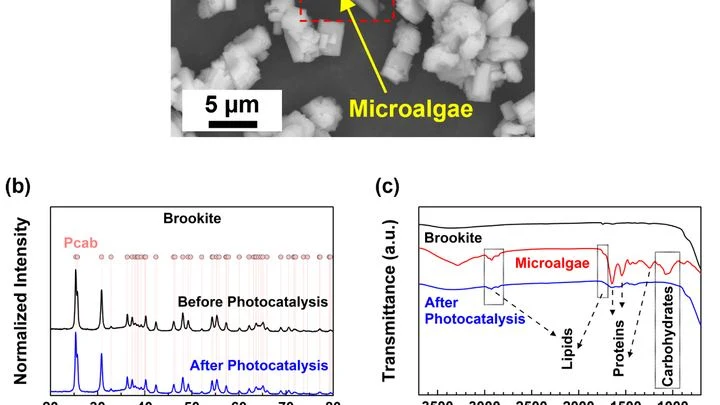
Conventional solar panels convert light into electricity, but here light splits water into hydrogen and oxygen. Hydrogen is a clean fuel, but the process is slow. To speed it up, helper substances that donate electrons are added. Often this is alcohol, but it's a shame to waste it.
Biological Physics2026-03-031 minarXiv:2603.03547express
Microbial Communities: How to Find the Key Players
Microbial communities are like a noisy orchestra: thousands of instruments, and it's hard to tell who's playing the lead. In the gut, ocean, or soil, millions of bacterial species live, and scientists need to figure out which ones truly matter for human health or soil fertility. The new approach works like smart laundry sorting.
Exoplanets2026-02-241 minarXiv:2602.20789express
Why Red Dwarfs Have Fewer Chances for Photosynthesis
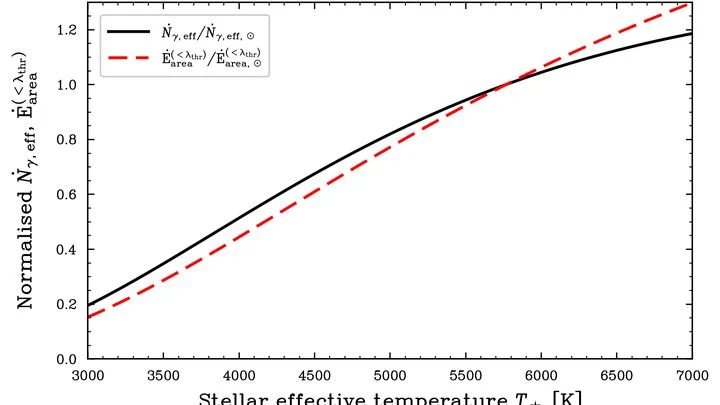
Oxygenic photosynthesis requires splitting water. It's kind of like a water wheel: to make it spin, you need a strong current. Light acts as the current, and light particles are the streams. For red dwarfs, the most common stars, the light is "cool" and weak — the streams barely move the wheel.
Chemical Physics2026-02-211 minarXiv:2602.18908express
Why Photosynthesis Works Without a Hitch
When a sunbeam hits a leaf, a relay race begins inside it. The energy of light passes from one chlorophyll molecule to the next until it reaches the reaction center — the place where the chemistry of life kicks off. This relay runs with astonishing accuracy: nearly every quantum of light finds its way.
Quantum Physics2026-01-311 minarXiv:2602.00633express
Light That Comes in Pairs
Light from an ordinary bulb is a stream of individual photons, like drops from a faucet. But there is also light where photons come in pairs, like twins walking together. Such grouped light has long been desired for measuring distances and imaging objects hidden around corners. But sources of this light were either too dim, or their flashes too short for ordinary detectors to catch.
Optics2026-01-301 minarXiv:2602.00363express
Glowing Heart Cells
A heart cell in a Petri dish contracts, and at that moment, an electrical wave sweeps across its surface. Previously, to catch that wave, you had to poke the cell with an ultra-fine electrode needle. Now, you just look at it under a microscope. The method is called electrochromic recording.
q-bio.BM2026-01-092 minarXiv:2601.14273express
Oxygen from Water: How Plants Build It Brick by Brick
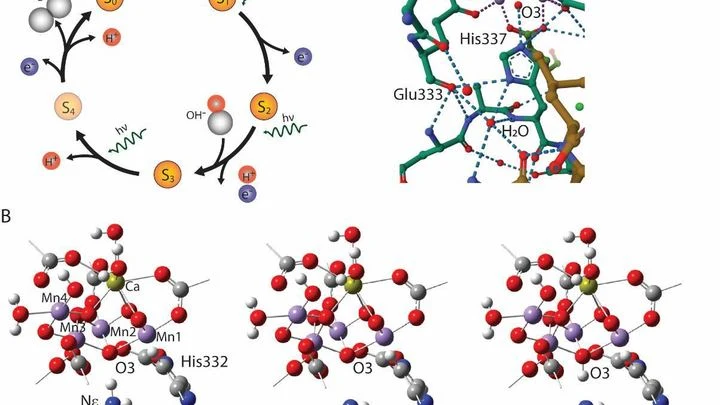
In every leaf, in the light, a factory works that splits water into oxygen and hydrogen. The oxygen goes into the air we breathe, and the plant uses the hydrogen for food. The heart of this factory is a protein complex with four manganese atoms and one calcium atom.
Galaxies2026-01-081 minarXiv:2601.05316express
Black Holes as Unexpected Beacons of the Early Universe
A few hundred million years after the Big Bang, the universe resembled an endless dark ocean, shrouded in a thick fog of neutral (non-ionized) hydrogen. Then something dispersed the gloom: ultraviolet radiation knocked electrons out of atoms, making the gas as transparent as pure water.
Exoplanets2026-01-052 minarXiv:2601.02548express
Oxygen Dead End in a Red Dwarf System
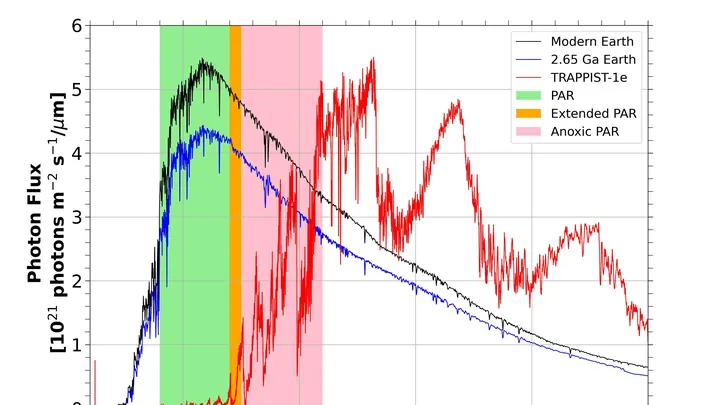
On the exoplanet TRAPPIST-1, oxygenic photosynthesis, the process by which light energy is converted into chemical energy with oxygen as a byproduct, is losing the race for survival. This M-dwarf star emits mostly in the infrared, not in the visible range like the Sun.
Biological Physics2025-11-091 minarXiv:2511.08624express
Which Stars Can Give Birth to Life? The Answer's in the Color
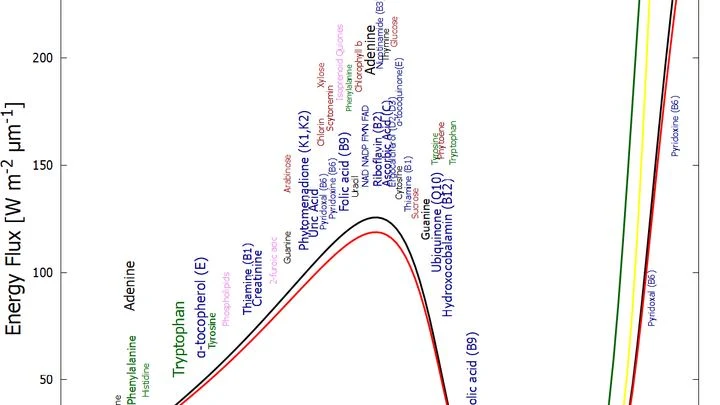
Life began with molecules akin to natural sunscreen — based on carbon, they soaked up the mild ultraviolet of the young Sun and turned it into heat. This way of dissipating energy wasn’t just heating: it made molecules self-organize, like chefs kneading structured dough out of a chaos of ingredients. But ultraviolet is a finicky tool.
Biological Physics2025-10-071 minarXiv:2510.05792express
Cells Communicate with Light
Living cells continuously exchange light signals — a billion times fainter than daylight. It's like a whisper picked up by ultra-sensitive instruments. A healthy cell whispers rhythmically, a cancerous one — haltingly, but with a long memory of previous flashes.