Lava Oceans of Exoplanets express
Original: "Magma Ocean Waves and Thermal Variability on Lava Worlds"
Tidal forces melt entire planets, forging lava oceans with waves kilometers high.
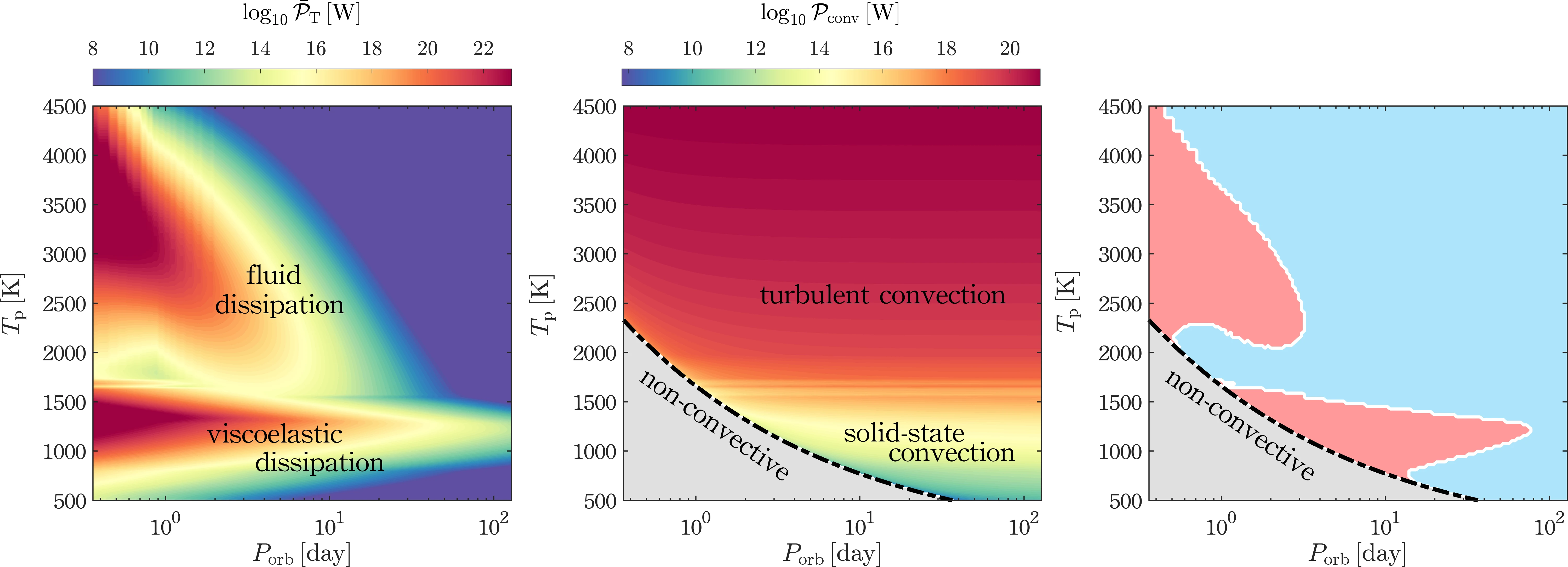
A planet whose orbit is a little stretched dives closer to its star each pass, then backs away. The varying gravity heats it up, solid rocks melt, becoming an ocean of lava.
If a year on such a planet is shorter than a day, even its core becomes liquid.
On the night side, a frozen crust acts as a shore. Tidal waves crash against it, collide, and spawn wandering hot spots. As a result, the planet’s glow flickers erratically, like a candle flame. Waves can rise several kilometers high — slow-moving stone ridges crawling across the scorching expanse.
The temperature of these lava oceans is higher than in a smelting furnace: around 3000°C.
Lava worlds like Mustafar from Star Wars turn out even more turbulent than in fiction, thanks to tides.
Scientists
Christian DopplerD. B. McLaughlinDidier QuelozMichel MayorR. A. RossiterDavid Charbonneaumagma ocean
marine heatwave
tidal heating
tidal migration
terrestrial exoplanet
mantle
dayside
hydrogen atmosphere
ocean current
Kelvin wave
hot jupiter
tropical cyclone
rocky planet
protoplanetary disk dynamics
plasma wave
sea surface temperature
sea surface temperature anomaly
protoplanetary disk winds
galactic winds
gravitational waves