Time Crystal Matryoshkas: A New Layer of Order express
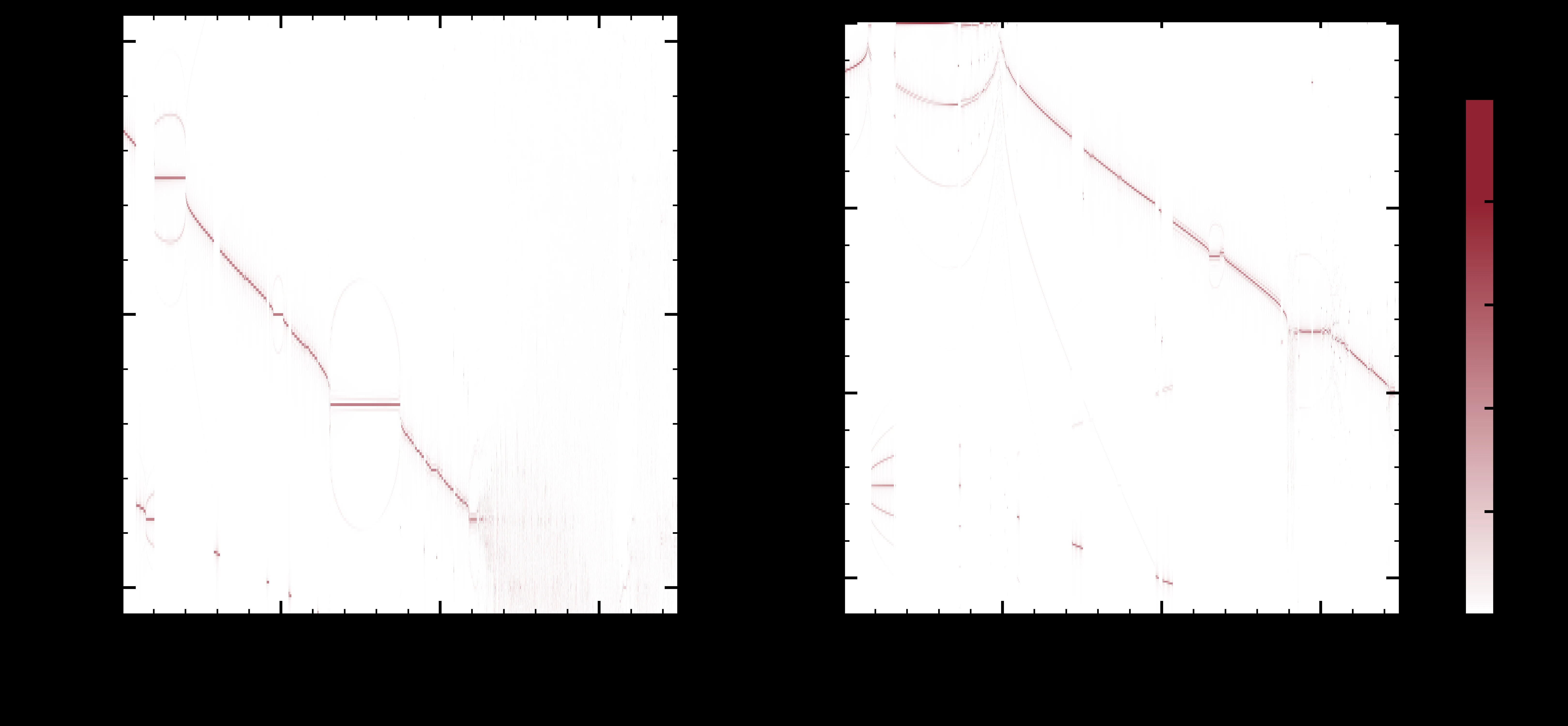
Time crystals are matter that 'ticks' even at rest, like eternal clocks predicted by Frank Wilczek. In a new experiment, physicists coupled two types: discrete (rigid rhythm, like a metronome) and continuous (tempo changes, like a spinning top). The result was a hierarchy resembling a matryoshka doll: the continuous crystal adopted the rhythm of the discrete one, and an additional temporal layer emerged that wasn't built-in originally. Usually, disorder grows in systems (entropy), but here a pattern emerged on its own — a principle familiar from the Standard Model of physics and the 'ticking' of pulsars. Remarkably, only five ytterbium ions at ultracold temperatures were enough for this. Such 'matryoshka' rhythms promise ultra-precise clocks and quantum memory based on perpetually oscillating atoms.
Original abstract
as written by the authors arXiv:2601.09779
Spontaneous symmetry breaking is one of the central organizing principles in physics. Time crystals have emerged as an exotic phase of matter, spontaneously breaking the time translational symmetry, and are mainly categorized as discrete or continuous. While these distinct types of time crystals have been extensively explored as standalone systems, intriguing effects can arise from their mutual interaction. Here, we demonstrate that a time-independent coupled system of discrete and continuous time crystals induces a simultaneous two-fold temporal symmetry breaking, resulting in a hierarchical time crystal phase. Interestingly, one of the subsystems breaks an emergent discrete temporal symmetry that does not exist in the dynamical generator but rather emerges dynamically, leading to a convoluted non-equilibrium phase. We demonstrate that hierarchical time crystals are robust, emerging for fundamentally different coupling schemes and persisting across wide ranges of system parameters.
The first time crystal (2017) consisted of just five ytterbium ions cooled nearly to absolute zero — a tiny ensemble that gave rise to eternal motion.
In Hamilton's novel 'Stolen Fire,' time crystals serve as an energy source for interstellar ships, and in Hannu Rajaniemi's 'The Quantum Thief,' they are used as currency and memory storage.