Matryoshka Time Crystals: A Hierarchy of Rhythms in a System of Five Ions express
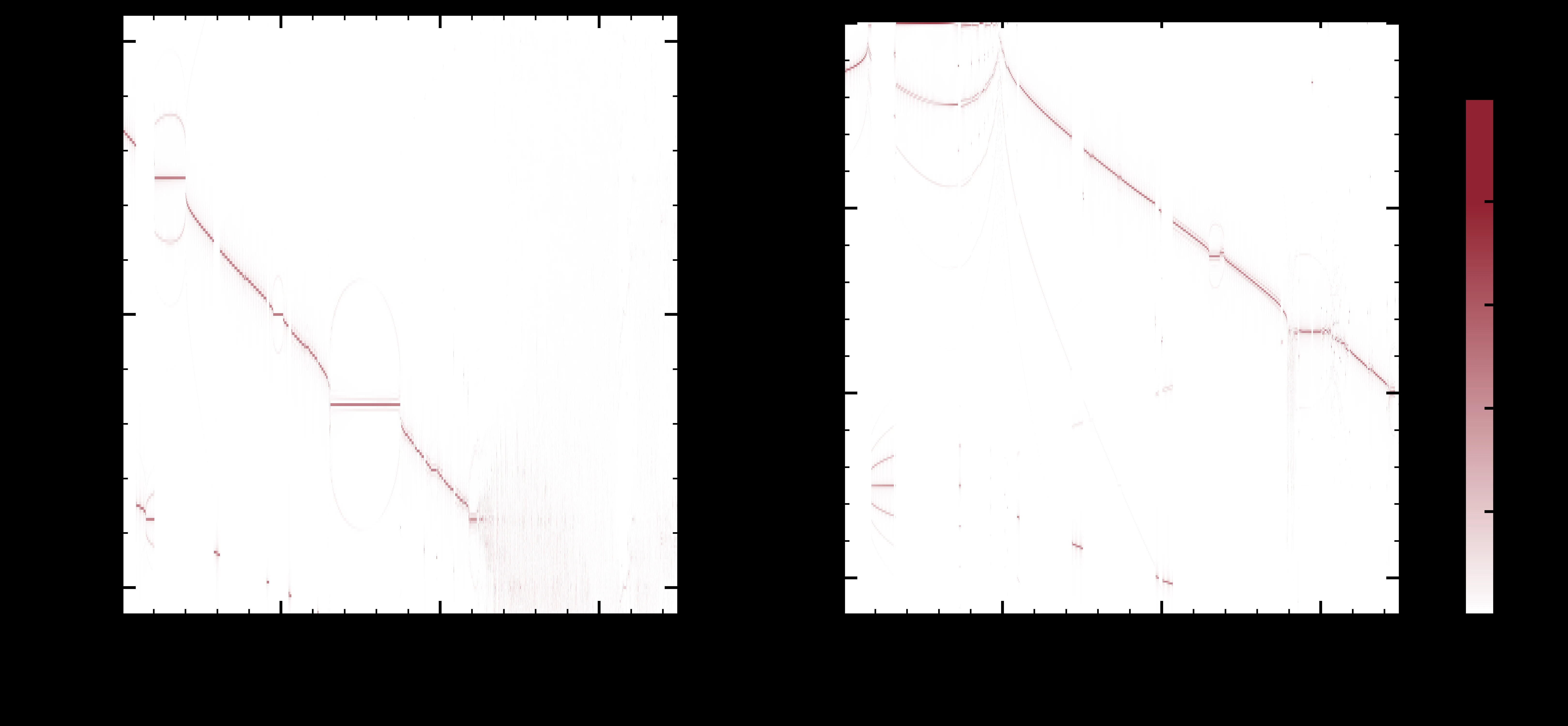
Time crystals are an exotic phase of matter that exhibits periodic motion not in space but in time, even while in its ground, unexcited state. This idea, reminiscent of a perpetual clock that never needs winding, was first proposed by Frank Wilczek. In the new experiment, physicists combined two types of such crystals: a discrete time crystal, whose rhythm is rigidly set by an external periodic drive, like a metronome beating strict time, and a continuous time crystal, capable of changing its oscillation tempo, much like a spinning top that can speed up or slow down. The result was a hierarchical structure reminiscent of a matryoshka doll: the continuous crystal, interacting with the discrete one, adopted its rhythm, and an additional temporal layer emerged in the system — a new periodic pattern not prescribed by the initial conditions. Usually, in isolated systems, disorder increases, dictated by the second law of thermodynamics and the growth of entropy, but here, an ordered temporal structure spontaneously formed. The principle of spontaneous symmetry breaking underlying this phenomenon is familiar from the Standard Model of particle physics and from the steady 'ticking' of pulsars — rotating neutron stars whose emission arrives with strict periodicity. Remarkably, observing such complex dynamics required only five ytterbium ions cooled to ultra-low temperatures. Such 'matryoshka' rhythms open prospects for creating ultra-precise clocks and quantum memory based on perpetually oscillating atoms.
The first time crystal (2017) consisted of just five ytterbium ions cooled to near absolute zero, a miniature ensemble that gave rise to perpetual motion.
In Hamilton's novel 'The Starry Rift', time crystals serve as an energy source for interstellar ships, while in Hannu Rajaniemi's 'The Quantum Thief', they are used as currency and memory storage.