Plasmons in Nickelates: The Electron Cloud Behaves Differently express
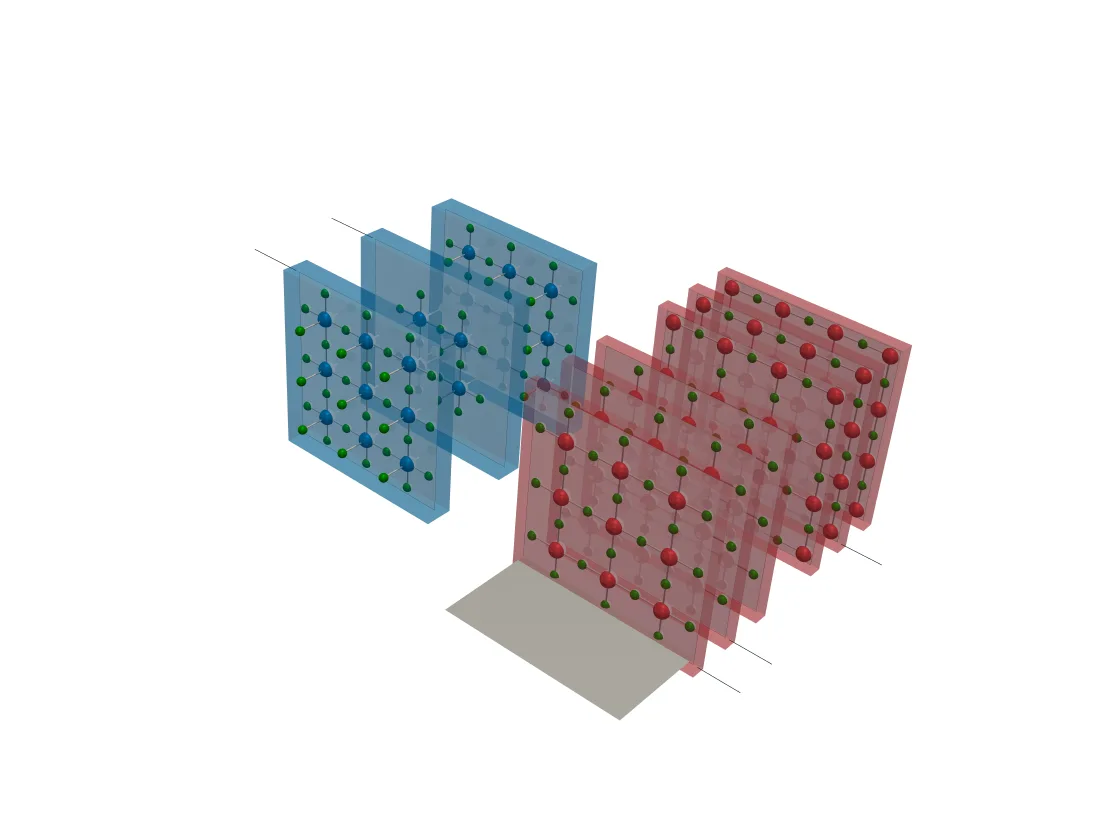
Electrons in a metal are like a crowd in a subway: each on their own, but at the slightest push, everyone moves at once. Physicists call this collective oscillation of the electron gas a plasmon. In superconductors, these oscillations are especially important because they reveal how electrons interact with each other.
In nickelates — recently discovered nickel-based superconductors — plasmons had not been observed until now. Now, scientists used resonant inelastic X-ray scattering (a method where X-rays transfer some energy to electrons, and the losses reveal collective motions) and for the first time detected plasmons in the metallic nickelate Pr4Ni3O8. It turns out that in this material, plasmons decay noticeably more strongly and their velocity is lower than in cuprates — another class of high-temperature superconductors based on copper.
Such behavior indicates that in nickelates, electrons hop between atoms more weakly, and electric charges are screened more strongly. This means that the analogies often drawn between nickelates and cuprates only partially hold. Understanding plasmons will help clarify how superconductivity works in nickelates and whether recipes developed for cuprates can be transferred to them.
Plasmons are collective oscillations of the electron gas, similar to the waves that ripple through a crowd of fans at a stadium.
In science fiction, plasmons are sometimes mentioned as a way to transmit energy or information, but in reality they currently only help us study the properties of materials.