Ice is not just frozen water; it is a material with a rich set of unusual properties that have fascinated scientists for centuries. One of its most famous quirks is that it is less dense than liquid water, which is why ice floats on ponds and lakes, insulating the water below and allowing aquatic life to survive winter. Another intriguing property is 'memory' of compression: ice can remember the history of how it was compressed, affecting its internal structure and behavior long after the pressure is removed.
History
The fact that ice floats has been known since antiquity, but the scientific study of its structure began in the 19th century. The hexagonal crystal structure was determined by X-ray diffraction in the early 20th century, and the concept of compression memory in ice has been studied more recently, particularly in the context of glacial dynamics.
How it works
The low density of ice comes from its crystalline structure, where water molecules form a hexagonal lattice with relatively large empty spaces. When water freezes, the molecules arrange into this open structure, making ice about 9% less dense than liquid water. The 'memory' effect arises from defects and dislocations in the crystal lattice that are created under compression and persist even after the stress is released, subtly altering the ice's mechanical and thermal properties.
In practice
Understanding ice properties is crucial for climate modeling, glaciology, and the design of ice-resistant structures. The compression memory effect is relevant for predicting the behavior of ice sheets and the stability of ice roads.
Fun fact
There are at least 18 known crystalline phases of ice, many of which form only under extreme pressures and temperatures, and some of which are denser than liquid water.
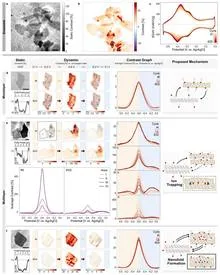
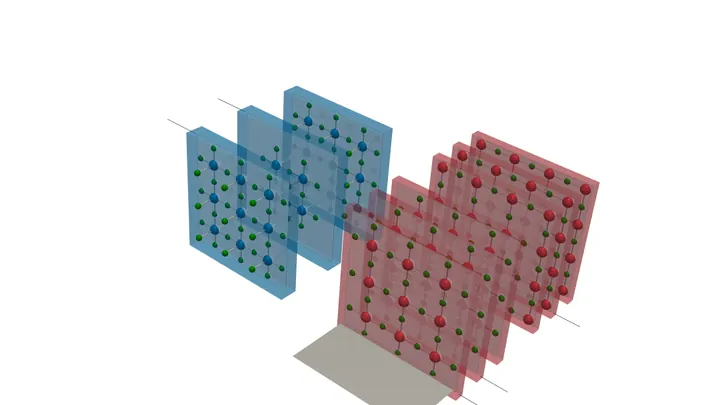
A stack of pages that has been flipped through many times remembers it: some sheets lie flat, others stick up, and creases remain here and there. Layered materials behave much the same way when ions enter them.
Two neutron stars whirl in a close dance, each feeling the tidal field of its partner. It's like the Moon raising oceans on Earth, but here it's spacetime itself and the star's matter that deform. Astrophysicists call this tidal deformation — a measure of how much an object 'bends' under the gravitational pull of its companion.
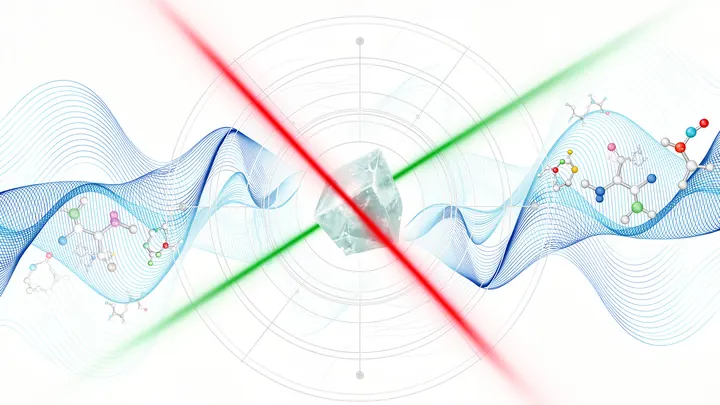
Spectroscopy has always been a way to hear the unheard. Back in the 19th century, Johann Balmer deciphered the elegant lines of hydrogen — a simple numerical harmony that foreshadowed quantum theory.
In water cooled to –40°C, a paradoxical pause sets in: perfect hexagonal ice is in no hurry to form. Instead, a disordered structure with interspersed cubic layers emerges — a real cradle for future symmetry, brimming with disorder yet already charged with hidden architecture.
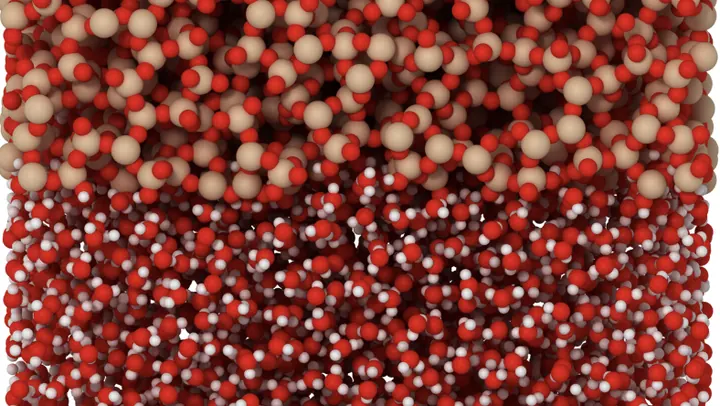
Ordinary ice at very low temperatures and high pressures does not melt but transforms into another solid — equally shapeless (amorphous) but much denser. For a long time, no one could understand exactly what happens at the moment when low-density ice begins to become dense.
Using the JWST space telescope, astronomers conducted a chemical analysis of the centaur Chiron, an icy body from the fringes of the Solar System. It turns out its gas activity resembles a layered cake. Carbon dioxide evaporates from the surface, forming a top crust.
A cold cloud of atoms is like a swarm of fireflies drawn to one another. The attraction between atoms tries to pack them into a single dense ball. But quantum jitter, the unavoidable motion of particles, keeps the ball from collapsing. When the attraction is strong, the cloud breaks into separate clumps.
A plastic heart rests on the water and doesn't tip over, no matter how you turn it. It freezes in any position, as if the water were holding it by invisible strings. This trick is possible thanks to the Zindler curve — a shape in which all lines that divide the area in half have the same length. The Zindler curve is a closed curve where any chord that bisects the area has the same length.
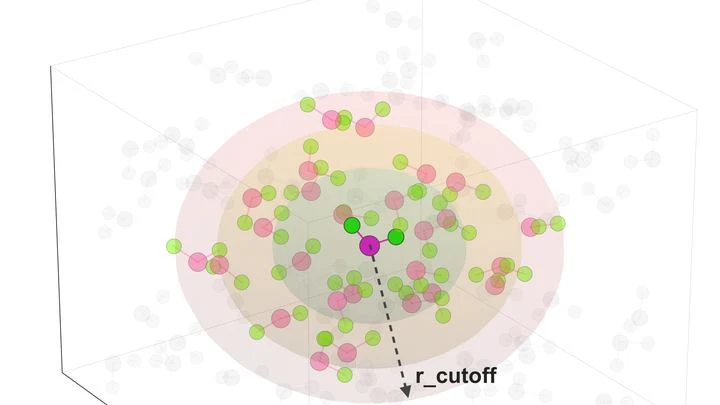
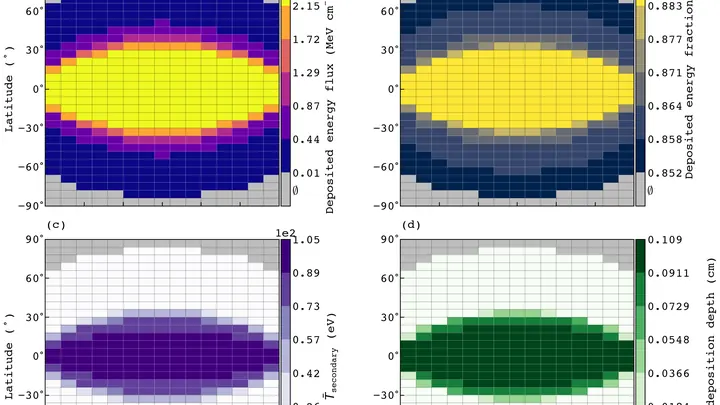
Europa's surface is an icy armor continuously bombarded by charged particles from Jupiter's magnetosphere. Electrons slam into the ice's crystal lattice, lose energy, and kick off chemical reactions. Until now, there was no tool to show how deep such bombardment pierces the ice.
Water is the only common liquid that doesn't immediately contract when cooled. Ice melts, and water becomes denser, but only up to 4 degrees Celsius. Beyond that, with further cooling, it expands again. This quirk explains why fish survive in freezing ponds: the densest water sinks to the bottom, while a lighter cold layer stays on top and turns into ice.
A fridge magnet holds on thanks to many atoms aligned in one direction. But what if you take a single atom and ask it to remember which way it was magnetized? That's exactly what physicists did: they placed a dysprosium atom on a thin film of ordinary table salt and tested how long the atom holds its magnetic state.
The atom turned out to be stubborn.
The cell membrane isn't just a wall; it's a turnstile gate. Embedded within it are protein channels that let ions in and out, creating an electric charge, like a battery that powers nerves and muscles.
Ice slips away from under a skate blade like a bar of soap in wet hands. For a hundred years, scientists argued about where this slipperiness comes from. Some said there is already a thin layer of water on top: it acts as a lubricant. Others countered that water only appears when you start moving, due to friction.
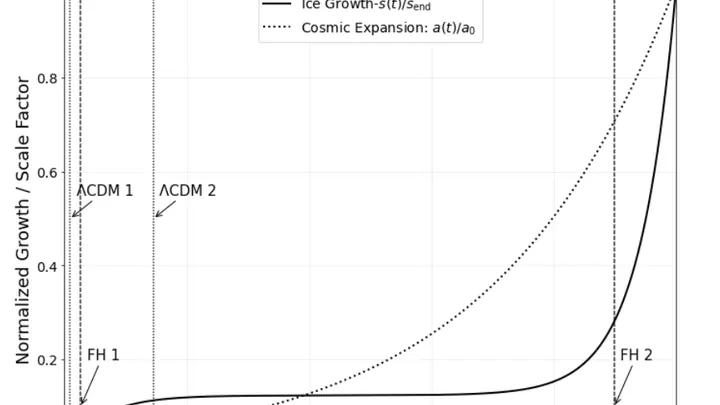
In winter, a lake freezes over, and this simple process turns out to be a living model of an expanding universe. Ice thickness grows according to the same mathematical law as the distances between distant galaxies.
The secret lies in the movement of water beneath the ice crust.
Beneath a thin layer of red dust on Mars lies water ice. Its presence was confirmed by the Phoenix lander and orbital instruments, but the mystery remained: why is the ice always just a few centimeters below the surface?
The answer lies in the wobbles of Mars' axial tilt.
Electrons in a metal are like a crowd in a subway: each on their own, but at the slightest push, everyone moves at once. Physicists call this collective oscillation of the electron gas a plasmon. In superconductors, these oscillations are especially important because they reveal how electrons interact with each other.
In a glass of salty water, even if it sits perfectly still, something is always happening. Tiny salt particles, ions, float and collide, sending ripples through the water. These ripples are invisible, but they create a force that attracts or repels nearby objects.
Previously, it was thought that this force only acts over very short distances, as if it quickly fades out.
Uranus and Neptune have long puzzled scientists: their magnetic fields are heavily tilted and tangled, nothing like Earth's. The answer lay in an exotic form of water — superionic ice, which fills their interiors.
A superconductor crystal is squeezed in a small cell, like clamping it in a vise, but with water to distribute the pressure evenly. Pressure up to 1.08 GPa (about a hundred times greater than in a car tire) barely changes the temperature at which the material loses resistance.
The usual way to freeze a living cell is like trying to put a spacesuit on it: you first need to get a protective substance inside, but while it's crossing the membrane, the cell can burst from salt imbalances or get poisoned by the chemicals.
A thin stream of water flows down a cold inclined board and, before your eyes, turns into an ice ridge. At first, the water paves itself a straight icy path, as if reinforcing its own banks. Then the trickle starts to meander, and the ice quickly spreads sideways. Finally, the ridge stops growing outward and begins to thicken, smoothing out irregularities.