A Spectrometer That Fits in Your Palm express
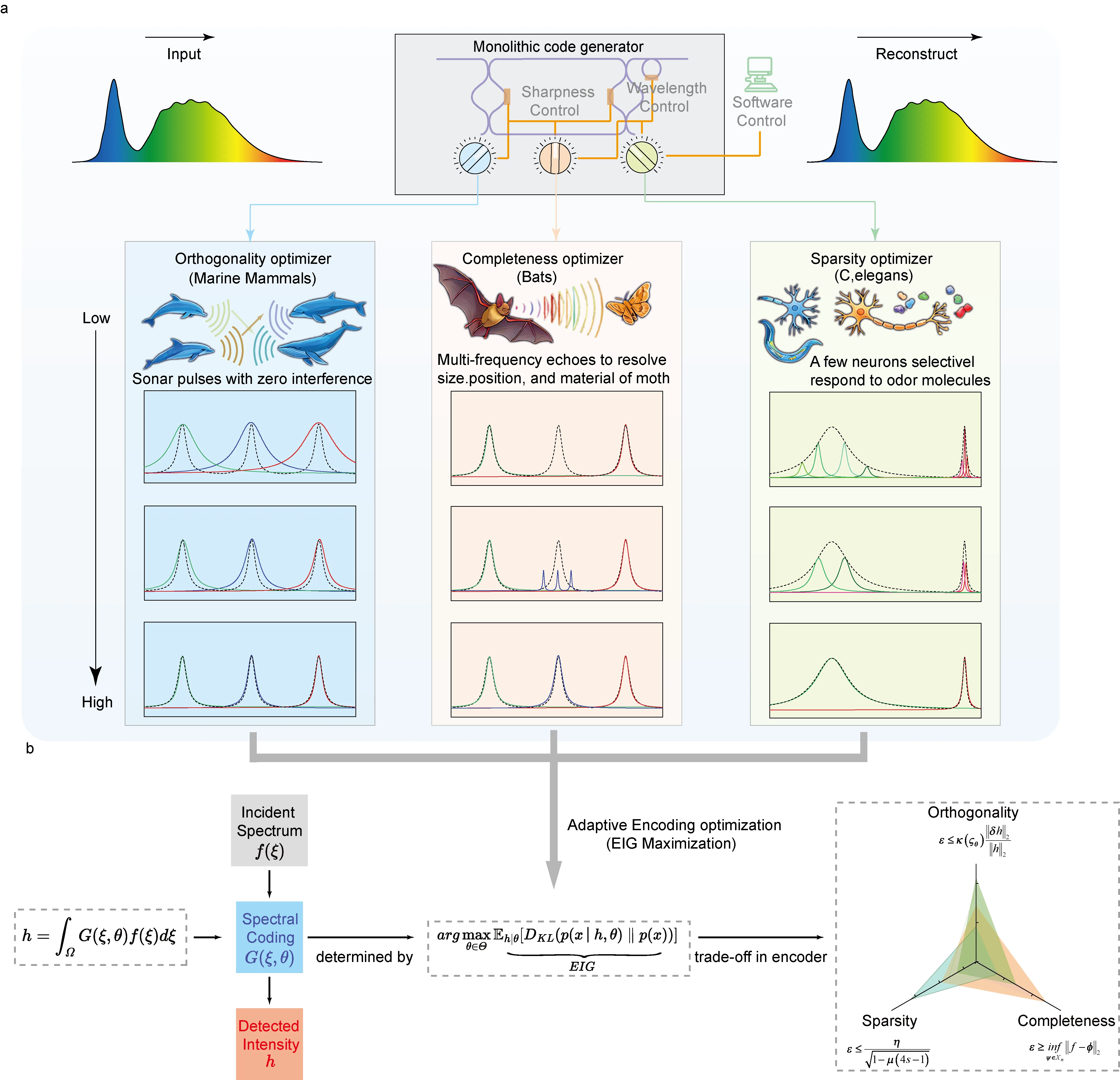
A conventional spectrometer is like a comb that untangles light and sorts it by wavelength. But a comb is rigid: one type of light needs one comb, another needs a different one. The new device works differently. It asks light a series of questions, changing its shape each time to glean more meaning from the answers. It's like interrogating a witness: a clever detective doesn't repeat the same question but adapts to the response.
The key trick lies in how the device chooses its questions. It takes inspiration from nature: the human eye adjusts to brightness, and the ear to loudness. The device assesses which next 'question' will yield the most new information and adjusts its 'comb' on the go. No replaceable parts, just electrical signals that reconfigure the light-sensitive sensor.
As a result, the device sees very fine spectral details while covering a broad range of 30 nanometers. It's like examining individual grains of sand and the entire beach at once. Previously, such precision required a bulky lab instrument. Now it all fits in your palm.
Such a spectrometer would be useful in the field, in factories, and in hospitals. It could check food quality, monitor water purity, or analyze drug composition on the spot. And its tunable nature means the same device can handle a wide variety of tasks — from detecting air pollutants to studying the colors of ancient pigments.
Original abstract
as written by the authors arXiv:2601.12228
Compact spectrometers promise to revolutionize sensing applications, offering a unique pathway to laboratory-grade analysis within a miniaturized footprint. Central to their performance is the encoding strategy to unknown spectra, which determines the efficiency, accuracy, and adaptability of spectral reconstruction. However, the absence of a unified spectral encoding framework has hindered the realization of optimal, high-performance compact spectrometers. We propose a transformative approach: an information-theoretic framework grounded in bio-inspired Bayesian expected information gain that defines the first generic light encoder for computational spectrometers. By optimizing three fundamental attributes at the lowest level of physical hierarchy, (1) orthogonality, (2) completeness, and (3) sparsity, we establish a design paradigm that transcends conventional encoding hardware limitations. We validate this paradigm with the first generic encoder capable of dynamically reconfiguring its response matrices. Experiments show superior reconstruction fidelity across diverse spectral regimes, enabling tunable spectral encoding tailored to varied input features. An ultra-high resolution of 6 pm and a broad measurable bandwidth of 30 nm are experimentally validated. By bridging the gap between theoretical encoding principles and reconfigurable hardware, our framework defines a coherent basis for future advances in compact spectrometry.
The human eye can distinguish about a million colors, but it doesn't see individual wavelengths — the brain blends signals from three types of cone cells. The new spectrometer does what the eye cannot: it splits light into hundreds of individual 'notes' and hears each one.
In 'Star Trek,' the tricorder is a handheld device that instantly determines the composition of any substance. The new spectrometer is a step toward such a device: it already adapts to unknown samples and extracts precise spectra from them.