How to Cool Light to Quantum Order express
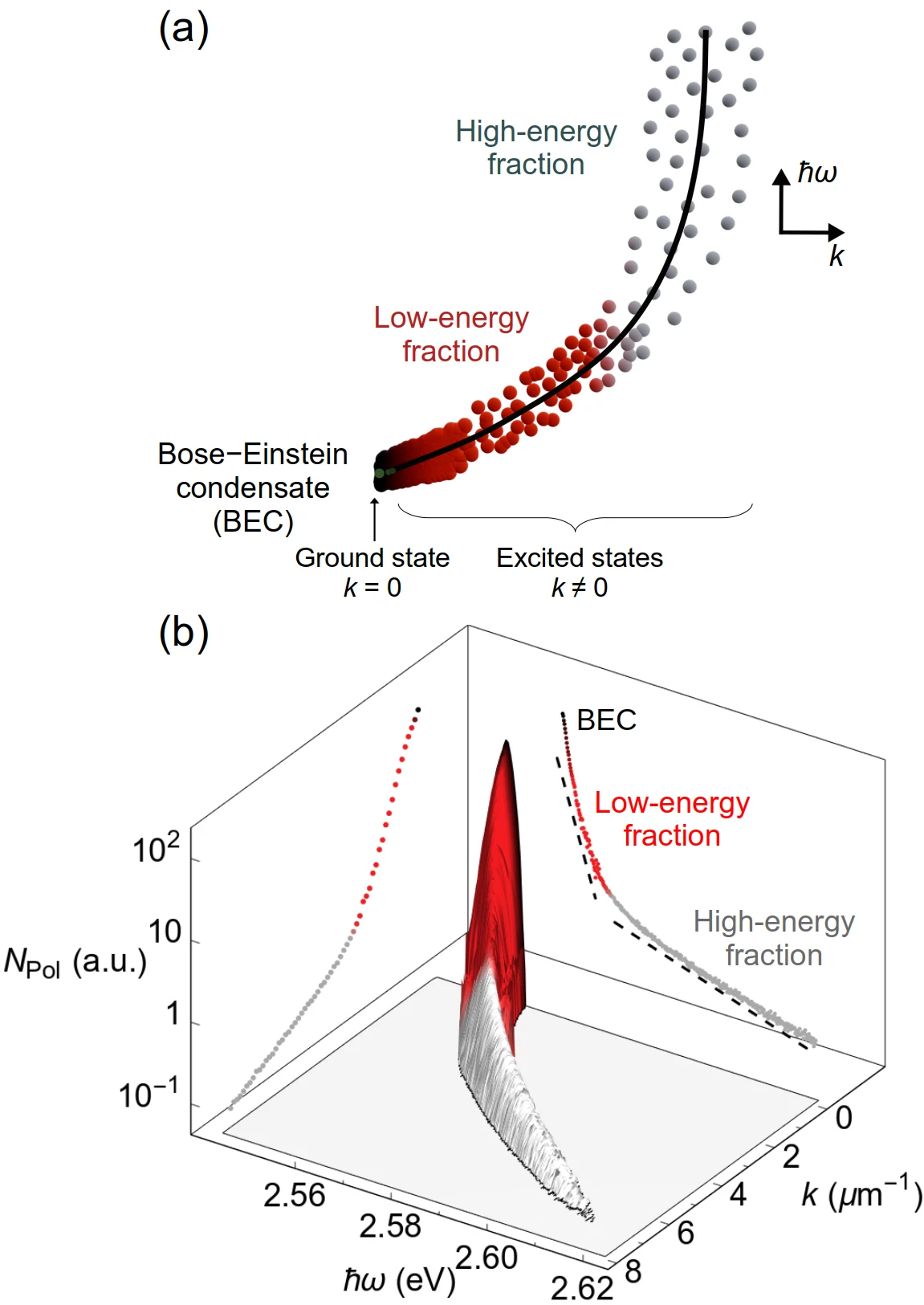
Cooling usually brings order: water freezes into ice. But in the quantum world, order takes unexpected forms. Experimenters cooled polaritons — particles that are both light and matter — to near absolute zero. Instead of simple freezing, the cloud began to 'dance,' synchronizing the oscillations of all particles into a single rhythm. But then the dance split: the cloud broke into two 'dance floors' with different tempos, each obeying the laws discovered by Bose and Einstein. Most strikingly, the temperature of these regions turned out to be not a result of heating, but a direct reflection of the number of particles in each clump. The tighter the crowd, the hotter the dance. This unexpected principle is universal for quantum systems far from equilibrium and may find application in future devices operating at the edge of quantum effects.
Polaritons are billions of times lighter than atoms, so cooling them takes just moments even at temperatures relatively 'high' for the quantum world.