Printing with Light: a Million Voxels per Second express
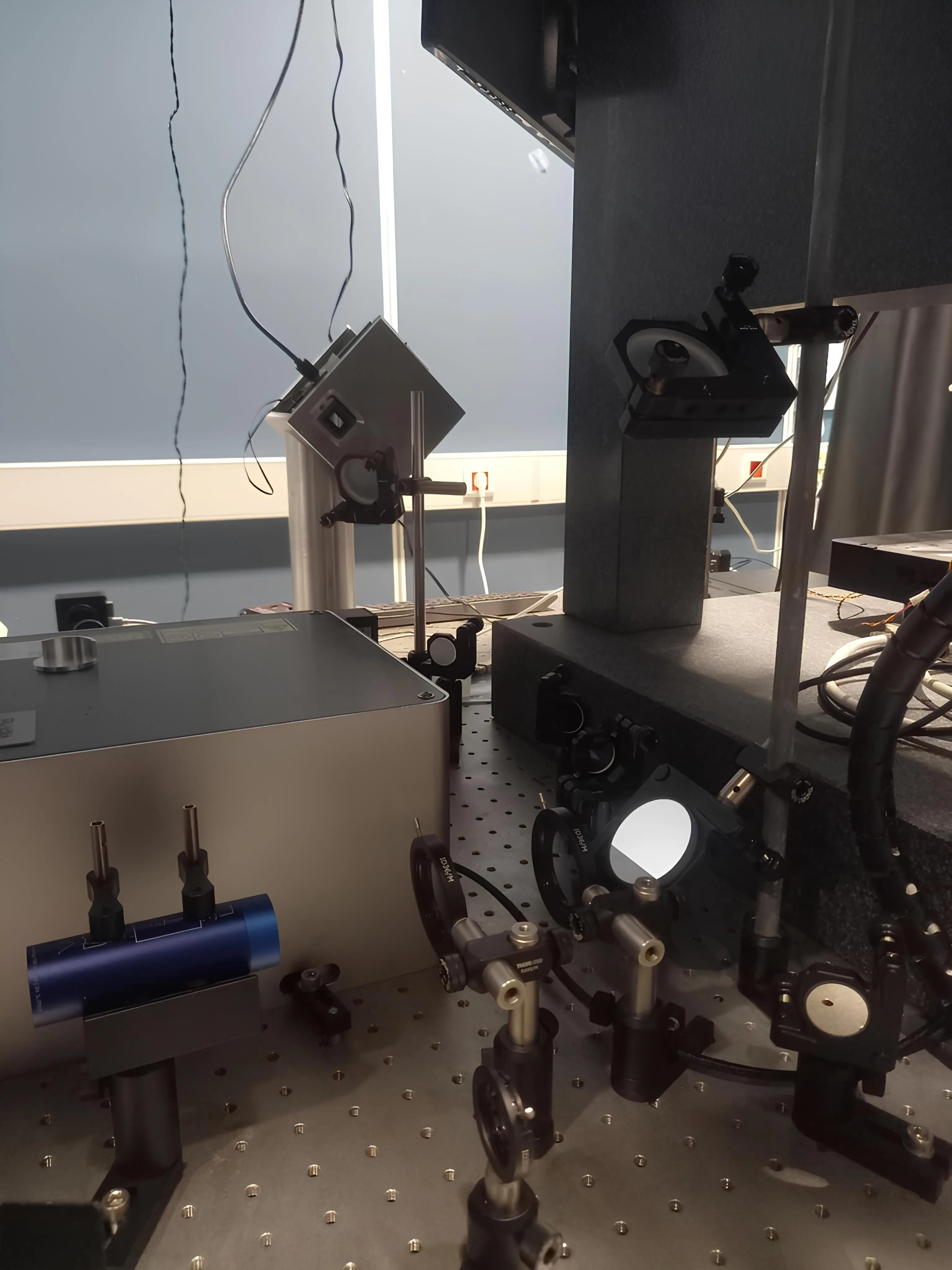
A typical 3D printer squeezes out plastic like a pastry chef piping cream from a bag. Here, instead of plastic, it's light. A laser beam draws in liquid resin, making it solidify at precise points. This creates parts too small to see without a microscope.
Until now, such printers were slow: the beam crawled across the surface like a pen on paper. The new machine changes the game. It projects an entire image at once, like a movie projector. The light is split into millions of tiny mirrors, and every spot solidifies simultaneously. Speed soars to a million voxels per second — imagine filling an entire room with Rubik's Cubes in one evening.
To make the resin solidify instantly, they chose a special catalyst. It prevents neighboring spots from fusing due to heat, just as oil in a pan keeps pancakes from sticking together. So the pattern comes out sharp and the details are even.
The printer has already printed a honeycomb-like lattice and a forest of microscopic pillars. Such structures are needed in optics: they control light better than conventional lenses. Now they can be made quickly and cheaply, like printing photos on an inkjet printer.
Original abstract
as written by the authors arXiv:2601.17816
High-resolution lithographic techniques are often limited by low volumetric throughput, since there is no universal and scalable manufacturing process that can produce 3D metasurfaces. In this work, we demonstrate a high-speed holographic 3D printing platform based on spatiotemporal beam shaping, exceeding the repetition rate while keeping the resolution high. The system integrates a femtosecond laser source with a spectral pulse compressor and a beam shaper to project uniform, axially confined light fields to project patterns directly on the advanced photoresists using a Digital Micromirror Device DMD. We investigate the process window for rapid polymerization, optimizing the photoinitiator choice to eliminate thermal crosstalk at high repetition rates. Using this setup, we achieve a production throughput of more than a million voxels per second with sub-micron resolution below 400 nm. The system's reliability is validated through the fabrication of large-area woodpile-like lattices and uniform micropillar arrays, establishing a workflow for scalable manufacturing of micro-optical components.
The printing precision is 400 nanometers—200 times thinner than a human hair.