The Hidden Force on Leaves express
A water droplet races across a taro leaf like a bead on a freshly waxed floor. But it doesn't just glide: it picks up electricity. Thirty years ago, scientists explained why lotus leaves stay dry: their surface is covered with microscopic bumps that trap air. Now it turns out that water on leaves has another, hidden power.
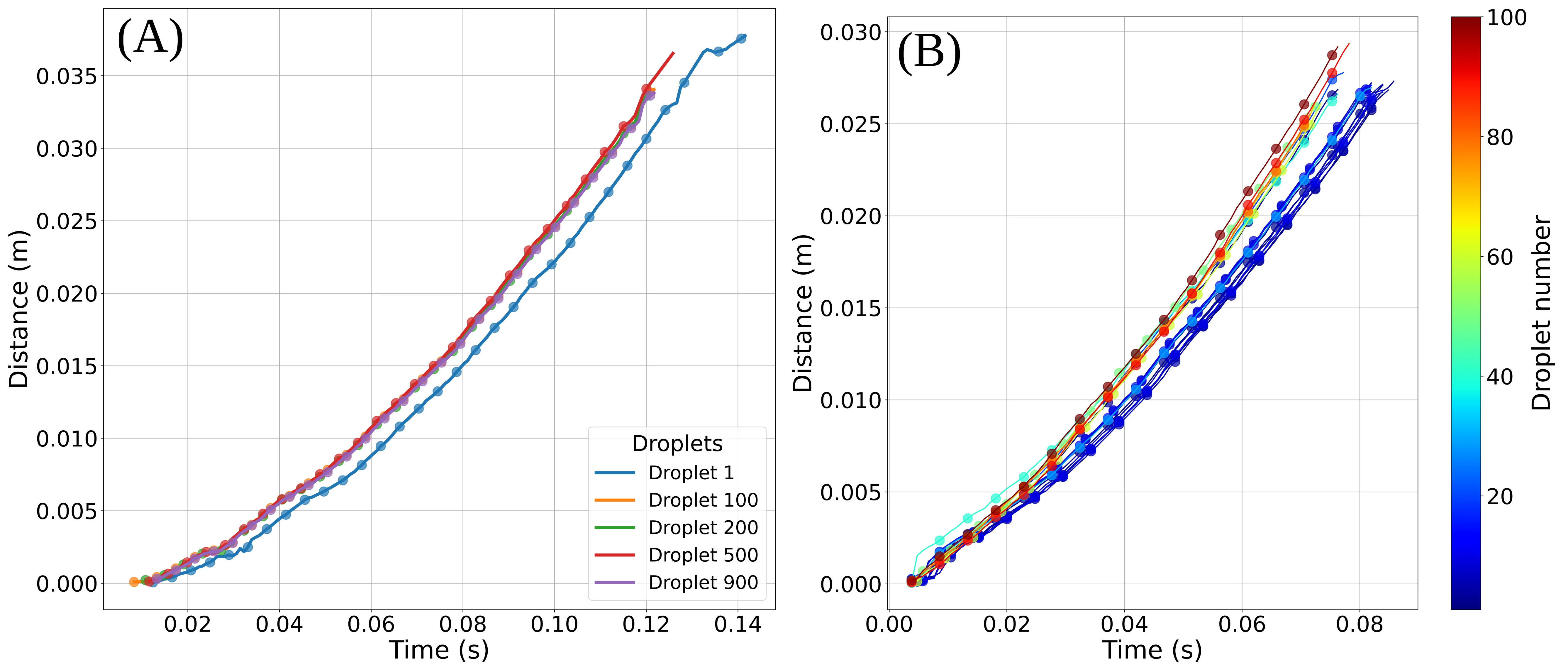
Researchers filmed droplets falling with a high-speed camera while simultaneously measuring their charge. On untouched taro leaves, a droplet with a volume of 30 microliters acquired a charge between -0.02 and -0.15 nanocoulombs. That's a tiny amount, as if the droplet had rubbed against the air. But when the waxy layer was slightly damaged, the charge jumped by a factor of 30–40, reaching -2.8 to -5.2 nanocoulombs. At the same time, the droplet slowed down by half.
Why does this happen? The wax on a leaf isn't just a smooth film. It's a rough structure with peaks and valleys. When a droplet slides, it rubs against these peaks, and electrons jump from the wax to the water. If the wax is damaged, its surface becomes even rougher, friction increases, and more charge is transferred. The charge on a droplet depends on the leaf's history: the same droplet will behave differently on a fresh leaf versus a worn one.
This discovery matters beyond botany. Charged droplets could influence how plants exchange substances with rain, and how spores and microbes spread. For engineers, it's a hint: if we can learn to control droplet charge, we might create surfaces that harvest rain energy or repel water even more effectively.
Taro leaves are so water-repellent that droplets on them form perfect little spheres. But even these spheres, it turns out, carry electricity that can steer their path.