Dwarf Stars Vanish in Metal-Poor Clouds express
The galaxy's kitchen has a recipe for stellar soup. The main ingredient is hydrogen, but the flavor depends on a pinch of metals. Astronomers have now peered into the pots where that pinch is almost absent, and found that the smallest stars are missing.
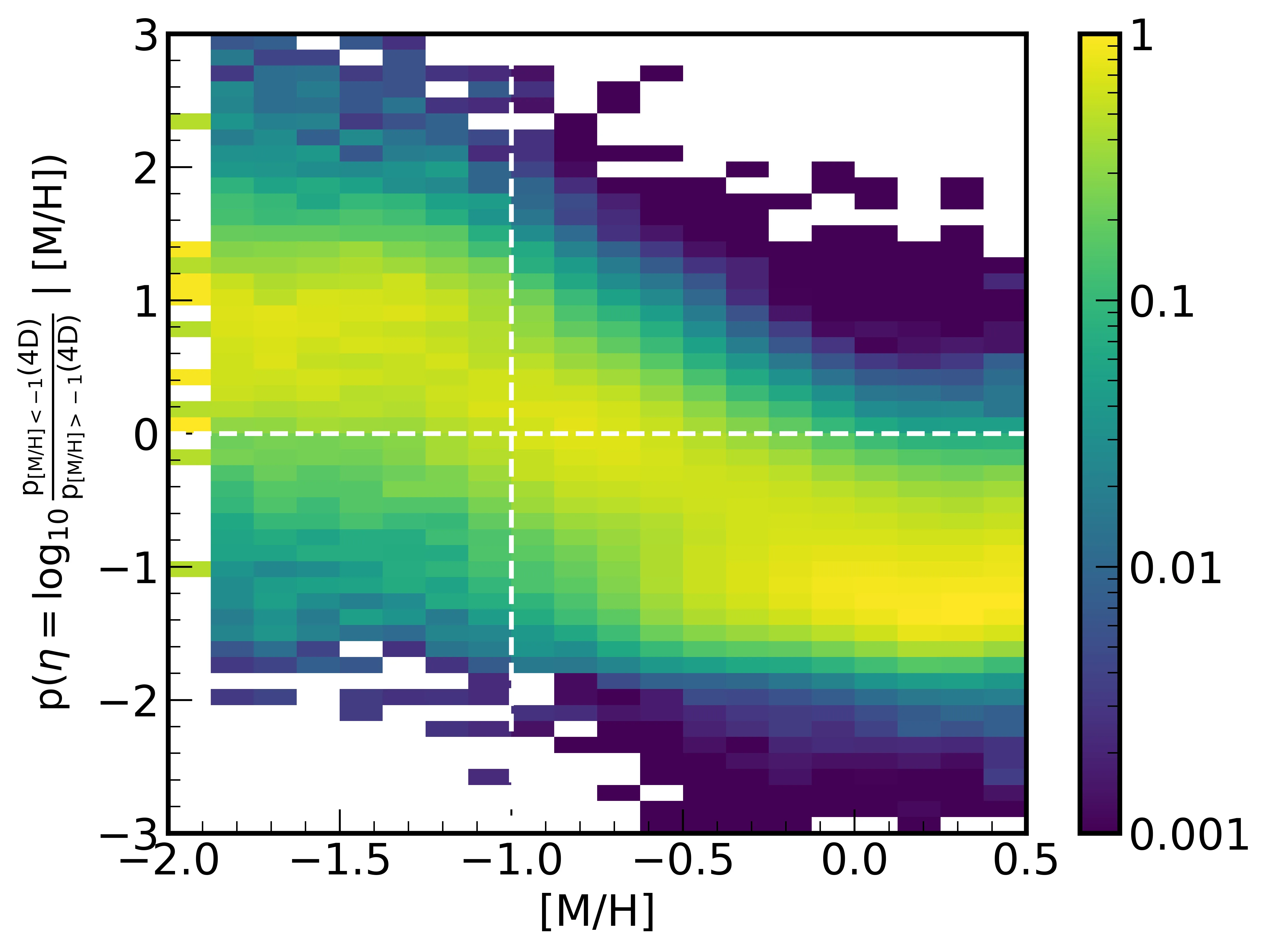
Using data from the Gaia space telescope, they selected about 53,000 stars with halo-like orbits and low metal content (less than one-tenth of the Sun's). For each star, they measured its mass and built the initial mass function — a plot showing how many stars of different weights are born. In environments with a moderate metal deficit (from −1.5 to −1 on a scale where the Sun is zero), small stars with masses between 0.2 and 0.5 solar masses are more common than in our neighborhood: the slope of the plot is steep, around −1.6. But in even poorer environments, the picture flips: the plot becomes nearly flat, with a slope close to zero. This means that lightweight stars are catastrophically rare there.
Why does this happen? There's no definitive answer yet. Perhaps in metal-poor clouds, gas fragments into larger clumps, so instead of a sprinkle of dwarfs, we get rare giants. Or the collapse conditions themselves prevent small stars from gaining mass. Importantly, the result doesn't depend on the chosen model of stellar evolution: it's a real property of nature, not an artifact of calculations.
The discovery changes our view of the early Universe. The first stars formed from nearly pure hydrogen and helium, with thousands of times fewer metals than today. If lightweight stars were almost absent under those conditions, then the first generation of stars consisted mostly of massive, short-lived giants. They exploded quickly, seeding the cosmos with the first metals, and only then did stars like our Sun begin to appear. That very pinch of metals missing from ancient clouds turned out to be the key to the emergence of small, long-lived stars, and thus to the possibility of planets and life.
Original abstract
as written by the authors arXiv:2601.19522
We present the first determination of the Galactic stellar mass function (MF) for low-mass stars (0.2-0.5 M_sun) at metallicities [Fe/H] < -1. A sample of ~53,000 stars was selected as metal-poor on the basis of both their halo-like orbits and their spectroscopic [Fe/H] from Gaia DR3 BP/RP (XP) spectra. These metallicity estimates for low-mass stars were enabled by calibrating Gaia XP spectra with stellar parameters from SDSS-V. For -1.5 < [Fe/H] < -1, we find that the MF below 0.5 M_sun exhibits a "bottom-heavy" power-law slope of alpha ~ -1.6. We tentatively find that at even lower metallicities, the MF becomes very bottom-light, with a near-flat power-law slope of alpha ~ 0 that implies a severe deficit of low-mass stars. This metallicity-dependent variation is insensitive to the adopted stellar evolution model. These results show that the Galactic low-mass MF is not universal, with variations in the metal-poor regime. A further calibration of XP metallicities in the regime of M < 0.5 M_sun and [Fe/H] < -1.5 will be essential to verify these tentative low-metallicity trends.
The Sun contains about 2% elements heavier than helium. But the most metal-poor stars in the Milky Way's halo have thousands of times fewer metals: their composition is almost the same as the gas right after the Big Bang.