Magnetic lattices: how plasma learns to filter waves express
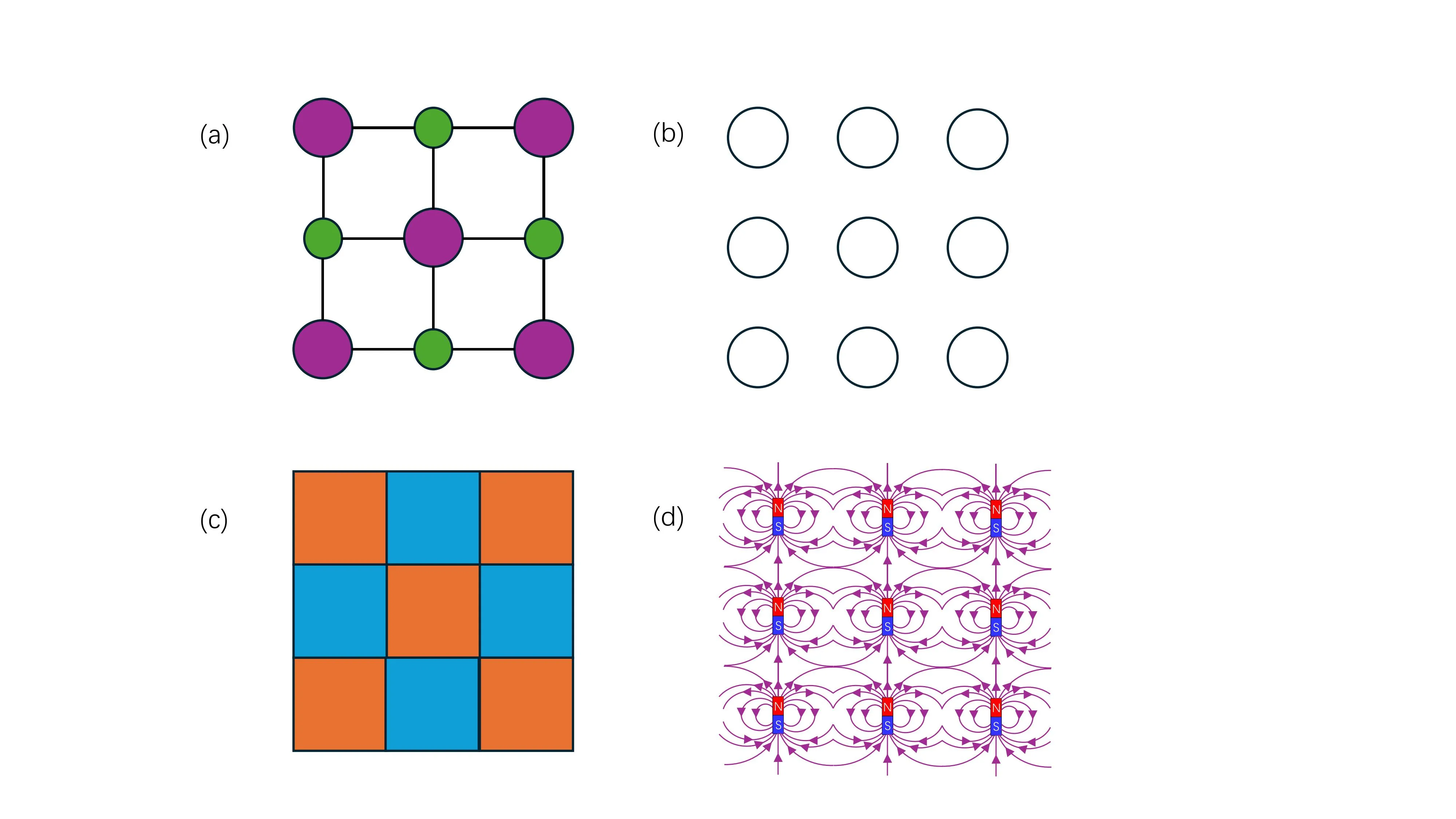
Plasma is a gas heated so intensely that electrons are stripped from atoms. Waves run through it, akin to sound in air, but they are governed by the magnetic field. When the magnetic field becomes periodic rather than uniform, like a fence with alternating slats, waves behave differently. Some frequencies simply vanish: the wave cannot propagate and is reflected back.
Physicists built a mathematical tool that predicts which waves will pass through such a 'magnetic lattice' and which will get stuck. Calculations showed: the stronger the magnetic field variations, the wider the forbidden zones. Moreover, the periodicity splits the continuous spectrum of Alfvén waves, special oscillations of magnetic field lines, into discrete branches.
The result resembles the behavior of light in photonic crystals — artificial materials that block light of certain colors. The magnetic lattice does the same for waves in plasma. Such structures are called plasma metamaterials. In the future, they could help confine energy in fusion reactors or create new antennas for space communication.
In Earth's magnetosphere, Alfvén waves carry energy from the solar wind and trigger auroras.