Iron in Iron Selenide: How an Impurity That Kills Superconductivity Became Its Booster express
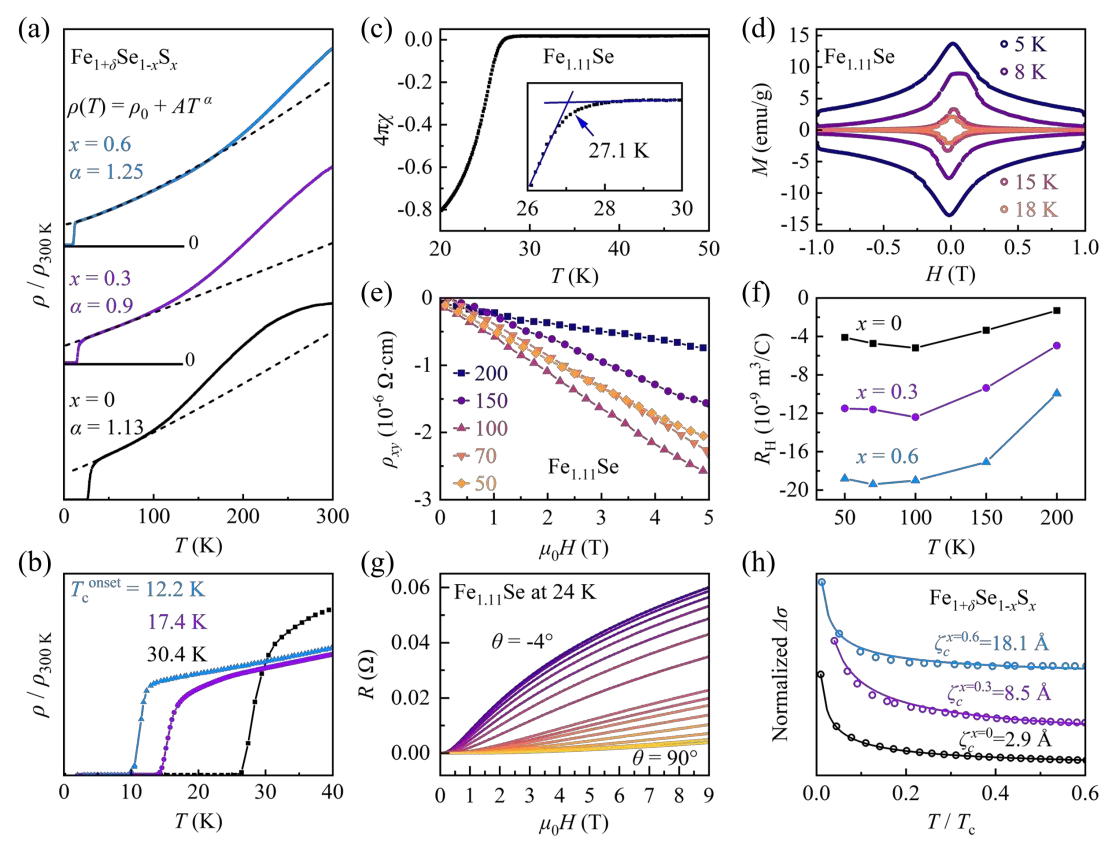
In the crystal lattice of iron selenide, iron and selenium atoms alternate like bricks in a wall. But sometimes extra iron atoms sneak into the voids between them, like uninvited guests squeezing into the gaps between bricks. Just 3% of such 'guests' and superconductivity vanishes: the material stops conducting electricity without resistance. In the new study, researchers grew a crystal with 11% extra iron — three times the 'lethal' dose. And it still became a superconductor, with a transition temperature of 30.4 K — higher than many other iron-based superconductors.
The secret lies in the synthesis method. Usually, such crystals are made at high temperatures, when atoms have time to settle into the most comfortable positions, like passengers taking seats in an empty bus. Here, they used hydrothermal ion exchange: a solution under pressure washes out some atoms and inserts others, not letting the lattice 'relax'. As a result, the extra iron is trapped in unusual positions that are impossible at equilibrium. It's as if passengers were forced to stand in the aisle, even though there are free seats.
Upon further compression, a magnetic order appears in the crystal, which was previously observed only in pure FeSe under pressure. So, the extra iron doesn't just not interfere, but actually helps 'switch on' new states of matter. The authors believe that non-equilibrium synthesis opens the door to materials with properties unattainable under ordinary conditions, as if we learned to build buildings not from a standard blueprint, but by assembling them from ready-made blocks in any order.
A temperature of 30.4 K is about -243°C, colder than the surface of Pluto, but for iron-based superconductors, it's a fairly 'warm' temperature.