Focusing Microwaves Instead of a Scalpel express
In Parkinson's disease, thin wires are implanted into the brain to calm tremors. The surgery is serious, and the wires stay in place for years. A team of researchers proposes doing without incisions: directing microwaves from several antennas into the head, much like musicians adjust volume from different corners of a hall so that the sound converges at one point.
Each antenna emits waves with its own frequency and phase. Deep in the brain, these waves add up, and in a small region an electric field emerges that makes neurons fire. Around it, where the waves don't align, the field is barely felt. It's like two flashlight beams crossing on a wall: a bright spot only where they intersect, and dimness around.
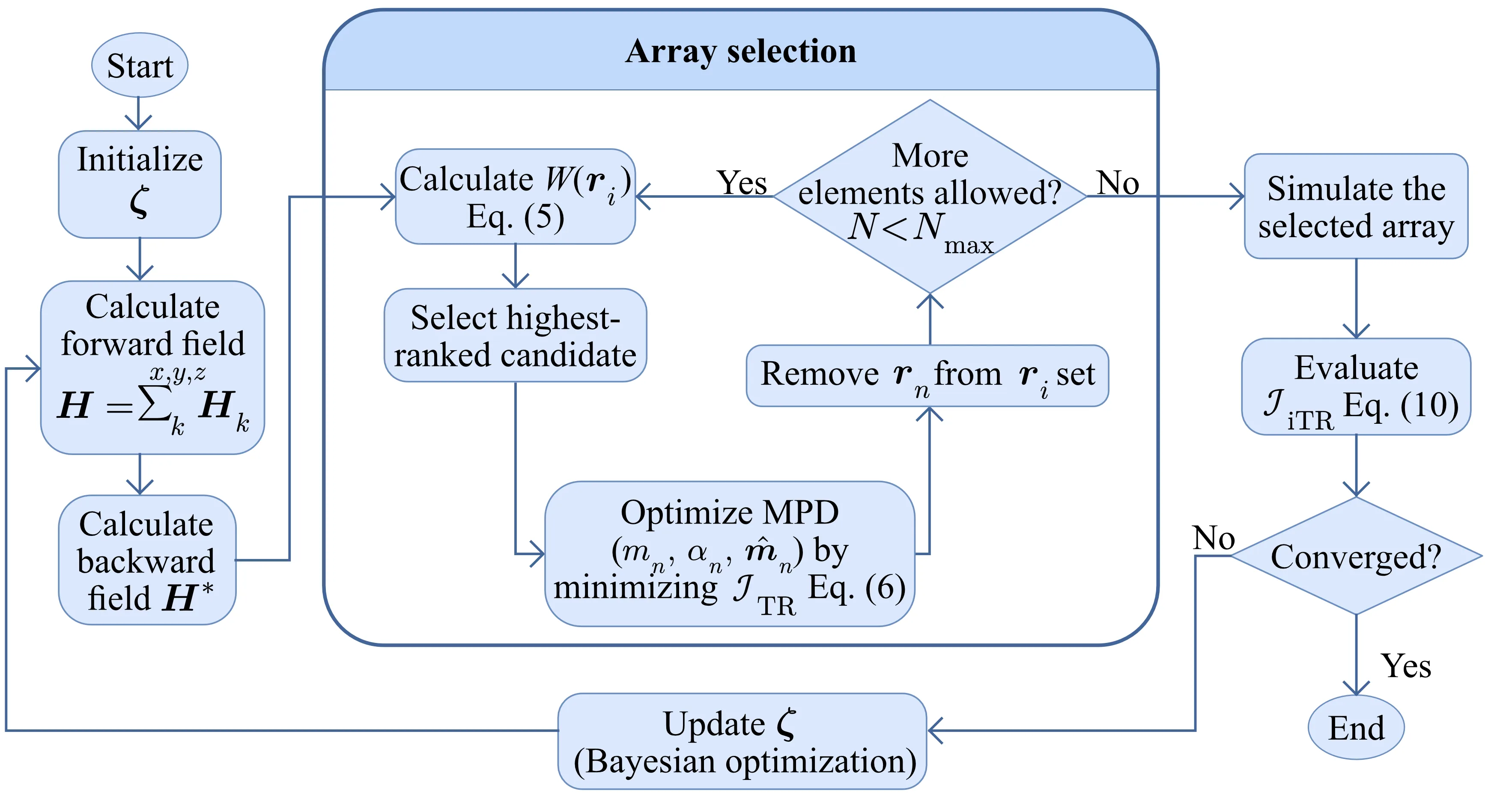
The researchers tested the idea on a computer model of the head with all tissues: bone, brain, fluid. They varied antenna positions, orientations, frequencies, and amplitudes to achieve a sharp stimulation spot. Even with random shifts of the antennas by a centimeter, the focus stayed in place. Tissue heating was measured by the specific absorption rate: it did not exceed permissible limits.
This is the first work to combine the two approaches for noninvasive stimulation of deep brain regions on a realistic model. Human trials are still far off, but the path is open: perhaps in a few years, patients with movement disorders will receive help without a single stitch.
Microwaves are the same radiation that heats food in a microwave oven, only here the power is thousands of times lower and strictly focused.
In the series 'Star Trek,' doctors use contactless emitters to treat the brain, the proposed method takes a step in that direction.