How Ice on a Dust Grain Gives Birth to Alcohol express
In a dark, cold cloud between the stars, a dust grain a thousandth of a millimeter across catches light molecules. Carbon monoxide and hydrogen stick to its surface like raindrops to glass and react. After a few steps, methanol is produced — the same alcohol found in windshield washer fluid. This is how complex molecules appear in space, from which planets and even life may later assemble.
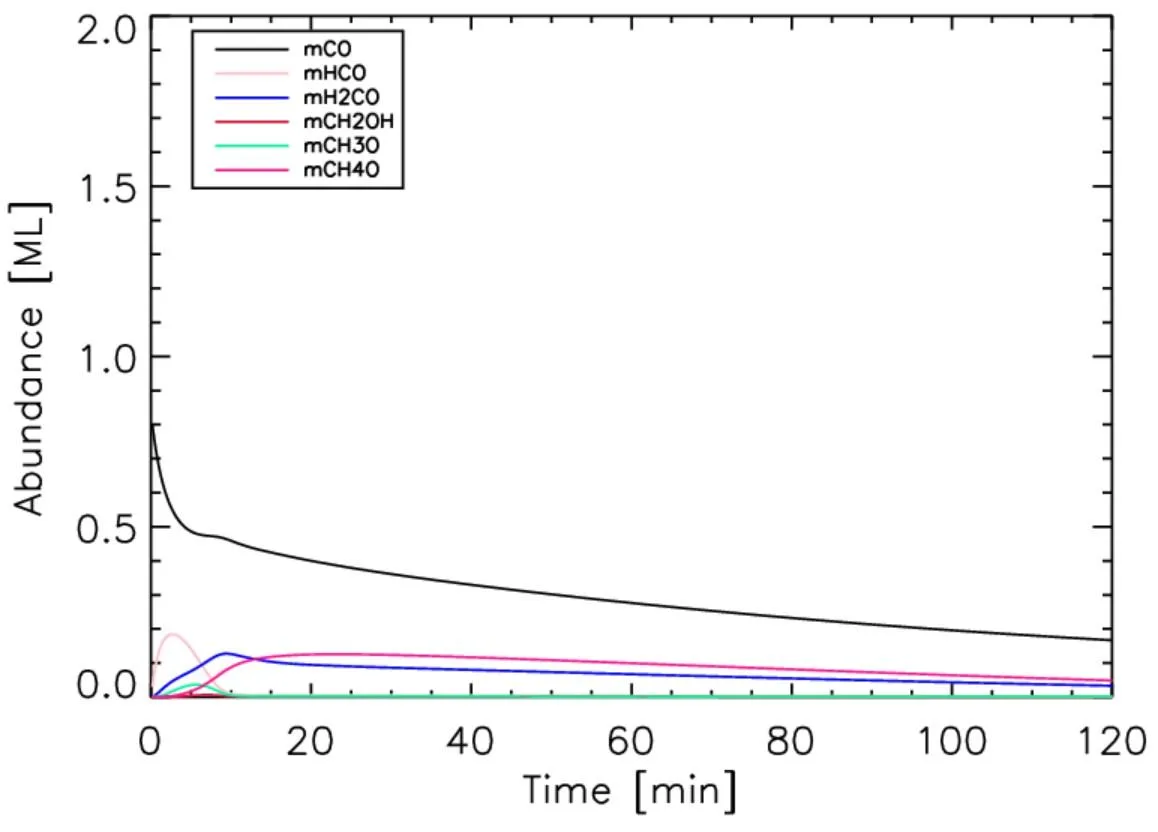
Computer models describe the chemistry on dust grains. They were built for interstellar clouds, where conditions are quite different from those in the lab. So scientists decided to test whether these models could apply to experiments on Earth. They took three programs (NAUTILUS, pyRate, and MONACO) and nine experiments. In each, they varied the temperature and the amount of gas supplied. It turned out that the models reproduce the experimental results fairly well, though they sometimes err in details.
The discrepancy between models and experiments may arise from an incomplete list of reactions or from how the models describe molecular movement on the surface. But the key point is that models can now be "trained" on laboratory data. This means predictions about which molecules are born in space will become more reliable.
Methanol is one of the most abundant organic molecules in interstellar clouds. It is even found in comets, and it could have reached the young Earth along with icy planetesimals.