Living Motors and Heat express
A cell is a city where tiny motors work nonstop. They carry cargo, move cilia, and make muscles contract. All this work generates heat, just like a car engine warms up. But measuring the heat from a single motor a few nanometers in size is no easy task.
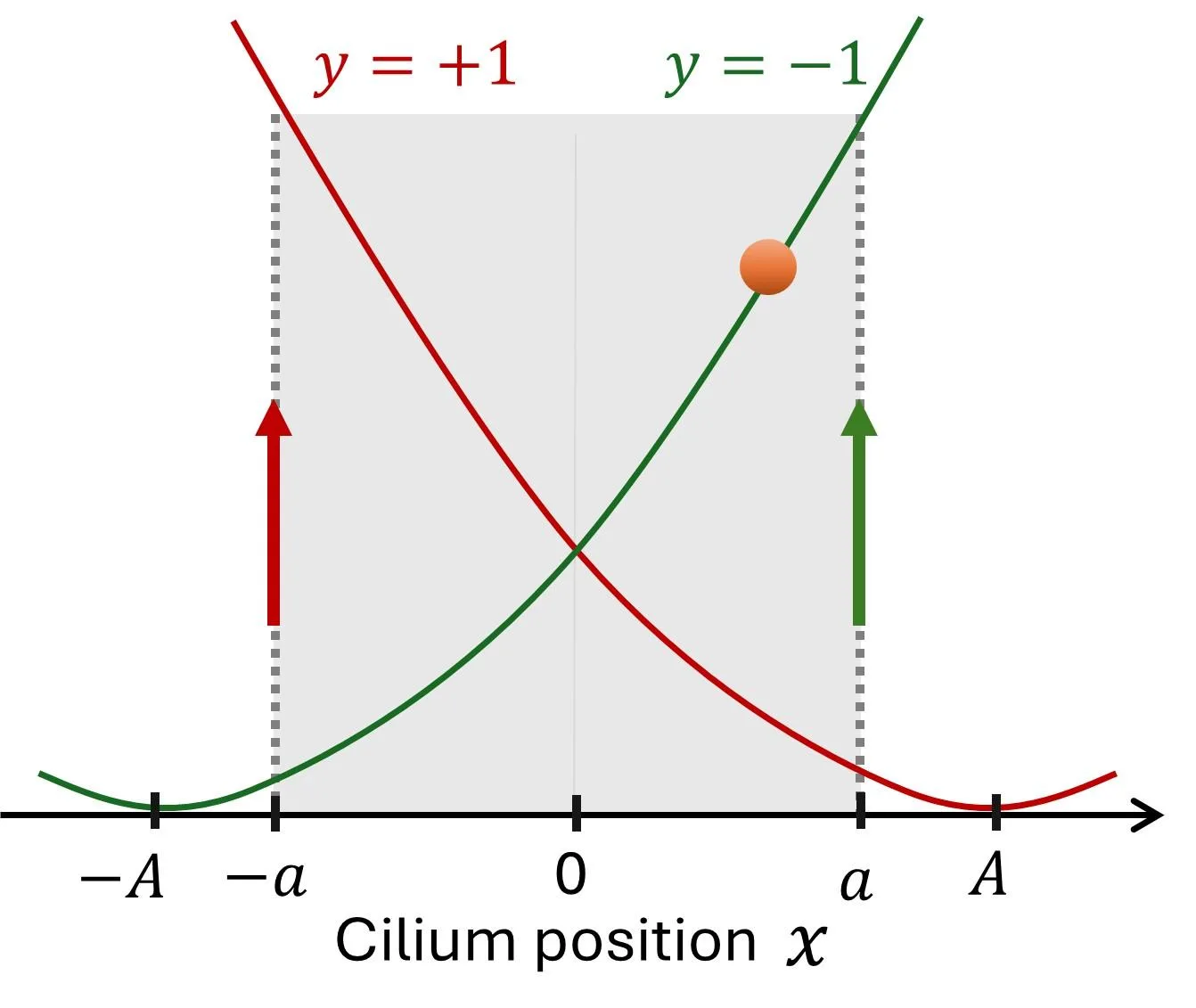
Stochastic modeling helps us peek into this world. The scientists built simple models: one describes the motion of cilia (like rowers in a boat), the other the work of a molecular motor that takes steps along a filament, like a person walking on a tightrope. Then they calculated how the heat capacity of such a system changes with parameters.
Negative heat capacity is not a paradox but a consequence of the system spending energy on work rather than on heating. It's like a refrigerator that cools by consuming electricity. In living cells, such effects could be key to understanding how motors coordinate their actions.
This approach, calorimetry under non-equilibrium conditions, opens a new way to study biological machines. By measuring heat, we can understand how they work without interfering with their operation.
Negative heat capacity appears in astrophysics: star clusters can cool down by giving off energy while their interiors heat up.
In Stanislaw Lem's novel 'Solaris', the planet's ocean exhibits activity that is hard to explain with ordinary physics. Negative heat capacity is an example of how living systems defy the usual laws of thermodynamics.