The Pulse of Binary Stars express
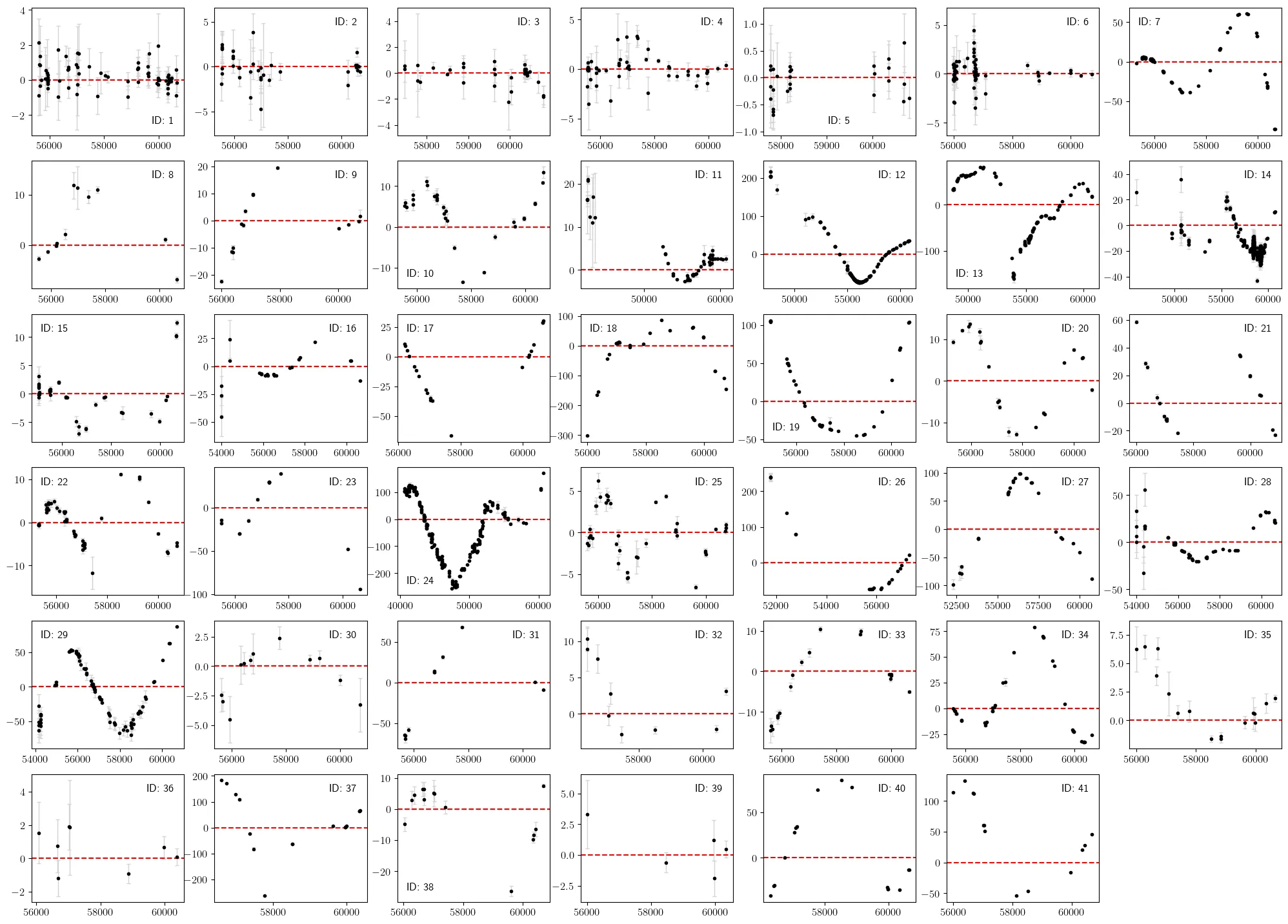
Eclipses in binary stars are like clockwork: a white dwarf (the dense remnant of a star) regularly passes in front of its companion, and the light briefly dims. But for most such pairs, the clock runs fast or slow by seconds over years. Astronomers measured these glitches in 43 systems and found a pattern.
If the companion star is fully mixed inside, like a boiling pot, the glitches are weak. If it has a solid core and an outer layer, the glitches are strong. This points to a magnetic mechanism: the star's magnetic fields, like a spring, alternately compress and stretch the orbit. Planets may also exist, but they are not the main cause.
A mystery remains: magnetic forces cannot explain the fastest and largest glitches. The star lacks the energy to change its orbit so abruptly. Perhaps something else is at work, but one thing is clear: the celestial clock is not as steady as we thought.
Original abstract
as written by the authors arXiv:2602.17800
The overwhelming majority of eclipsing white dwarf (WD) binary systems show quasi-periodic variations in eclipse timings on many year timescales. Currently, the mechanism behind these eclipse time variations (ETVs) is not known, with the main competing theories being the planetary hypothesis and the Applegate/Lanza mechanisms. Here, we present a comprehensive study of 43 WD binary systems, the vast majority of which have more than a decade of eclipse timing measurements, analysing their global properties to determine which driving force is the likely origin of the observed ETVs. Long-term, high-speed photometry data obtained with ULTRACAM, ULTRASPEC and HiPERCAM have allowed us to track the evolution of the ETVs in these systems, and analyse any previously unseen trends. From this analysis, we find a clear difference in the level of observed ETVs past the fully convective boundary, where systems with partially radiative companion stars consistently showing high levels of variation. While some systems may be affected by the presence of an unknown planet, the results from this study strongly indicates that an Applegate- or Lanza-like mechanism is the most likely driving force for the timing variations seen in the majority of systems in this sample. However, as found in previous studies, the Applegate/Lanza mechanisms are still not able to reproduce the large and rapid timing variations seen in the vast majority of systems, with the companion star to the WD unable to provide sufficient energy on these short timescales.
A white dwarf is about the size of Earth but has the mass of the Sun. A teaspoon of its material would weigh as much as a truck.