Icy Surprise from a Dying Star: JWST Finds CO2 Crystals express
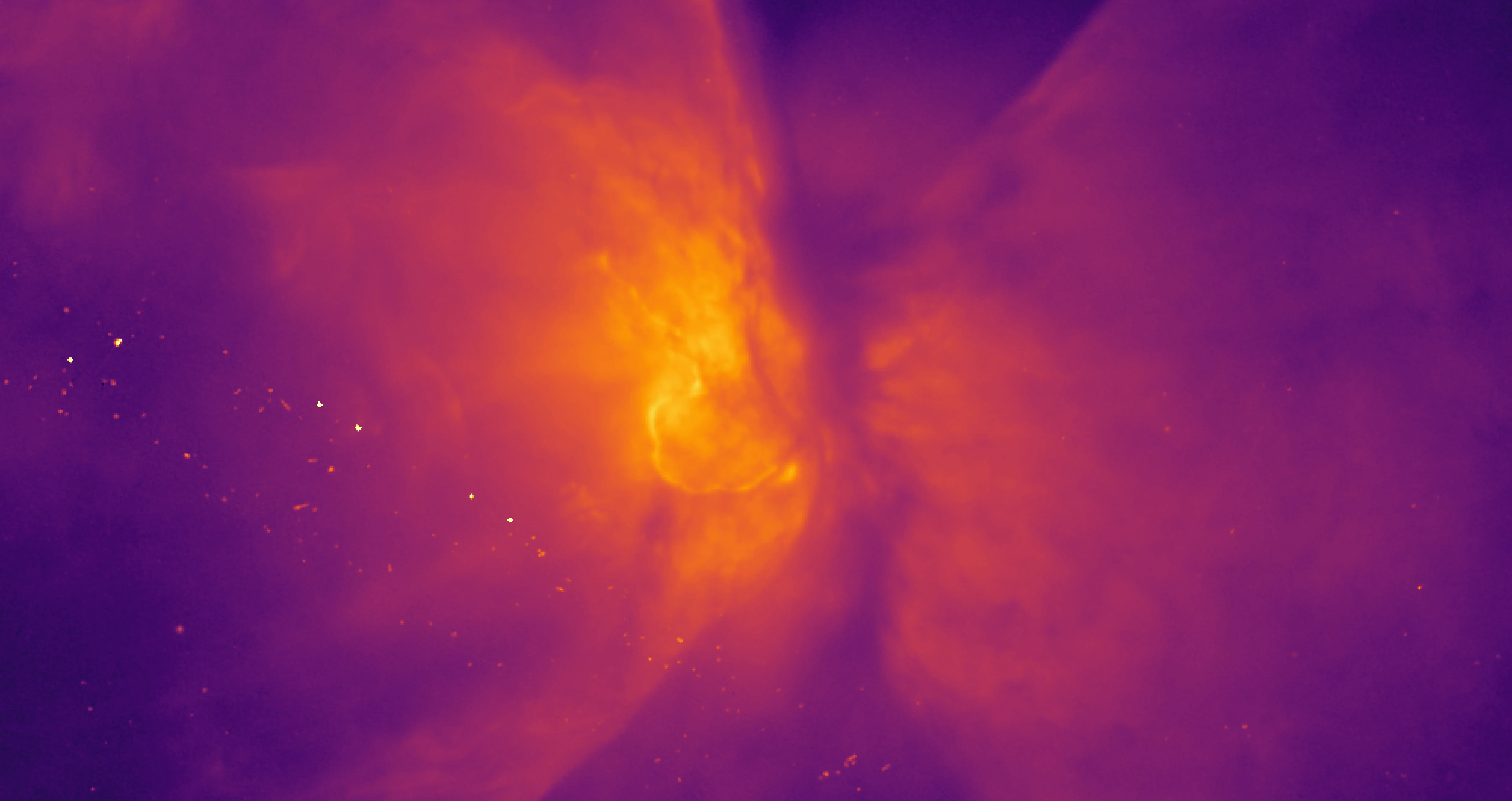
In a blazing foundry, any ice cube would vanish instantly. But tucked inside a thick mitten, it survives. Nature pulled a similar trick in the planetary nebula NGC 6302. A dying star floods its surroundings with deadly ultraviolet light, yet inside a dense dust ring, the JWST spotted something unexpected: pure crystalline ice made of carbon dioxide. Its giveaway: spectral lines exactly matching those of dry ice used to create theater fog.
Scientists once believed ices don't form in such old systems. But spectroscopy data revealed an abundance of CO₂ gas, with a gas-to-ice ratio dozens of times higher than in the cradles of newborn stars. Apparently, ice crystallizes directly onto dust grains — like frost on a window, but sheltered inside a protective dust "mitten." The discovery forces a rewrite of dying stars' chemistry.
Dry ice on Earth doesn't melt; it sublimates directly from solid to gas. It behaves the same way in space, so its crystals can survive for billions of years.